
Last Updated on May 19, 2019
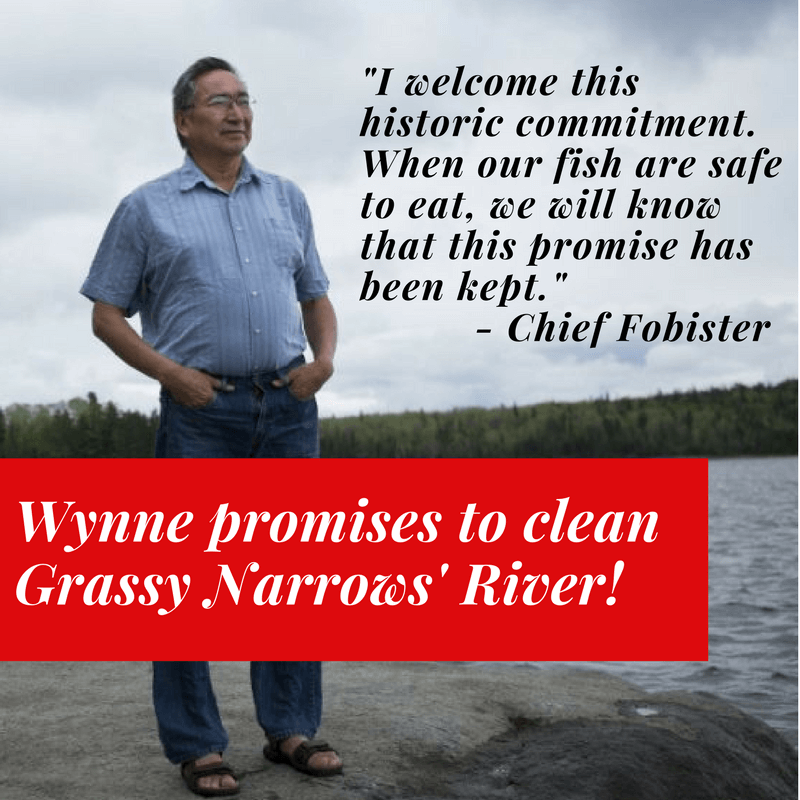
Chief Simon Fobister received momentous news when he met Premier Kathleen Wynne on Friday.
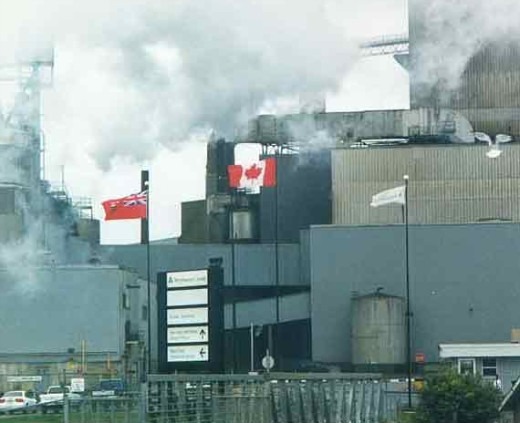
Premier Wynne promised to him that Ontario would clean up the English-Wabigoon River system and the Dryden Mill and that this cleanup would be led by Grassy Narrows First Nation!
Water has worn away the stone. After years of foot dragging, misleading, and back pedalling, Ontario has committed to do the right thing. This commitment is a direct result of sustained grassroots Indigenous resistance and ally support.
This is a moment for cautious celebration, but the work is not done. No schedule has been announced, and the remediation has not begun. Promises made before have been broken.
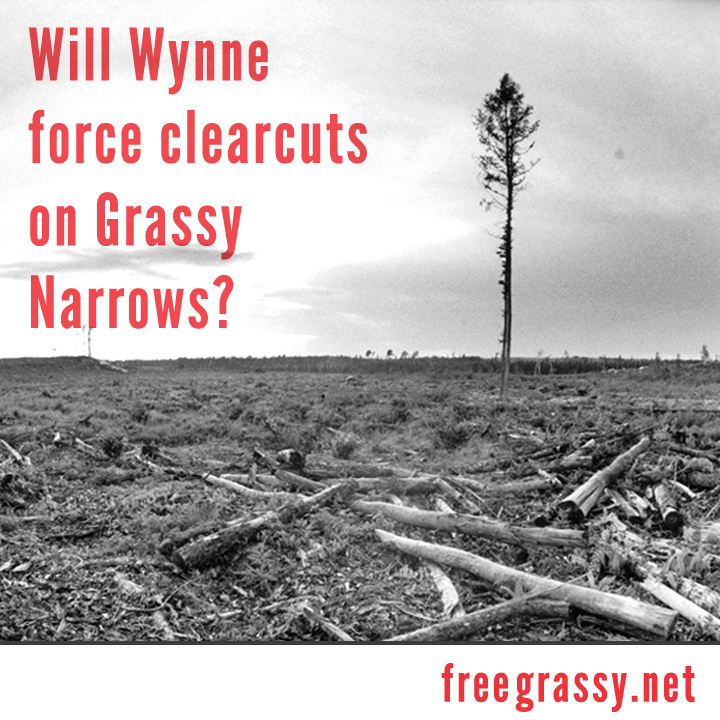
The clean up of the river, led by Grassy Narrows First Nation directly, is the first step. Grassy Narrows continues to call for a dignified Mercury Home for survivors in their community, a fair mercury compensation system, top quality health care, and a permanent Grassy Narrows environmental health monitoring station. Grassy Narrows is also calling for an end to planned clearcut logging on their homeland which would release more mercury into their lakes and rivers.
For over forty years (read brief history below), the people of Grassy Narrows have organized and fought for this commitment, and in the process they have become one of the lighting rods of Indigenous self-determination in Canada. Grassy’s win today shows us yet again that justice on these territories will come through the leadership of grassroots Indigenous communities.
Chief Fobister has a message for us. “I thank the grassroots people of Grassy Narrows, and our supporters who have been tireless in their work to gain justice for mercury survivors at long last
Let us continue until Grassy Narrows and all Indigenous communities win justice.
PLEDGE YOUR SUPPORT TO GRASSY: http://bit.ly/GrassyPledge
In solidarity,
FreeGrassy.net
A brief history of the struggle at Grassy Narrows
Across the world right now, Indigenous peoples are facing a renewed assault on their lands, rights, and ways of life.
From extractive industries pushing deeper into ancestral territories, to governments rolling back hard-won protections,
the threat is global—and it is growing.
What makes this moment especially dangerous is how little attention it receives.
Stories like this are disappearing in real time. Mainstream media
barely covers it and the coverage is fragmented. The public is left without the context
needed to understand what is truly at stake.
That is exactly why IC Magazine exists..
For more than 20 years, IC has reported on Indigenous struggles worldwide — consistently, independently, and without compromise.
We don’t follow news cycles; we trace patterns. We don’t sensationalize; we provide context.
And when the world looks away, we stay focused.
But this work is increasingly difficult to sustain.
We refuse to lock our reporting behind a paywall. We don’t sell access through subscriptions.
And we don’t answer to advertisers. IC Magazine survives solely because readers like you choose to
support independent Indigenous journalism.
Please donate today if you can. Every contribution helps us to continue this crucial work.
Thank you,
John Ahni Schertow
Founder and Editor in Chief