
Last Updated on August 28, 2014
The Plant Varieties Protection Bill passed by the Guatemalan Congress in June is facing the resistance of peasant organizations, groups of artisanal fisherfolk and Indigenous Peoples from the Central American country, who warn about the risks of the regulation in terms of biodiversity and food sovereignty.
The bill–also known as the “Monsanto Bill” because of the GM seed and agrotoxic multinational company’s involvement in its promotion in several Latin American countries–was appealed before the Guatemalan Constitutional Court, while different mobilizations were planned both in the capital of the country and in other departments on Tuesday, Aug. 26, 2014.
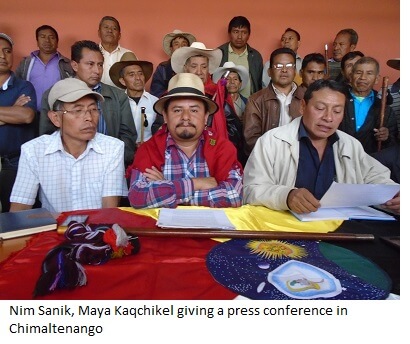
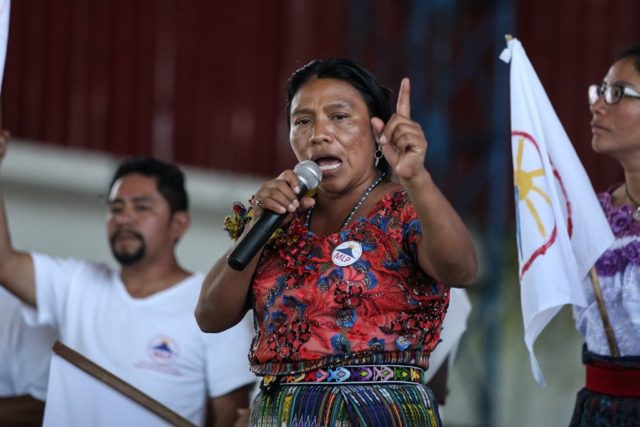
Antonio Gonzalez, member of the National Network in Defense of Food Sovereignty in Guatemala (REDSAG) and the Latin American Agroecological Movement (MAELA) said in a press conference that “this bill risks biodiversity, native seed varieties that are over 7,000 years old and that never required patents or labs, but have been able to sustain the lives of the Guatemalan people. We are speaking of privatizing ancestral knowledge and one of the risks is the disappearance of the “milpa system”.
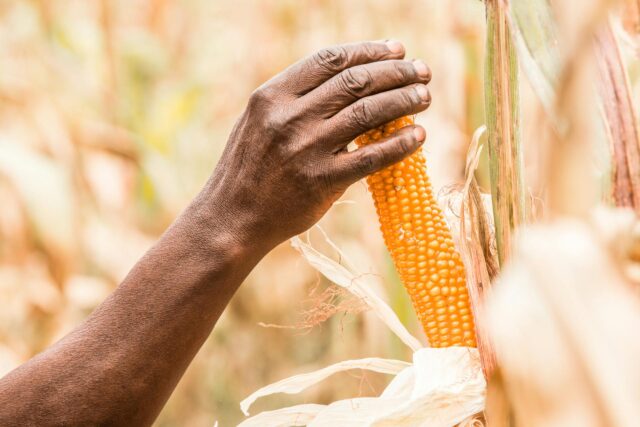
This is a small-scale self-consumption agriculture and commercialization system involving maize, pumpkin, medicinal herbs and beans, typical crops of peasant-indigenous agriculture in Mesoamerica and especially Guatemala.
“We will no longer be the sons and daughters of maize, we will be the sons and daughters of GMOs”, said Antonio Gonzalez, who also denounced the actions by the government in favor of transnational seed companies.
Meanwhile, Glenda de Leon, also member of REDSAG, said in a press conference that the regulation will directly affect peasant and indigenous women, deepening the dependence of the food chain on transnational corporations that unlawfully hold intellectual property rights over plant varieties.
Across the world right now, Indigenous peoples are facing a renewed assault on their lands, rights, and ways of life.
From extractive industries pushing deeper into ancestral territories, to governments rolling back hard-won protections,
the threat is global—and it is growing.
What makes this moment especially dangerous is how little attention it receives.
Stories like this are disappearing in real time. Mainstream media
barely covers it and the coverage is fragmented. The public is left without the context
needed to understand what is truly at stake.
That is exactly why IC Magazine exists..
For more than 20 years, IC has reported on Indigenous struggles worldwide — consistently, independently, and without compromise.
We don’t follow news cycles; we trace patterns. We don’t sensationalize; we provide context.
And when the world looks away, we stay focused.
But this work is increasingly difficult to sustain.
We refuse to lock our reporting behind a paywall. We don’t sell access through subscriptions.
And we don’t answer to advertisers. IC Magazine survives solely because readers like you choose to
support independent Indigenous journalism.
Please donate today if you can. Every contribution helps us to continue this crucial work.
Thank you,
John Ahni Schertow
Founder and Editor in Chief