Last Updated on July 9, 2025
Raúl Pineda, former mayor of San Francisco de Ojuera in western Honduras, and his deputy Plutarco Mejía Cardona were found guilty last Monday of abusing their authority in granting construction permits for the Agua Zarca Dam in 2010 without considering the rights of Indigenous peoples. The two officials will be sentenced on 4 August.
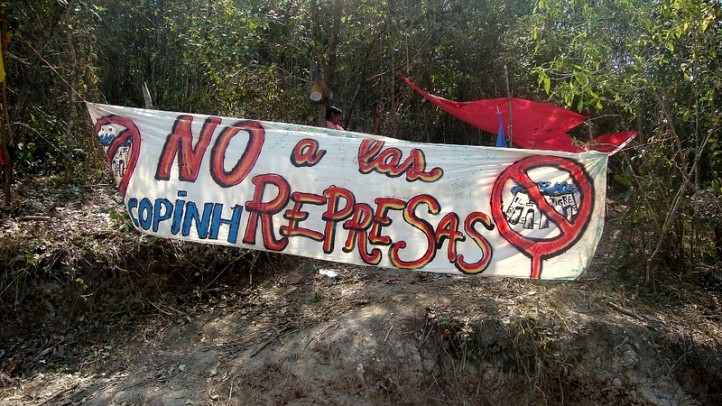
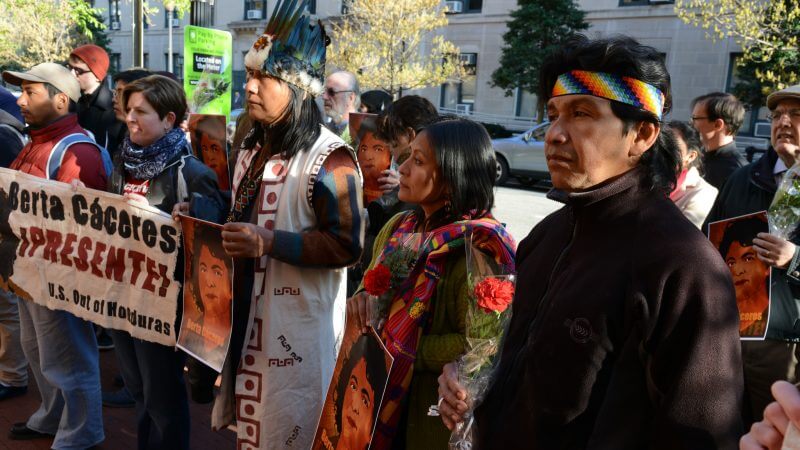
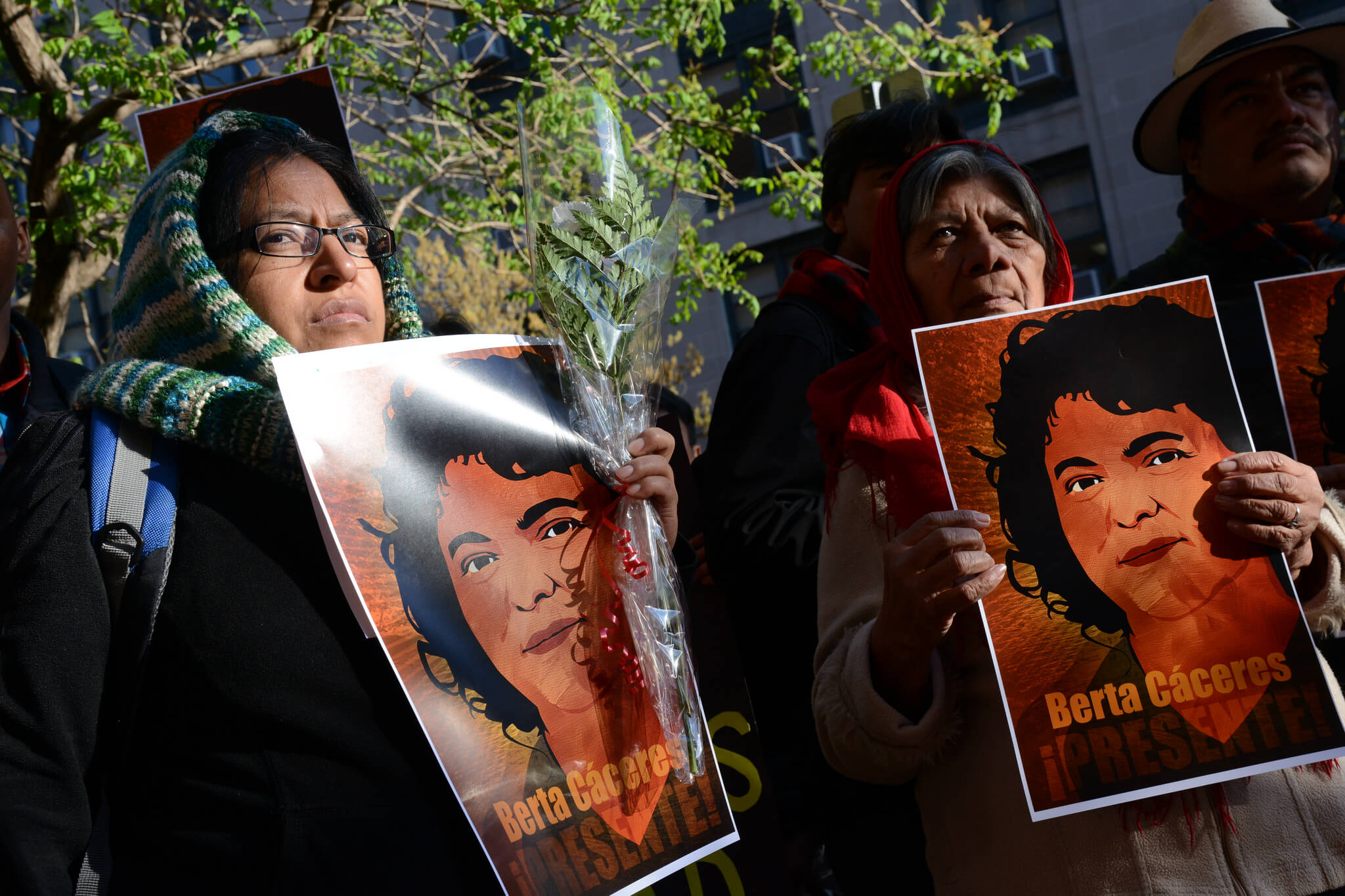
The Agua Zarca project gained internationally notoriety following the 2016 murder of indigenous leader Berta Cáceres who became a figurehead for Lenca opposition to the dam. The organization that she had co-founded, the Council of Popular and Indigenous Organizations of Honduras (COPINH), released a statement at the onset of the latest trial: “At COPINH, we firmly denounce that the imposition of the Agua Zarca project was illegal, illegitimate, and violated the fundamental rights of Indigenous peoples… This trial is an opportunity to reaffirm a historical truth: without prior consultation, there is no legitimacy or legality in any project that affects Indigenous territories.”
The ruling was passed unanimously by the Court in Santa Bárbara, in the west of the country, and according to a statement from the Honduran Public Prosecutor’s Office in the wake of the decision, saw “the Special Prosecutor’s Office for Ethnic Groups and Cultural Heritage present testimonies, documents, and the reports of international experts to demonstrate the responsibility of the ex-functionaries for the irregular approval of the project on the Gualcarque River, in ancestral territory protected by the Lenca community.”
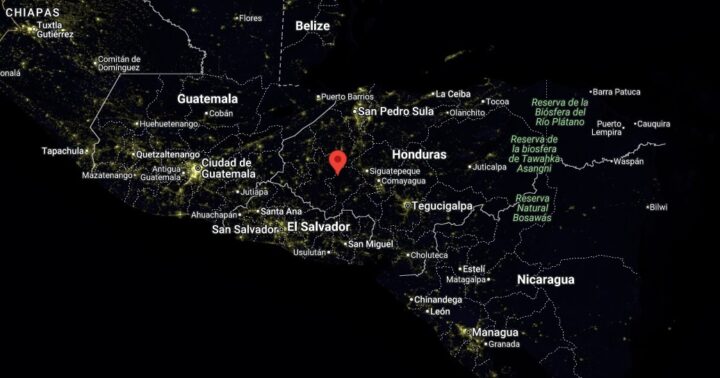
Location of the dam project on the Gualcarque River. (C) Google Maps
The dam project on the Gualcarque river was initiated by the national electricity board (ENEE), but in 2009 its employee, West Point graduate David Castillo, used his insider knowledge to establish the company Desarrollos Energeticos (DESA) to advance the project, using proxies’ names to hide his conflict of interest. With involvement from the Chinese hydroelectric company SINOHYDRO, the world’s largest dam builder, and involvement by the powerful Honduran Atala family, DESA moved into the Lenca area.
The communities affected lay in the municipality of San Francisco de Ojuera along the Gualcarque river where it passes from the department of Intibuca into that of Santa Barbara. The Pineda Madrid family from Santa Barbara, which had been attempting to gain control of the fertile river banks from Lenca communities through forced purchases of communal “ejidal” lands, were reportedly employed by DESA by 2012 and released cattle to destroy Lenca crops.
Community opposition escalated rapidly [see timeline below], and in 2013 Lenca protester Tomas Garcia was shot by the Honduran military, causing SINOHYDRO to pull out of the project. In stepped the Central American Development Bank (CABEI) with a loan of US$24.4 million, and an agreement to administer an additional US$20 million from Dutch development bank FMO and Finnish financing company Finnfund.
Two years later Berta Cáceres was murdered, leading FMO and Finnfund to withdraw and construction at the dam site to stop. While the Honduran police initially treated the murder as a crime of passion, local and international pressure forced the justice system to respond, and in November 2018 seven men were convicted for murdering Cáceres on behalf of executives within DESA.
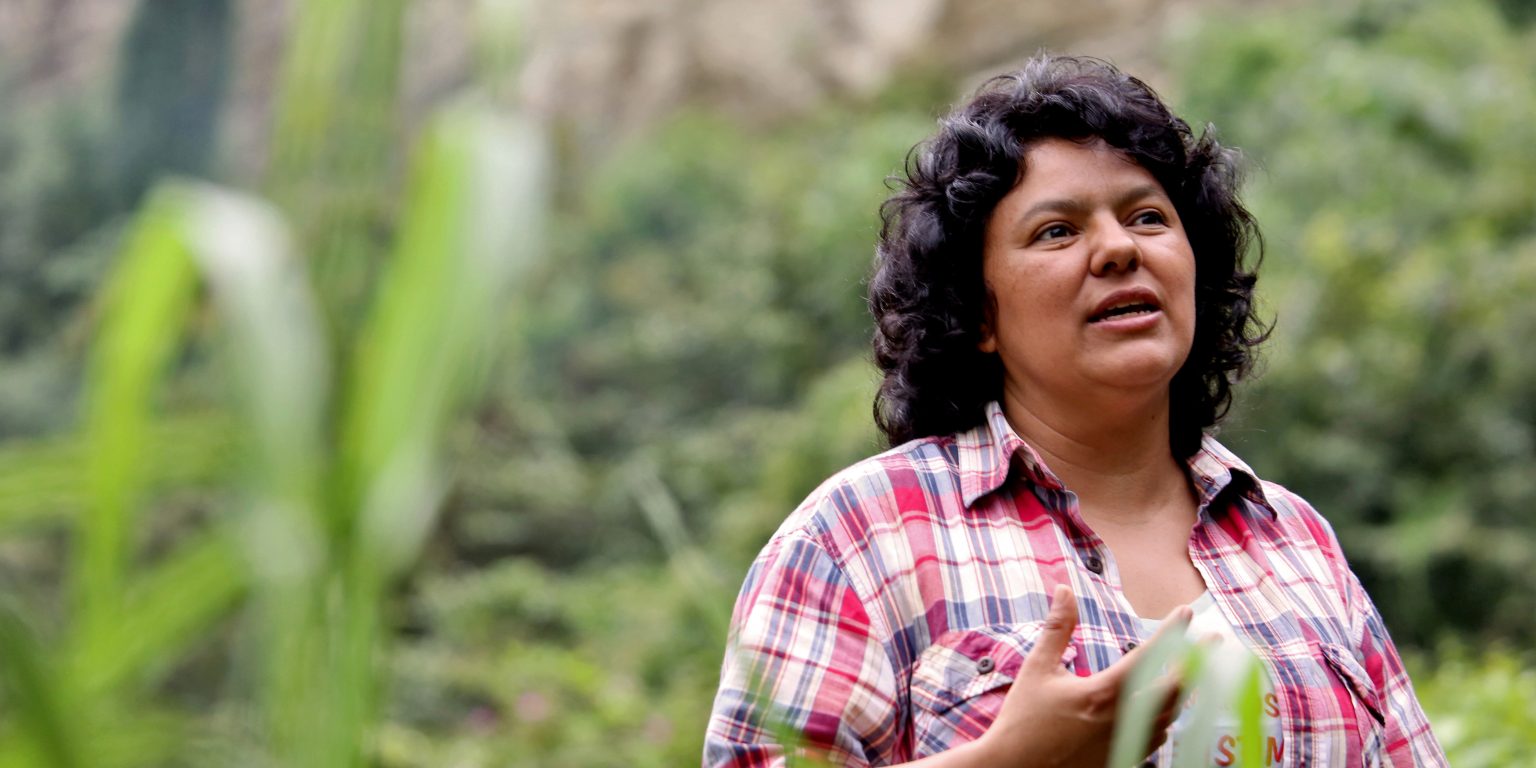
Berta Cáceres was a recipient of the Goldman Environmental Prize in 2015. Photo: www.goldmanprize.org
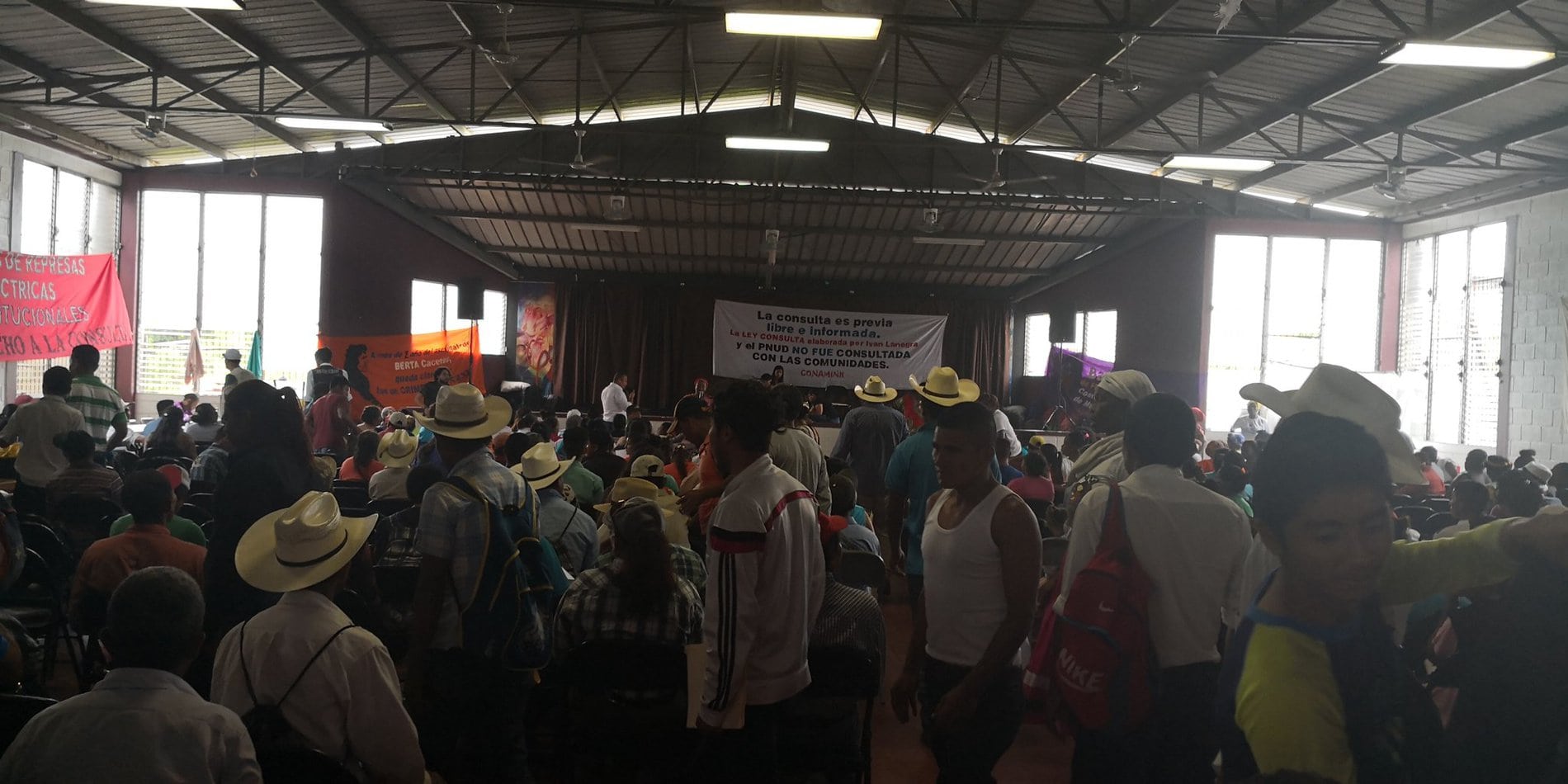
In court last week the defense team of Raúl Pineda attempted to deny that there were any Lenca or other indigenous communities within the bounds of the municipal area of San Francisco de Ojuera. Honduran news site Criterio reported the lawyer Edy Tábora, representing COPINH, reply that the Lenca People’s concept of their territory goes beyond the imposition of borders imposed by the municipalities, and that the “State must, and is obligated to, design an appropriate mechanism for consultation based on this concept of territory of the Lenca People”.
The Court also heard from Guatemalan indigenous anthropologist María Jacinta Xon, who said the failure to recognize the right to exercise free, prior, and informed consent (FPIC) was a racist act, and that the territory of “the Lenca indigenous people transcends the territorial divisions of the State of Honduras” and that its extension cannot be understood “based on the municipal political divisions of Honduras.”
At least on the surface the decision cements indigenous rights as integral to the development of projects on indigenous lands: the judges ruled that the mayor and his deputy “illegally approved the Agua Zarca project without securing the free, prior, and informed consent (FPIC) of the Lenca community, as established by Convention 169 of the International Labour Organization [ILO 169] and the United Nations Declaration on the Rights of Indigenous Peoples [UNDRIP].”
The ruling follows a 3 May 2024 conviction of Pineda for usurping functions and falsifying documents related to the project. In that “Fraud on the Gualcarque” case the former DESA CEO David Castillo and former national electricity board official Carolina Castillo had also been convicted, the latter two on fraud charges. It was the first time that the indigenous Lenca community was recognized as a victim and had the opportunity to act as a victim in the trial.
But COPINH observed that “Raúl Pineda did not act alone. He represents a cog in a system of corruption that has operated with impunity in Honduras to benefit companies like DESA, responsible for the plundering of our common goods and the repression of organized communities. We demand that the Honduran justice system act impartially and swiftly and appropriately punish those who have violated the rights of the Lenca people. [We also demand] That the Honduran State fulfill its obligation to fully and immediately implement Free, Prior, and Informed Consent (FPIC), in accordance with international jurisprudence, without excuses or delays… [and] That the criminalization and dispossession of Indigenous peoples through extractive projects imposed without consent be halted once and for all.”
The Agua Zarca dam construction site in Honduras. Photo: COPINH
In June 2022, COPINH filed a criminal complaint in the Netherlands against FMO for “complicity in corruption, embezzlement, money laundering and violence” during its involvement in the Agua Zarca project. According to FMO an attempt to find a settlement is ongoing.
The issue of how FPIC can be realized in deliberations over renewable energy projects on indigenous lands without suffering from falsification, fraud, division, and violence, is being explored by several organizations. The Sirge Coalition, for example, offers a guide for indigenous communities to develop effective FPIC protocols when their territories are affected by “energy transition” projects.
The World Bank is returning to funding large-scale hydroelectric dams, and while public banks and international financial institutions increasingly pay lip service to inclusivity and human rights, the extent of real change is questioned.
International Rivers, an international NGO working with river-dependent and dam-affected communities, attempted to engage with the world’s public development banks at the Finance in Common Summit in Cape Town in February 2025 (FiCS 2025). But Genny Ngende, of the International Rivers Africa Program, was unimpressed by the attitudes evident at the event. She wrote: “Despite its theme, “Fostering Infrastructure and Finance for Just and Sustainable Growth,” FiCS 2025 overwhelmingly prioritized financial and institutional interests. Environmental and social issues were relegated to a few sessions. Key discussions took place behind closed doors, with civil society organizations largely shut out, underscoring a systemic pattern where development is designed without those who must live with its consequences. While framed as a contribution to the Sustainable Development Goals – focused on ensuring communities have access to affordable, reliable, sustainable, and modern energy – the summit ultimately revealed who truly benefits: banks and project developers, and not communities.”
An FMO-commissioned document from 2016 notes that “It is the responsibility of the state to ensure that consultations are held prior to the commencement of a project that may impact indigenous peoples… there is no regulatory arrangement in the country for the application of ILO 169 and FPIC. The absence of a regulation makes the implementation of the convention more complicated for non-state actors.” The document further notes that according to the consultants contracted by FMO, an “adequate consultation was undertaken with community-based organizations in the absence of any traditional authorities such as councils of elders and this therefore served the same purpose.”
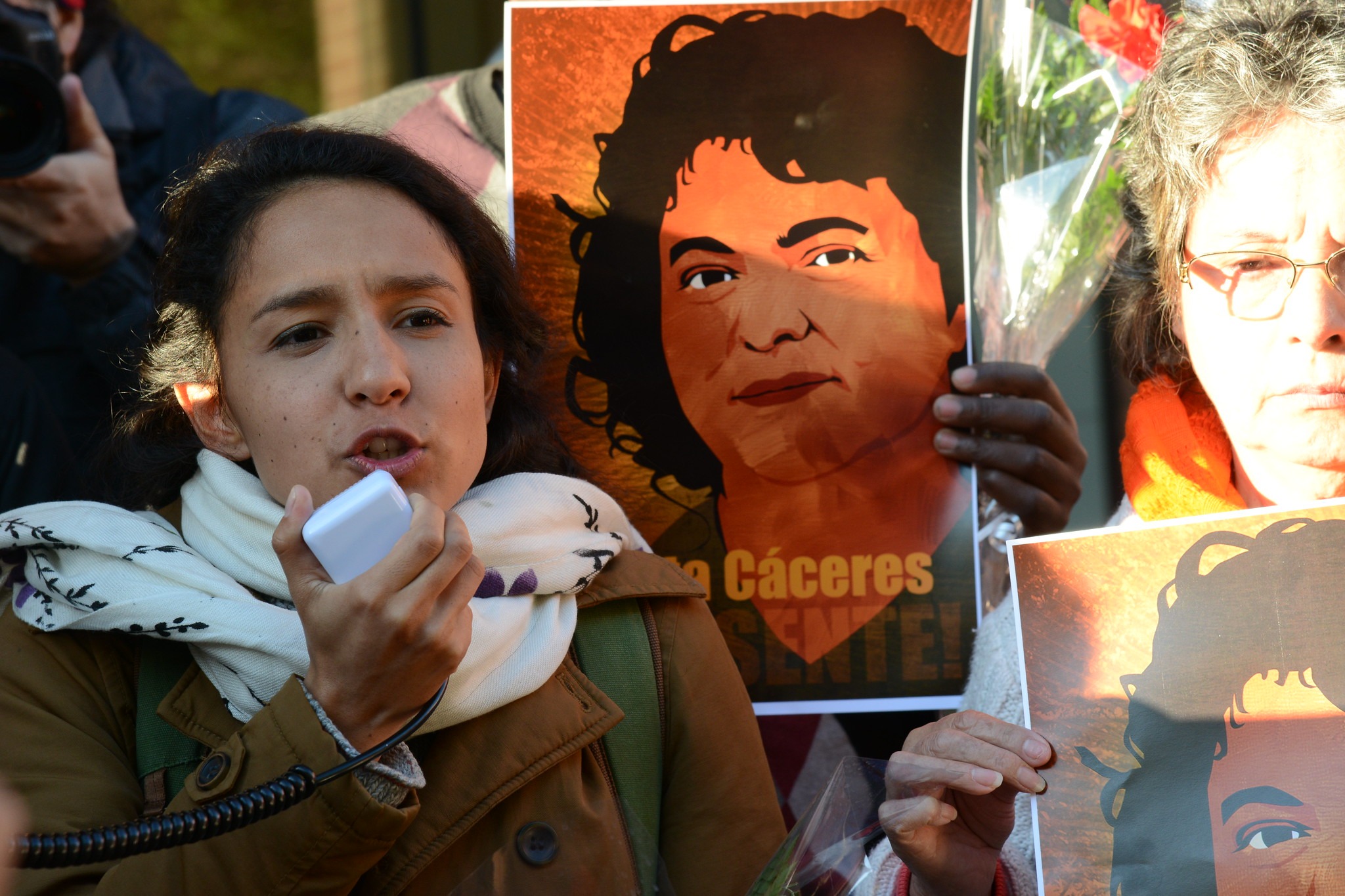
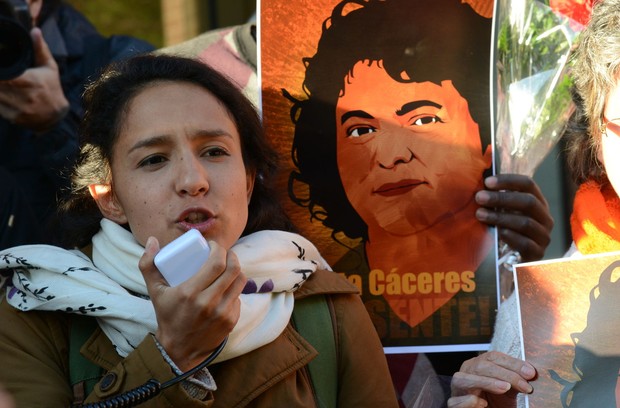
Speaking through the megaphone: Berta Zúñiga Cáceres (daughter of Berta Cáceres). Photo Daniel Cima (CC)
This contrasted strongly with the words of CABEI President Dante Mossi, who described his bank’s lending money to Agua Zarca (prior to his term of office) as a “disgrace”. He told the Organized Crime and Corruption Reporting Project (OCCRP) that “If I were president [at the time] this project would never have been accepted because I know this is communal land, you cannot buy a plot of land in that region.”
But in CABEI exiting the Agua Zarca project, Mossi recommended that the bank’s board sell their debt in the project (DESA had stopped repaying its loan shortly after the Cáceres assassination) and donate the US$500,000 they gained to the Honduran government’s socialization campaign to gain indigenous support for a draft law that would reactivate the Honduran energy sector. The draft law limited FPIC, overcoming the limitations imposed by ILO 169, and received intense opposition from Honduran indigenous groups.
The debt sale passed control of the dam concession to Guillermo Bueso, a former friend of Mossi, and CEO of powerful Honduran bank Banco Atlantida, threatening the reactivation of the Agua Zarca project, the concession for which was granted for 50 years. According to Contracorriente, the OCCRP partner in Honduras, “the banking group headed by Bueso is known for having obtained concessions for 14 river sub-basins in Honduras for the development of energy generation and water collection for private consumption”. As the Lenca communities along the Gualcarque remain poised for the potential return of dam-building, the Lenca community of Reitoca also faces the potential return of another stalled hydro-dam project.
A Honduran arrest warrant that was issued for Daniel Atala Midence, Chief Financial Officer of DESA, for alleged involvement in the murder of Berta Cáceres remains pending as he remains in hiding, allegedly in El Salvador. Neither the influential Atala family nor the international banks have yet been held to account, and the ignoring of FPIC in the “green transition” remains a global phenomenon.
A March 2025 meeting in Indonesia of 32 indigenous leaders from 13 countries saw delegates conclude that despite indigenous peoples’ rights being “increasingly embedded into the certification standards, in practice, certification schemes covering commodities such as palm oil, timber, minerals, carbon credits, and renewable energy are routinely failing Indigenous Peoples.”
The leaders produced a declaration with recommendations for states, businesses, NGOs, UN bodies, financial institutions, certification schemes, and to buyers and sellers in supply chains, including the key demand that auditors be “financially decoupled from the entities they are auditing”. Robeliza Halip, Coordinator of the Right Energy Partnership With Indigenous Peoples which helped convene the meeting, said “In too many cases, these certification seals are being used as rubber stamps for human rights abuses. While companies display these badges of honor, our communities face increasing violence, land grabs, and the destruction of our sacred sites.”
On the ground in Honduras, river defenders continue to confront a coalition of international finance, Honduran military and ex-military actors, and hired assassins. When his organization was awarded the Moffit Letelier Human Rights Award for attempting to protect the rivers of northeastern Honduras, the activist Juan Lopez consciously echoed Berta Cáceres, telling the audience in Washington: “Humanity, we are out of time!” He was assassinated in September last year. The intellectual authors of his killing remain at large.
1925: Following attempts by inhabitants of the department of Santa Barbara to buy the land title to the Lenca inhabited area around the Gualcarque river, the title holder donates the land to the department of Intibuca for the use of local people.
1942: Residents of Santa Barbara again attempt unsuccessfully to take control of Lenca community of Rio Blanco. Local community-member Pablo Gutierrez is killed in the conflict.1
1990: as a condition of the structural adjustment program promoted by the World Bank and IDB, a new law regulating municipalities, replacing the previous 1927 law, was passed. In Article 70 of this law, municipal governments were granted the authority to sell ejidal lands.27 The directive to sell off ejidal lands was repeated in the Law for Modernization of the Agricultural Sector of 1992, also closely related to the structural adjustment program.
The 1990 Municipalities Law and the 1992 Agricultural Sector Modernization accelerated encroachment into indigenous lands. Government functionaries across Honduras extended titles to outsiders to the indigenous communities.
1994: Honduras ratified the International Labor Organization’s Indigenous and Tribal Peoples Convention 169. Judicial hierarchy in Honduras prioritizes ratified international treaties over law decrees, as directly stated in Article 66 of the Municipalities Law.
2005: Helicopters circle the dam site and drop markers.2
2007: David Castillo, a US-trained former Army intelligence officer, later jailed for 22 years for involvement in the murder of Berta Cáceres, and member of the Armed Forces Intervention Board in the National Electric Energy Company (ENEE), learned of the state’s plans for the exploitation of the Gualcarque River and used this information to create “Agua Zarca” (Agua Zarca) with Carolina Castillo.
2007: The Community Council of La Tejera, Rio Blanco, passes a resolution to inform the Municipal Council that they do not want to negotiate the use or sale of their natural resources.3
28 June 2009: Military coup against reform-minded Honduran president Manuel Zelaya. The post-coup government is given US support in reestablishing its international legitimacy.
September 2010: Post-coup Congress, led by future president Juan Orlando Hernandez, awards 47 hydro-dam concessions without consulting the communities affected. Hernandez is now serving a 45 year sentence in the US for drug-trafficking and weapons offenses.
October 2010: COPINH informs the community of Rio Blanco of the government’s awarding of a dam concession without informing them. Close to 500 community members hold an assembly expressing their rejection of the decision. COPINH files a complaint with the Special Prosecutor for Ethnic Groups denouncing the Congress for violating ILO Convention 169.
December 2010: Officials of the Secretary of Natural Resources and the Environment (SERNA) hold a meeting evaluating the dam with local authorities from the neighboring municipality of San Francisco de Ojuera. No one from the community of Rio Blanco or its municipality of Intibuca is present. DESA and the Honduran government later claim that this event was a consultation of the Rio Blanco people.4
25 March 2011: SERNA issues a 50-year environmental license for the Agua Zarca project to DESA. Neither DESA’s initial environmental application not SERNA’s 2010 evaluation mentions Rio Blanco or indigenous people.5
11 April 2011: Mayor of Intibuca, Martiniano Dominguez, visits La Tejera, Rio Blanco, seeking the community’s support for the dam project, which they reject. He ignores their opposition, and in December 2011 issues a construction permit. He is tried in 2018 for abuse of authority but aquitted.
March 2013: The community of Rio Blanco finds “No Entry”, “Swimming Prohibited”, and “Caution: Area under Construction” signs, and armed security guards preventing them from accessing the river. Heavy equipment appears and tractors destroy the community’s crops as they move to dam the river.6
1 April 2013: The community of Rio Blanco, together with COPINH, establish a road block preventing construction of the dam.
17 May 2013: The Honduran Police and Army repeatedly try to remove the road block, and also establish a base in the DESA camp where they reportedly conduct joint patrols with DESA’s security guards.7 The DESA security guards are led by School of the Americas graduate and former Air Force lieutenant Douglas Geovanny Bustillo, who would later be sentenced to 30 years in prison for his role in the murder of Berta Cáceres.
24 May 2013: The vehicle of Berta Cáceres and Tomas Gomez of COPINH is stopped on a road leading out of Rio Blanco by 15-20 soldiers who are soon joined by Police in vehicles belonging to DESA. The security forces claim to find an unregistered weapon in the bed of the pickup truck Cáceres is driving and charge her with illegal weapons possession. Cáceres claims the weapon was planted but must report weekly while in preventative detention.
28 June 2013: US Ambassador to Honduras, Lisa Kubiske, calls on Honduran government to prosecute those who promote land occupations, stating that “the government should guarantee a functional justice system to proceed against those who encourage campesinos to invade lands.”
2 August 2013: Honduran Public Prosecutors office formalized charges against the three internationally recognized leaders of the Lenca organization COPINH, marking what appears to be the first time that leaders of an organization have been charged with the intellectual authorship or instigation of a protest action.
July 2013: Tomás García, a community leader of Río Blanco, is shot and killed by a soldier during a march to the DESA camp.
5 September 2013: Legal complaint filed against DESA by affected communities.8
27 February 27 2014: Dutch development bank FMO and Finnish development financier, Finnfund, agree to loan $20,000,000 to finance the Agua Zarca project, while the Central American Bank for Economic Integration (CABEI), whose former Honduran director was former DESA board member José Eduardo Atala Zablah, loaned $24,400,000, according to The Intercept.
5 March 2014: María Santos, sister of Tomás García and aunt of the gunshot-wounded son, attacked by seven men with machetes.
April 2015: In accepting the 2015 Goldman Environmental Prize, Berta Cáceres says: “Let us wake up humanity! We are out of Time! We must shake our conscience free of the rapacious capitalism, racism, and patriarchy that will only assure our own self-destruction.”
3 March 2016: Berta Cáceres is killed in her home by armed assailants.
15 March 2016: COPINH activist Nelson Garcia assassinated.
6 July 2016: COPINH anti-dam activist Lesbia Yaneth Urquia assassinated.
November 2016: The International Advisory Group of Experts (GAIPE) comprised of legal specialists is established to conduct an independent, objective, and impartial analysis of the events that occurred against Berta Cáceres, and to “establish the patterns and modus operandi that led to this murder and that affected other members of COPINH.”
July 2017: European development banks FMO (Netherlands) and Finnfund (Finland) withdraw from the Agua Zarca Project, and through forgiving the loan to the project effectively gift it US$6.1 million.
December 2017: Pineda is voted out of office as mayor of San Francisco de Ojuera following local cross-party opposition to corruption. A fire subsequently erupts in the municipal office, destroying records.
November 2018: Sergio Ramón Rodríguez, DESA Communities and Environment Manager, and six other men found guilty of murdering Berta Cáceres.
16 July 2019: Members of the Rio Blanco community receive threats and see their food crops intentionally destroyed, affecting 25 families.
5 July 2021: David Castillo, CEO of DESA, found guilty of involvement in murder of Berta Cáceres and is later convicted to 22 years in prison. It is the first time that a businessman is convicted in Honduras for the murder of an indigenous leader in the context of the imposition of an extractive project.
June 2022: COPINH files a criminal complaint in the Netherlands against Dutch development bank FMO for “complicity in corruption, embezzlement, money laundering and violence” during its involvement in the Agua Zarca project. According to FMO an attempt to find a settlement is ongoing.
December 2023: Honduran arrest warrant issued for Daniel Atala Midence, CFO of DESA, for involvement in the murder of Berta Cáceres. The suspect, from the powerful Atala Zablah family, fled justice and remains in hiding.
3 May 2024: Former mayor Raúl Pineda found guilty of usurping public functions and falsifying documents. DESA CEO David Castillo and former ENEE official Carolina Castillo found guilty of fraud.
14 September 2024: Honduran anti-mining activist and river defender Juan Lopez, who had echoed the words of Berta Cáceres in accepting the Moffit Letelier Award on behalf of his organization, is shot dead. The intellectual author of his killing remains unidentified.
February 2025: The Interdisciplinary Group of Independent Experts (GIEI) is established through agreement between the Honduran government, COPINH, The Centre for Justice and International Law (CEJIL), and the Inter-American Commission on Human Rights, to advance the investigation into the intellectual authorship of the murder of Berta Cáceres.
30 June 2025: Raúl Pineda and Plutarco Mejía Cardona found guilty of ignoring indigenous people’s rights in authorizing construction of the Agua Zarca dam.
Across the world right now, Indigenous peoples are facing a renewed assault on their lands, rights, and ways of life.
From extractive industries pushing deeper into ancestral territories, to governments rolling back hard-won protections,
the threat is global—and it is growing.
What makes this moment especially dangerous is how little attention it receives.
Stories like this are disappearing in real time. Mainstream media
barely covers it and the coverage is fragmented. The public is left without the context
needed to understand what is truly at stake.
That is exactly why IC Magazine exists..
For more than 20 years, IC has reported on Indigenous struggles worldwide — consistently, independently, and without compromise.
We don’t follow news cycles; we trace patterns. We don’t sensationalize; we provide context.
And when the world looks away, we stay focused.
But this work is increasingly difficult to sustain.
We refuse to lock our reporting behind a paywall. We don’t sell access through subscriptions.
And we don’t answer to advertisers. IC Magazine survives solely because readers like you choose to
support independent Indigenous journalism.
Please donate today if you can. Every contribution helps us to continue this crucial work.
Thank you,
John Ahni Schertow
Founder and Editor in Chief