Last Updated on May 19, 2019
Collusion between the U.S. Government and Wall Street to deprive Native Americans of their treaty-guaranteed property goes back to the beginning of the country. Over two and a half centuries, that collusion has comprised both brutal coercion and devious subterfuge, ethnic cleansing coinciding with kidnapping and religious persecution.
While alienating indigenous property in the past entails many broken promises and treaties between the United States and American Indian tribes, the failure to prosecute corporate criminality on Indian reservations in the present is a symptom of the demise of the rule of law in the US that undermines the U.S. Constitution and protections that guard against corporate corruption of governance at all levels. As indigenous governments in the United States assert jurisdiction over their resources under national and international law, the corrupting influence of Wall Street threatens not only Indians and their sacred grounds, but democracy itself.
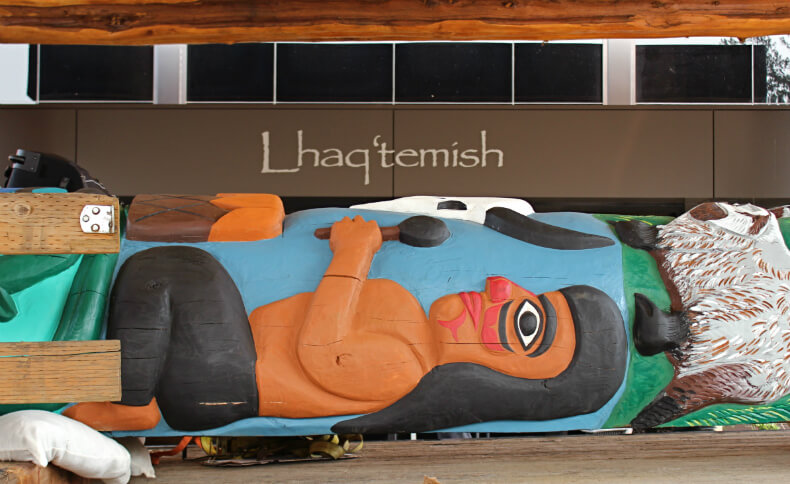
As Jewell Praying Wolf James writes in his August 2013 special supplement to Whatcom Watch, The Search for Integrity in the Conflict Over Cherry Point as a Coal Export Terminal, the Lummi Indian Tribe ancient village and burial ground at Cherry Point is in the way of progress. As such, Pacific International Terminals, its financial backer Goldman Sachs, and Edelman — the world’s biggest public relations firm — have their work cut out for them.
Having recently settled a $1.6 million lawsuit for illegally and intentionally bulldozing the ancient Cherry Point Lummi village of Xwe’chi’eXen — the first archaeological site placed on the Washington State Register of Historic Places — Pacific International Terminals is actively seeking to corrupt local and tribal elections, as well as influence members of Congress. While PIT — one of the largest marine operators in the world — was able to avoid criminal prosecution for desecrating sacred Lummi grounds, it isn’t leaving anything to chance when it comes to securing approval for its project on Lummi Reservation lands previously stolen by U.S. Bureau of Indian Affairs agents on behalf of illegal white settlers.
History, as they say, has a way of repeating itself.
Across the world right now, Indigenous peoples are facing a renewed assault on their lands, rights, and ways of life.
From extractive industries pushing deeper into ancestral territories, to governments rolling back hard-won protections,
the threat is global—and it is growing.
What makes this moment especially dangerous is how little attention it receives.
Stories like this are disappearing in real time. Mainstream media
barely covers it and the coverage is fragmented. The public is left without the context
needed to understand what is truly at stake.
That is exactly why IC Magazine exists..
For more than 20 years, IC has reported on Indigenous struggles worldwide — consistently, independently, and without compromise.
We don’t follow news cycles; we trace patterns. We don’t sensationalize; we provide context.
And when the world looks away, we stay focused.
But this work is increasingly difficult to sustain.
We refuse to lock our reporting behind a paywall. We don’t sell access through subscriptions.
And we don’t answer to advertisers. IC Magazine survives solely because readers like you choose to
support independent Indigenous journalism.
Please donate today if you can. Every contribution helps us to continue this crucial work.
Thank you,
John Ahni Schertow
Founder and Editor in Chief