Last Updated on November 11, 2025
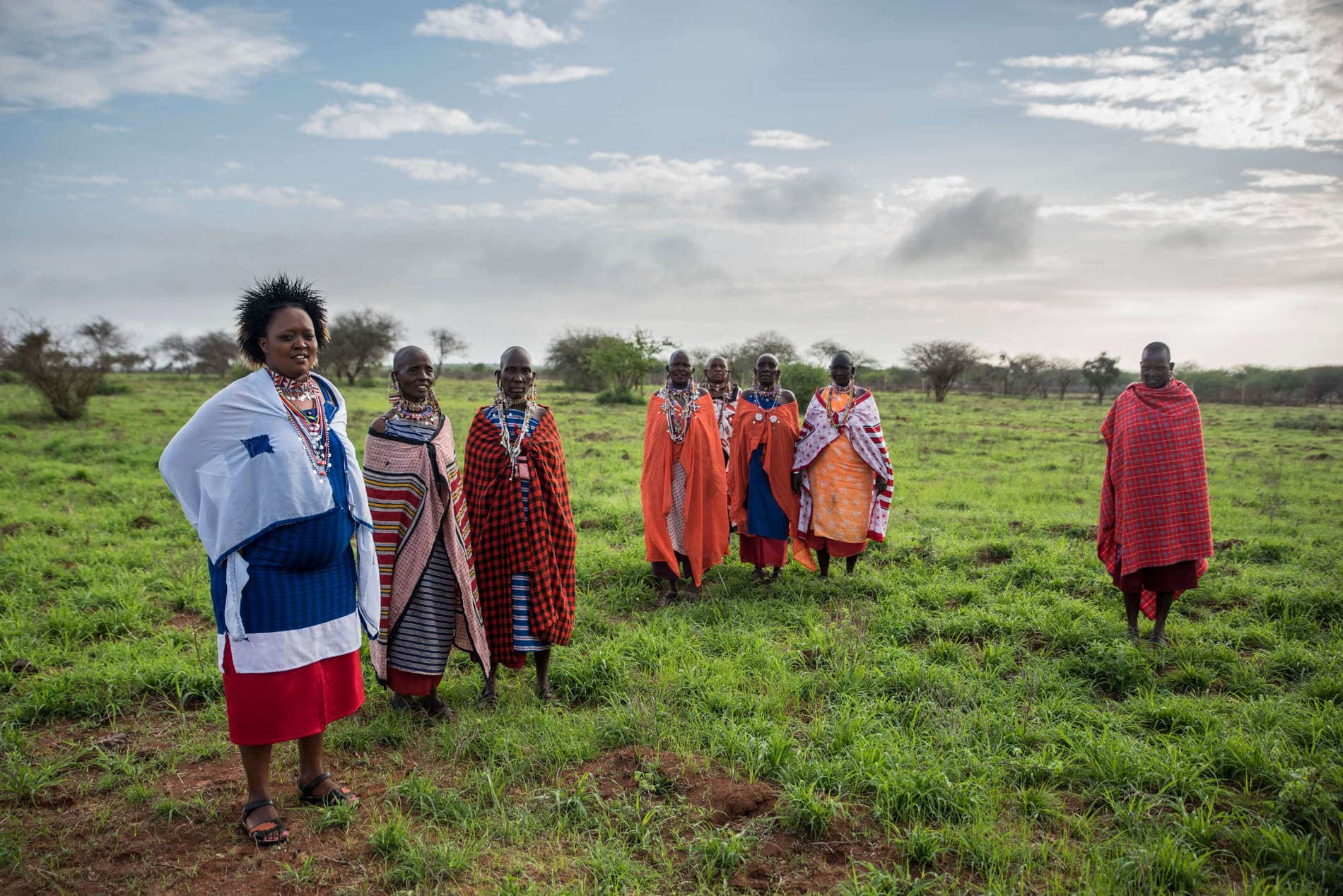
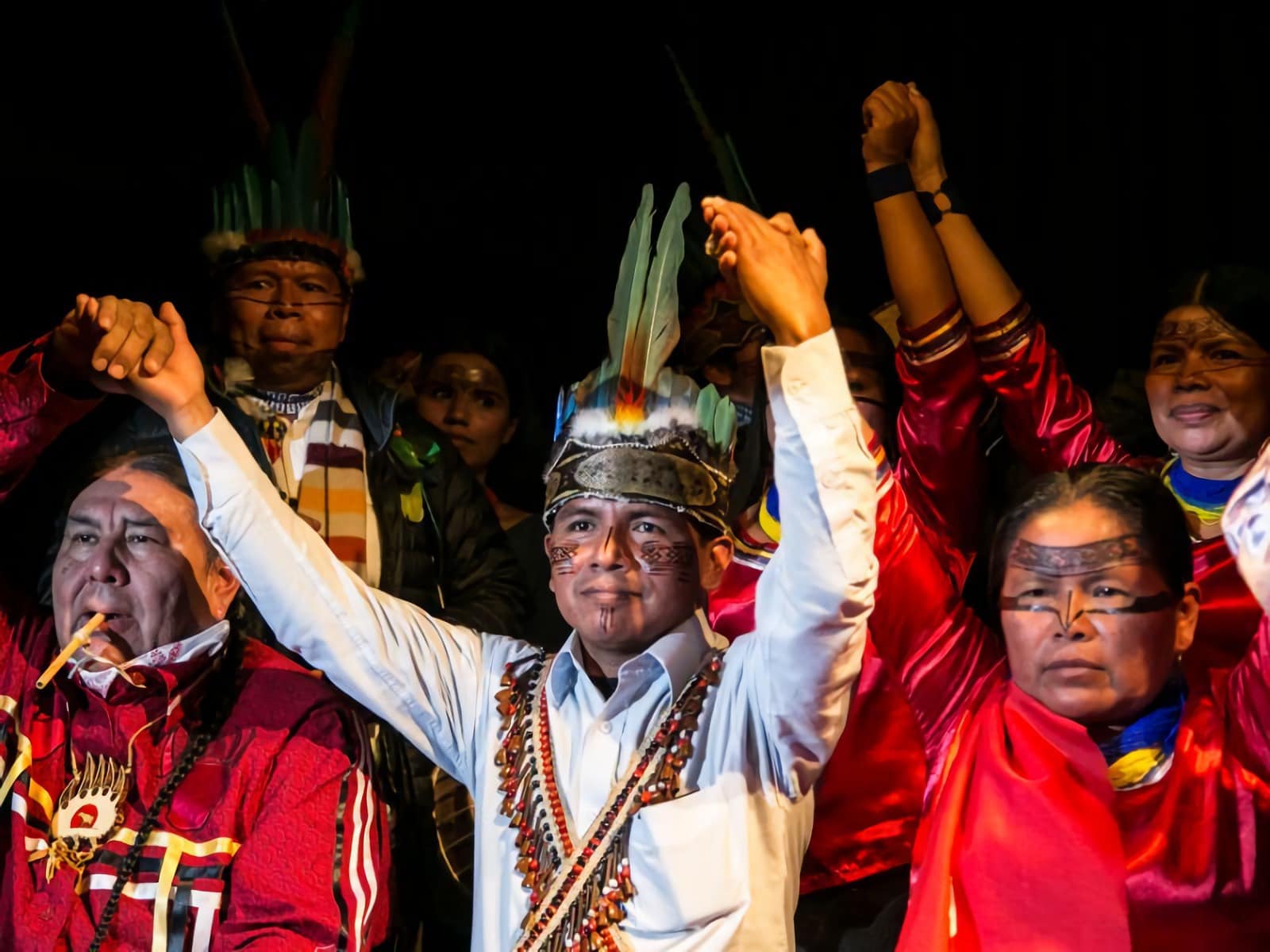
A sweeping new report by Earth Insight and the Global Alliance of Territorial Custodians (GATC) exposes mounting industrial pressures on Indigenous Peoples and local communities (IPLCs) who collectively safeguard nearly one billion hectares of tropical forest.
Published in five languages, the report combines geospatial mapping, community data, and field-based case studies from the Amazon, Congo Basin, Indonesia, and Mesoamerica — regions home to some 35 million Indigenous and local community members.
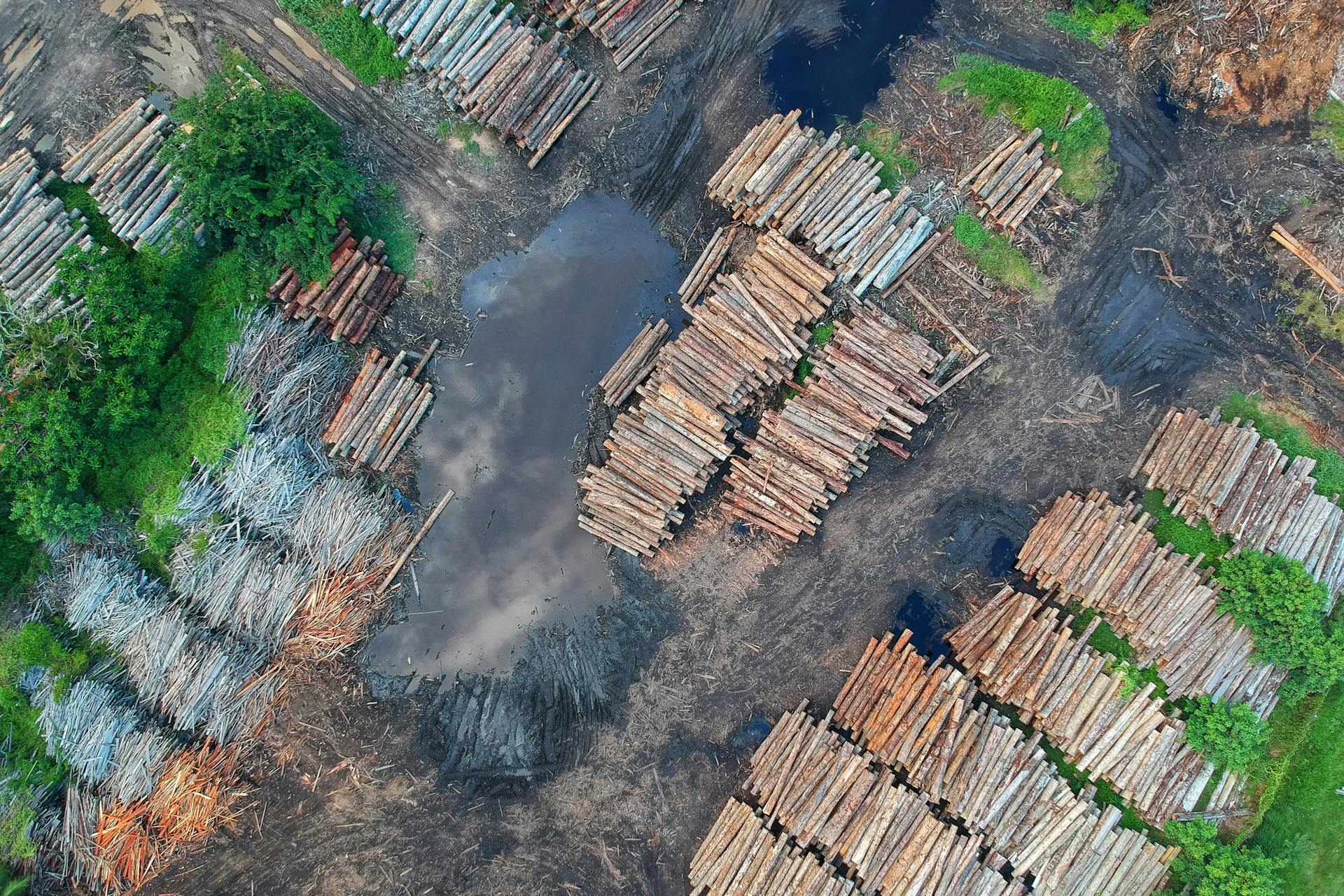
According to the report, there is a systemic pattern of policies and investments that reward extraction while sidelining Indigenous governance. Despite decades of evidence showing that deforestation rates are significantly lower in Indigenous-managed territories, governments continue to issue new concessions on these lands—often without the free, prior, and informed consent (FPIC) required under international law.
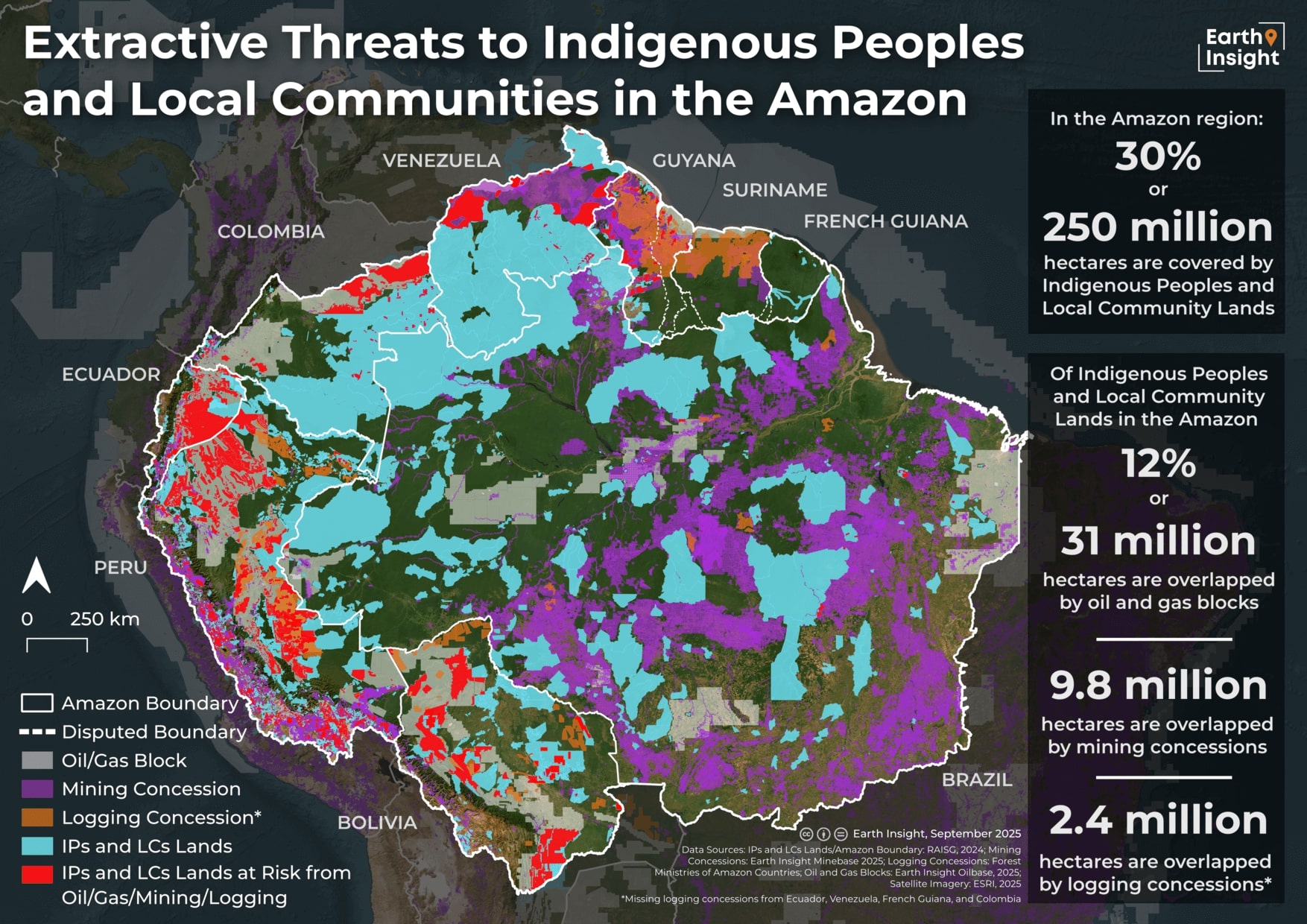
In the Amazon region alone, 31 million hectares (about 12%) of Indigenous territories overlap oil and gas blocks, and nearly 9.8 million hectares overlap mining concessions.
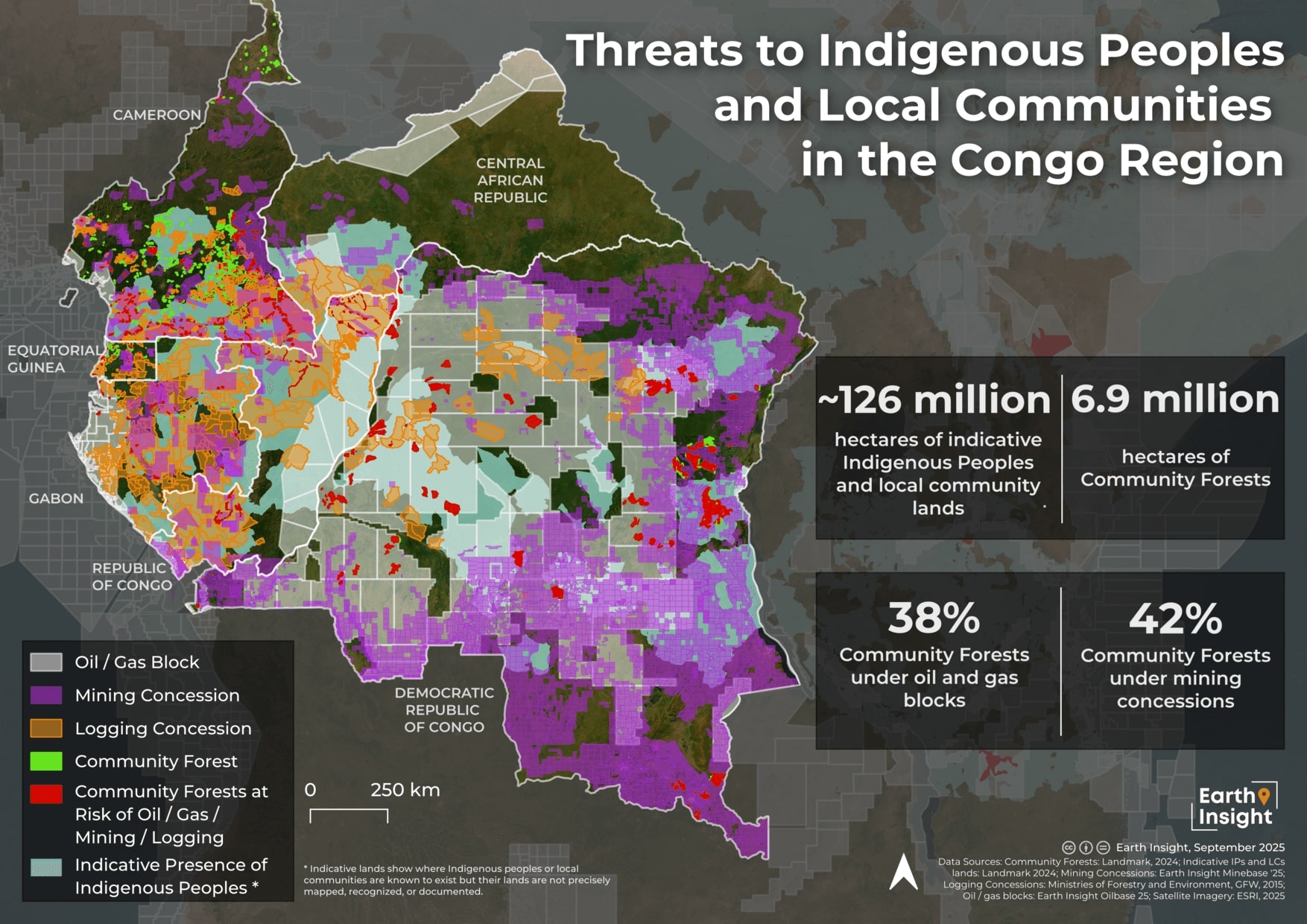
In the Congo Basin, 38% of community-managed forests are subject to overlaps with oil and gas concessions—imperiling peatlands key to carbon storage.
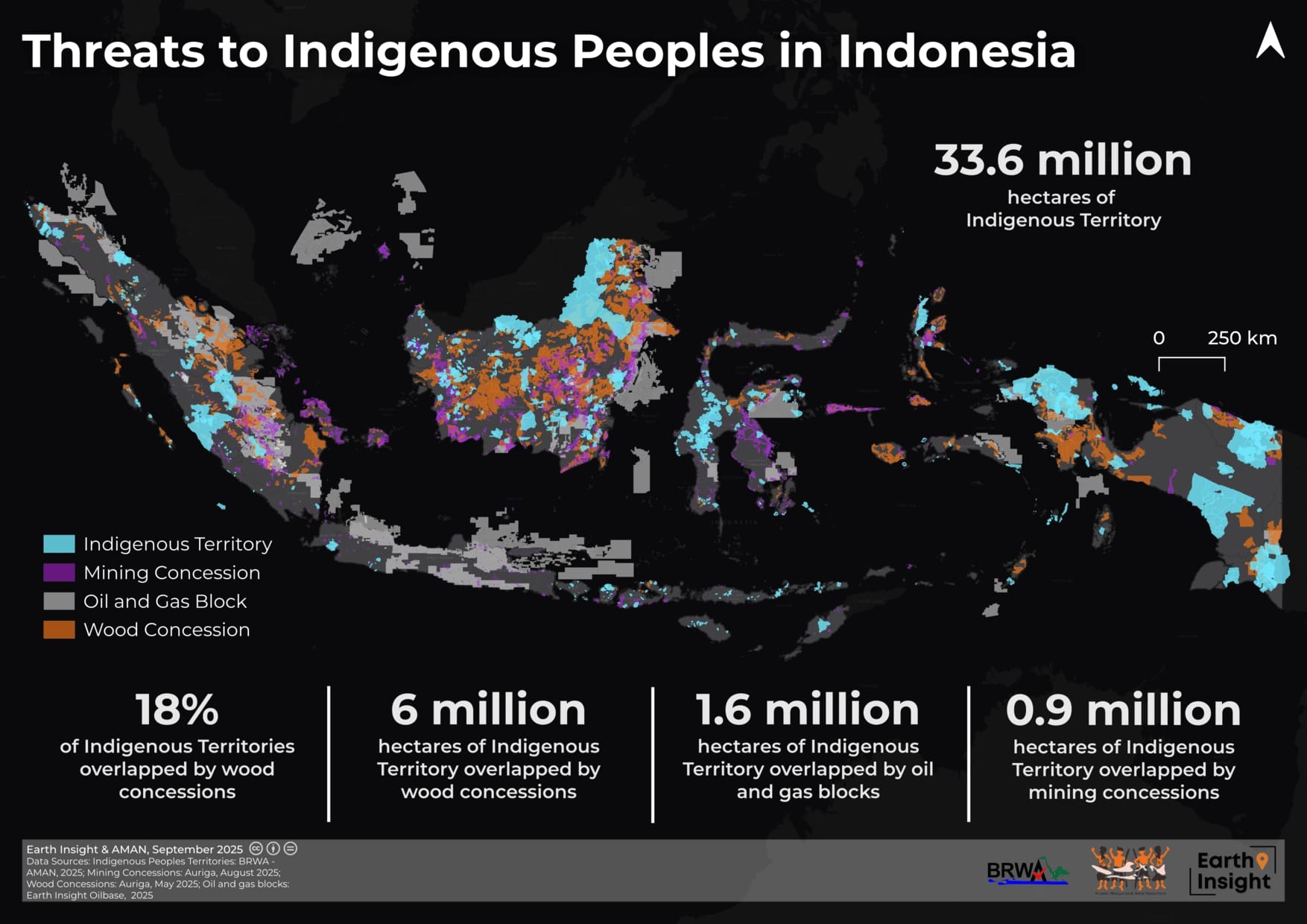
In Indonesia, 18% of Indigenous territories are impacted by timber concessions; meanwhile nickel extraction threatens isolated communities such as the O’Hongana Manyawa.
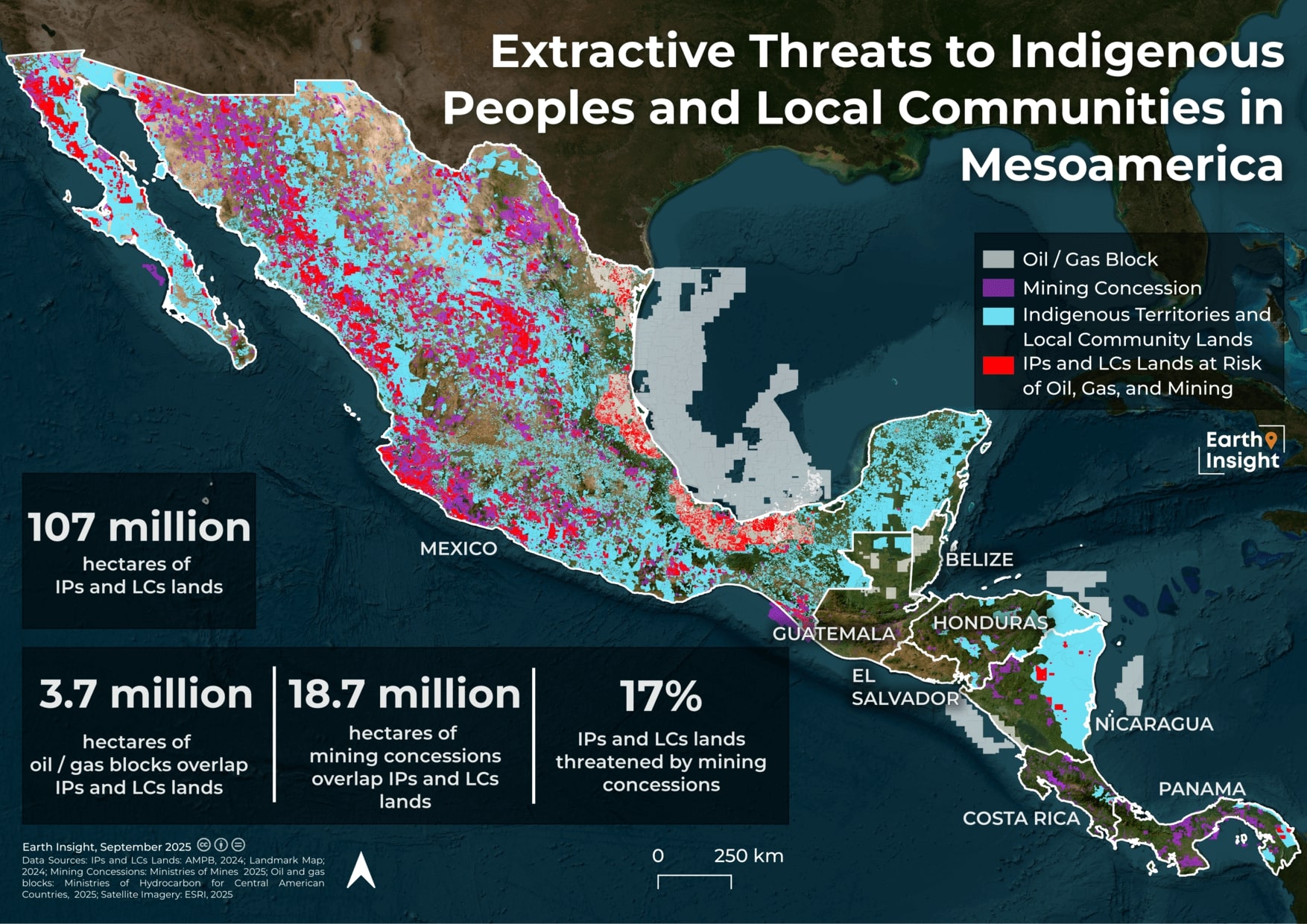
In Mesoamerica, almost 4 million hectares of Indigenous lands are overlapped by oil and gas blocks, and 19 million hectares (17 %) by mining concessions.
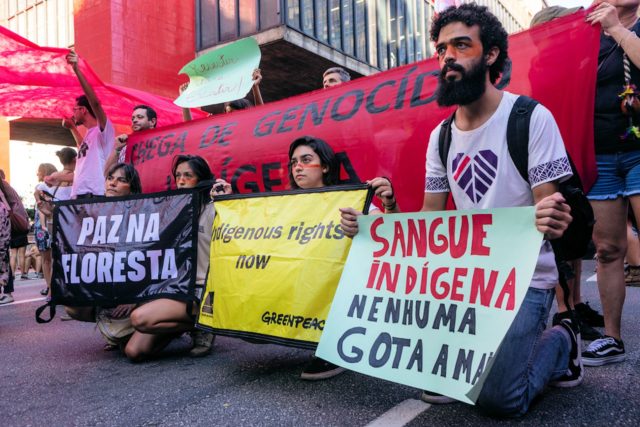
Between 2012 and 2024, at least 1,692 environmental defenders in GATC countries were murdered or disappeared, including 208 tied to extractive industries and 131 to logging.
The report frames this scenario as a “land-scape of crisis” — where despite the proven stewardship of IPLCs in maintaining intact forests (often outperforming state and private management), mounting industrial pressures threaten to unravel hard-won protections.
Many of these pressures stem from legacies of colonial dispossession and state-led resource extraction, but it is being amplified by global demands for “green” commodities, infrastructure for the energy transition, and agribusiness expansion.
Against this backdrop, the authors have outlined a five-point roadmap for transformation:
In short, the report challenges governments, corporations, and funders to move beyond symbolic commitments and fundamentally restructure how conservation, development, and climate finance operate. That means redirecting power and resources to the communities who have protected these lands for generations, and embedding Indigenous stewardship at the center—not the margins—of global environmental strategy.
As the report makes clear, even the most remote forests are under siege, and even the strongest Indigenous protections remain perilously exposed without structural change.
The future of the planet’s remaining tropical forests—and the climate stability they sustain—will depend on whether the world finally heeds what Indigenous peoples have been saying all along.
Across the world right now, Indigenous peoples are facing a renewed assault on their lands, rights, and ways of life.
From extractive industries pushing deeper into ancestral territories, to governments rolling back hard-won protections,
the threat is global—and it is growing.
What makes this moment especially dangerous is how little attention it receives.
Stories like this are disappearing in real time. Mainstream media
barely covers it and the coverage is fragmented. The public is left without the context
needed to understand what is truly at stake.
That is exactly why IC Magazine exists..
For more than 20 years, IC has reported on Indigenous struggles worldwide — consistently, independently, and without compromise.
We don’t follow news cycles; we trace patterns. We don’t sensationalize; we provide context.
And when the world looks away, we stay focused.
But this work is increasingly difficult to sustain.
We refuse to lock our reporting behind a paywall. We don’t sell access through subscriptions.
And we don’t answer to advertisers. IC Magazine survives solely because readers like you choose to
support independent Indigenous journalism.
Please donate today if you can. Every contribution helps us to continue this crucial work.
Thank you,
John Ahni Schertow
Founder and Editor in Chief