
Last Updated on March 13, 2013
Next month, the Tohono O’odham will be hosting the 2nd Indigenous Peoples’ Border Summit of the Americas. It will run from November 7-10 at the San Xavier Community Center, 2018 W. San Xavier Rd, Tohono O’odham Nation.
Hopefully this years Summit will be once again broadcast live on the net. (It was broadcast last year, I believe thanks to www.earthcycles.net)
Below you will find the open invasion (oops, I meant invitation) and provisional agenda, courtesy of treatycouncil.org
INVITATION AND ANNOUNCEMENT
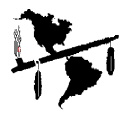 We are honored and pleased to invite you to the “Indigenous Peoples’ Border Summit of the Americas II” from November 7-10, 2007 at the San Xavier Community Center, 2018 W. San Xavier Rd, Tohono O’odham Nation. It is hosted and coordinated by the San Xavier Tohono O’odham District Community.
The “Indigenous Peoples’ Border Summit of the Americas II” will provide the opportunity for Indigenous peoples of the border regions to exchange experiences and information about how the international borders impact their respective communities. It will also create a way to unite Indigenous Peoples to address and resolve issues of mutual concern affecting our traditional homelands, cultural and ceremonial practices, sacred sites, treaty rights, health and way of life.
The San Xavier Community/District previously hosted border summits in 1989 and 2006, recognizing the critical issues facing the Tohono O’odham and other indigenous nations divided by international borders (US/Mexico/Canada). By again hosting an “Indigenous Peoples’ Border Summit of the Americas”, San Xavier Community wants to promote the human rights of indigenous peoples and support each other in our common struggles.
The International Indian Treaty Council (IITC) is co-sponsoring the Summit, and will be the fiscal sponsor. The IITC is an organization of Indigenous Peoples from North, Central, South America and the Pacific, working for the sovereignty and self-determination of Indigenous Peoples and the recognition and protection of Indigenous rights, Treaties, traditional cultures and sacred lands. IITC representatives will provide training and updates on new developments at the United Nations during the Summit, including the recent adoption of the United Nations Declaration on the Rights of Indigenous Peoples and how we can use the UN to hold countries, including the US, accountable for human rights violations.
The “Indigenous Peoples’ Border Summit of the Americas II”, will build awareness and educate all peoples about the impacts of polices and practices being carried out along the borders. We hope that you, your Nations and your organizations can participate and we look forward to seeing you in the San Xavier Community in November, 2007. Should you have any questions or need additional information please contact: Kim Garcia at (520) 573-4000 or by e-mail at kgarcia@waknet.org or Mike Flores, (520) 235-2406, email: Michaelflores_@hotmail.com. Thank you for your interest.
Across the world right now, Indigenous peoples are facing a renewed assault on their lands, rights, and ways of life.
From extractive industries pushing deeper into ancestral territories, to governments rolling back hard-won protections,
the threat is global—and it is growing.
What makes this moment especially dangerous is how little attention it receives.
Stories like this are disappearing in real time. Mainstream media
barely covers it and the coverage is fragmented. The public is left without the context
needed to understand what is truly at stake.
That is exactly why IC Magazine exists..
For more than 20 years, IC has reported on Indigenous struggles worldwide — consistently, independently, and without compromise.
We don’t follow news cycles; we trace patterns. We don’t sensationalize; we provide context.
And when the world looks away, we stay focused.
But this work is increasingly difficult to sustain.
We refuse to lock our reporting behind a paywall. We don’t sell access through subscriptions.
And we don’t answer to advertisers. IC Magazine survives solely because readers like you choose to
support independent Indigenous journalism.
Please donate today if you can. Every contribution helps us to continue this crucial work.
Thank you,
John Ahni Schertow
Founder and Editor in Chief


