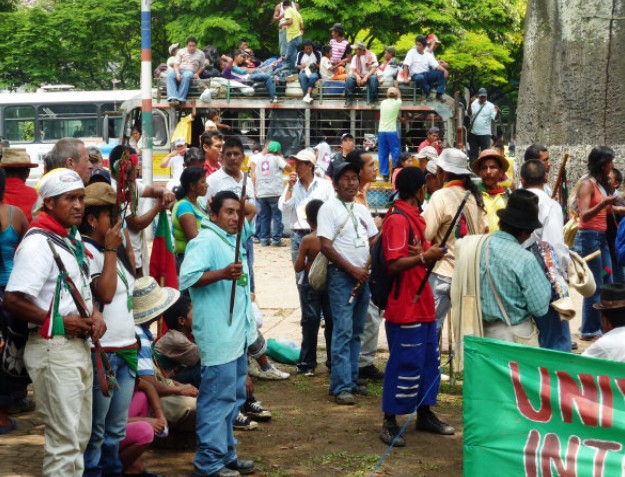
The Huitoto Peoples, also known as Witoto, are an Indigenous group native to the northwestern Amazon region of Colombia and parts of Peru. Traditionally semi-nomadic and deeply connected to their rainforest environment, the Huitoto sustain their culture through spiritual ceremonies, storytelling, and communal life. Their belief system emphasizes harmony with nature, with rituals often centered around the use of sacred plants like tobacco and coca. Their language family includes several dialects, and they have a strong oral tradition that preserves ancestral knowledge and cosmology.
The Huitoto face severe challenges due to land dispossession, armed conflict, and environmental degradation. During the rubber boom in the late 19th and early 20th centuries, thousands of Huitoto were enslaved and killed in one of the region’s worst human rights atrocities. In recent decades, armed conflicts involving guerrilla groups, drug cartels, and paramilitary forces have displaced many Huitoto communities. Additionally, illegal logging, mining, and oil extraction threaten their rainforest homeland, disrupting traditional lifestyles and access to natural resources.
Despite these adversities, the Huitoto peoples are leading efforts to preserve their culture and protect the Amazon. They have engaged in community-led education initiatives to teach younger generations their languages, traditional medicines, and ecological practices. Many Huitoto leaders are also at the forefront of environmental activism, working with global organizations to defend Indigenous land rights and biodiversity. Their spiritual worldview, which sees the forest as a living entity, offers an inspiring model for sustainable living and ecological stewardship in an era of climate crisis.