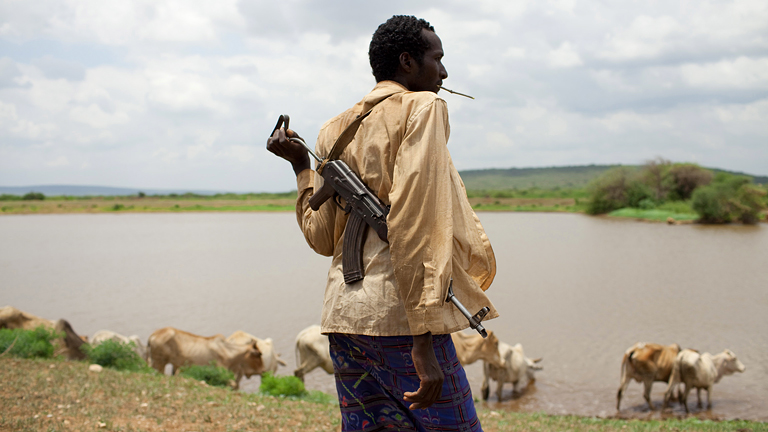
The Nyangatom are a semi-nomadic community residing in the remote Omo Valley of southwestern Ethiopia, near the borders with South Sudan and Kenya. Their livelihood is rooted in pastoralism, relying on cattle for food, social status, and spiritual practice. The Nyangatom also cultivate sorghum along the Omo River and are known for vibrant body adornments, scarification rituals, and oral traditions that preserve ancestral knowledge and social cohesion across generations.
In recent years, the Nyangatom have faced serious challenges from large-scale land grabs, dam construction, and forced resettlement programs. The building of the Gibe III dam has altered the flow of the Omo River, reducing access to fertile floodplains essential for farming. Additionally, militarized borders and resource competition have intensified tensions with neighboring communities. Limited access to healthcare, education, and political representation further marginalizes Nyangatom families in the face of rapid change and state-imposed development.
Despite these hardships, the Nyangatom continue to show remarkable resilience by adapting traditional practices to shifting ecological and political landscapes. Women play a critical role in maintaining cultural continuity through song, storytelling, and caregiving. Youth are increasingly bridging generations by learning both ancestral knowledge and modern tools of advocacy. Through their unwavering connection to land, livestock, and heritage, the Nyangatom stand as a testament to the enduring strength of Indigenous lifeways amid external pressures.