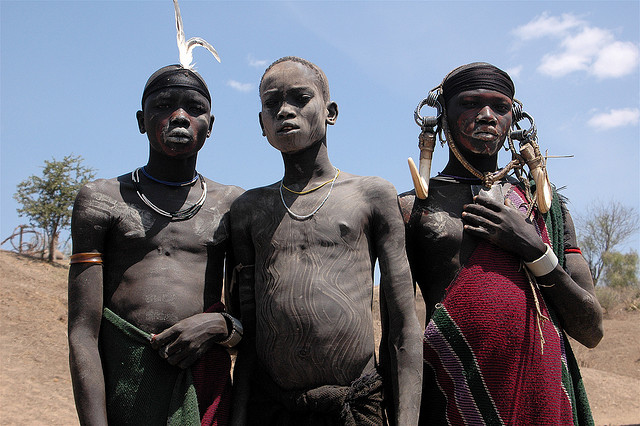
The Suri inhabit the remote and rugged terrain of southwestern Ethiopia’s Omo Valley, where they are known for their deep knowledge of the land and its natural rhythms. Distinctive cultural expressions such as elaborate body painting, lip plates, and scarification mark important stages of life and identity. Their way of life is centered on cattle herding, which holds both economic and spiritual significance, and is passed down through generations with deep reverence.
The Suri face growing threats from large-scale land acquisitions, resource extraction, and state-sponsored agricultural projects that undermine their access to grazing and water. Encroachment from outside interests has led to forced displacement, conflict, and restrictions on traditional practices. Additionally, militarized interventions and a lack of political representation make it difficult to protect their ancestral territory and sustain their cultural autonomy in an increasingly globalized environment.
Despite these pressures, the Suri continue to resist cultural erosion through strong communal bonds and commitment to traditional education. Their intricate body art and ceremonial rituals are not only acts of heritage but symbols of defiance and resilience. By maintaining self-determined practices and fostering intergenerational teaching, the Suri demonstrate how indigenous knowledge systems can remain vital and empowering even amid profound external challenges.