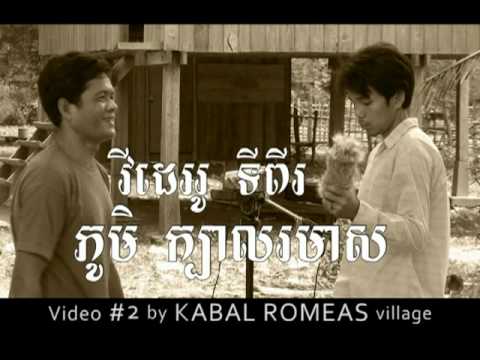
The Brao people are an Indigenous ethnic group living primarily in northeastern Cambodia and southern Laos, particularly in the provinces of Ratanakiri and Attapeu. They are part of the larger Mon-Khmer ethnolinguistic family and speak various Brao dialects, including Kreung, Kavet, and Lun. Traditionally, the Brao are subsistence farmers and foragers, practicing shifting cultivation, hunting, and gathering in the forested highlands. Their spiritual life is deeply connected to animism and ancestral worship, with sacred rituals and communal ceremonies playing a central role in their culture.
The Brao face numerous challenges, many stemming from land dispossession, deforestation, and marginalization. Large-scale land concessions for mining, logging, and agribusiness have led to the loss of ancestral territories, threatening their food sovereignty and cultural practices. Additionally, government policies in both Cambodia and Laos often neglect Indigenous rights, resulting in limited access to education, healthcare, and political representation. Language erosion is another major issue, as younger generations are increasingly assimilated into dominant Khmer and Lao cultures.
Despite these pressures, the Brao people continue to demonstrate remarkable resilience in preserving their way of life. Local leaders and Indigenous advocates are working to document Brao languages, protect sacred forests, and assert land rights through community mapping and legal advocacy. Traditional knowledge systems—especially related to ecological stewardship and herbal medicine—remain strong and are increasingly recognized as vital to sustainable development. The Brao’s determination to protect their identity and environment offers an inspiring example of Indigenous strength and adaptation in the face of adversity.