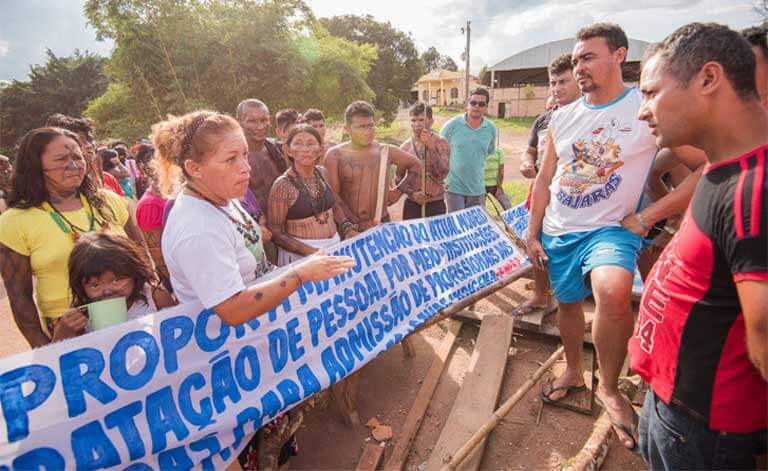
The Munduruku are an Indigenous nation native to the Brazilian Amazon, primarily along the Tapajós, Cururu, and Madeira rivers. With a population numbering in the tens of thousands, they maintain a complex social structure and a language from the Tupian family, which they actively preserve through oral tradition and education. The Munduruku worldview is deeply intertwined with the rainforest, rivers, and ancestral territories that sustain their spiritual and physical lives. Their land is not only a source of food and shelter but a living archive of history, mythology, and ecological knowledge passed down through countless generations.
The Munduruku face mounting threats from illegal logging, gold mining, and large-scale hydroelectric projects that encroach on their territories. These activities lead to deforestation, water contamination, and violence against community leaders who resist exploitation. Despite constitutional rights to their land, the slow pace of demarcation and political indifference leave them vulnerable to environmental destruction and cultural displacement. Their struggle is compounded by health crises brought on by mercury pollution and a lack of adequate state support, especially in remote areas where basic services remain out of reach.
What makes the Munduruku especially inspiring is their strategic and united resistance. They have successfully halted several dam projects through organized protests, legal action, and international alliances. Cultural education initiatives led by elders and youth alike are reinforcing language fluency and traditional knowledge. The Munduruku are also leveraging technology—using drones, maps, and digital platforms—to document their land and expose environmental crimes. Their ability to combine ancestral wisdom with modern advocacy tools highlights a powerful model of Indigenous resistance, one rooted in identity, resilience, and an unwavering commitment to future generations.