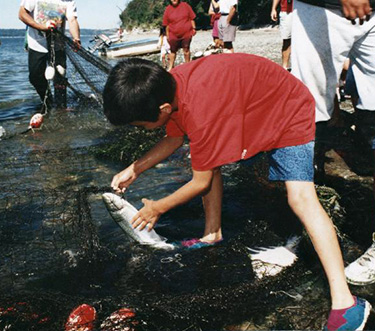
The Musqueam are a Coast Salish nation whose unceded ancestral territory lies at the mouth of the Fraser River in what is now known as Vancouver, British Columbia. With millennia of continuous presence, the Musqueam have a rich cultural heritage rooted in fishing, weaving, oral tradition, and stewardship of marine and riverine ecosystems. Their hən̓q̓əmin̓əm̓ language, deeply embedded in place names and ceremonial life, reflects a profound relationship with the land and waters that sustain both physical and spiritual well-being.
The Musqueam continue to face challenges stemming from colonial dispossession, legal battles over land rights, and the pressures of urban development. Much of their territory was settled without treaties, leading to prolonged struggles for recognition and restitution. Rapid urbanization in and around Vancouver has encroached upon sacred sites, restricted access to traditional fishing areas, and contributed to environmental degradation. At the same time, socio-economic disparities—including limited housing, underfunded education systems, and historical trauma—remain obstacles to full self-determination.
What stands out about the Musqueam is their strength in reclaiming visibility and asserting sovereignty in one of Canada’s most densely populated cities. Through landmark land agreements, cultural revitalization projects, and economic partnerships, the Musqueam are redefining what Indigenous presence means in an urban context. They have established language programs, museums, and heritage initiatives that reconnect youth with ancestral knowledge. Their leadership in co-managing archaeological sites and urban planning demonstrates how ancient wisdom and contemporary governance can thrive side by side, setting a powerful example for reconciliation in action.