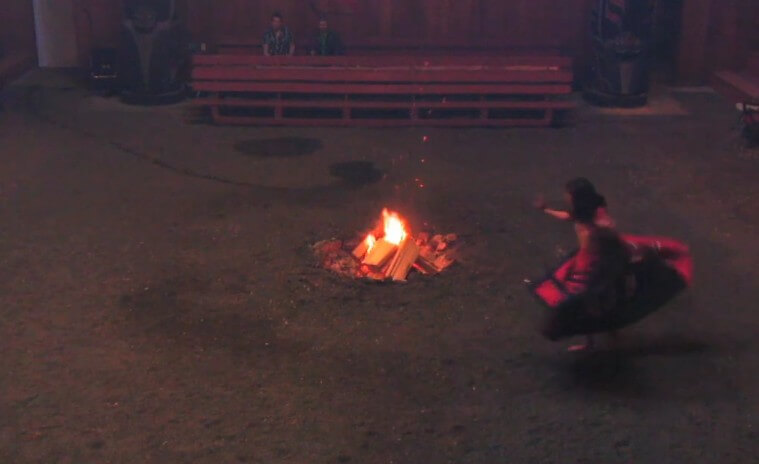
The ‘Nakwaxda’xw are one of the Indigenous Kwakwaka’wakw-speaking nations of coastal British Columbia, Canada. Historically, the ‘Nakwaxda’xw (also spelled Nakoaktok) lived in the northern reaches of Vancouver Island and surrounding territories. Today, they are part of the Gwa’sala-‘Nakwaxda’xw Nations, a band government formed in the mid-20th century after forced relocation by the Canadian government. Their culture is rooted in potlatch traditions, intricate art forms, and a deep spiritual connection to the land and ocean.
In the 1960s, the ‘Nakwaxda’xw and their Gwa’sala relatives were forcibly removed from their traditional territories and resettled in Tsulquate, near Port Hardy. This relocation caused a significant disruption to their social structures, land-based practices, and cultural continuity. Today, community members are actively working to revitalize their language, customs, and governance systems. Cultural education, language programs, and youth land-based initiatives have become vital tools in reclaiming their heritage.
The ‘Nakwaxda’xw continue to face challenges such as limited access to traditional lands, economic marginalization, housing shortages, and systemic inequities. While land claims and treaty negotiations remain unresolved, the nation is increasingly asserting its rights through legal and political channels. Environmental concerns, including resource extraction and climate change, also threaten their lands and waters. Despite these barriers, the Gwa’sala-‘Nakwaxda’xw are leading resilience-focused initiatives rooted in Indigenous sovereignty, environmental stewardship, and community healing.