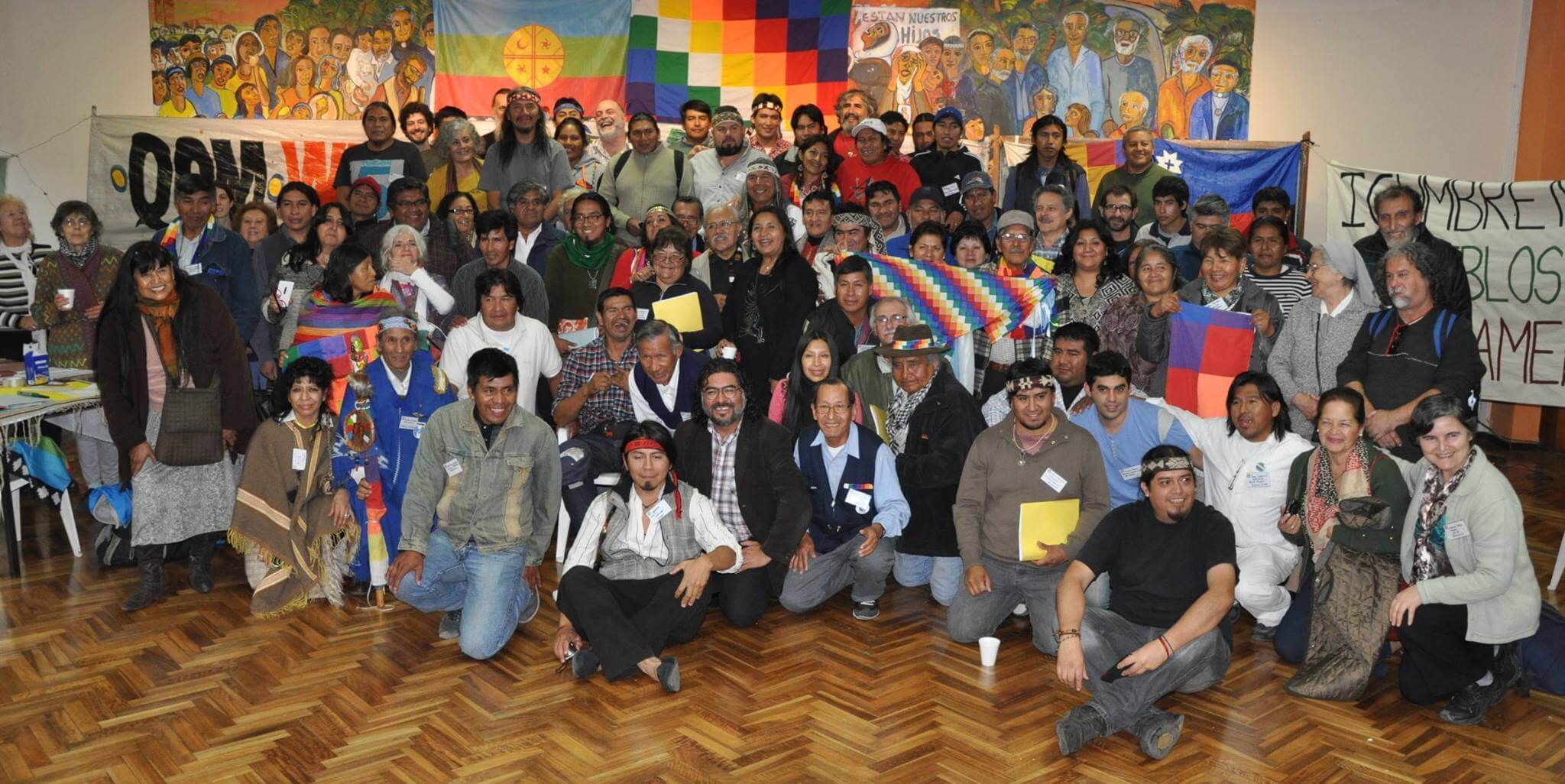
The Nivaclé are an Indigenous nation of the Gran Chaco, a vast semi-arid region spanning Paraguay, Argentina, and Bolivia. Traditionally semi-nomadic, the Nivaclé developed deep knowledge of the challenging environment, thriving through hunting, fishing, and small-scale agriculture. Their language, part of the Matacoan family, carries rich oral traditions, spiritual teachings, and environmental knowledge tied to the land, seasons, and ancestral lineage. Community life centers on kinship, reciprocity, and collective memory rooted in the Gran Chaco’s unique ecology.
The Nivaclé face mounting threats from deforestation, agribusiness expansion, and legal exclusion from ancestral lands. Large-scale cattle ranching and soy cultivation have drastically altered ecosystems, leading to water scarcity, biodiversity loss, and displacement. Forced assimilation policies and missionary efforts have also disrupted cultural continuity, leading to language loss and weakened intergenerational knowledge transfer. Access to healthcare, education, and land rights remains limited, reinforcing cycles of marginalization and poverty.
What stands out as truly inspiring is the Nivaclé commitment to cultural survival and land stewardship. Community members and educators have launched revitalization programs to teach the Nivaclé language, develop bilingual materials, and protect oral traditions. Simultaneously, local leaders are fighting for land demarcation and environmental protection through legal advocacy and partnerships with grassroots movements. Their unwavering connection to land, language, and cultural identity serves as a powerful model of Indigenous resistance and regeneration in one of South America’s most threatened landscapes.