The Tacuara’i community, descendants of the Ava Guaraní Chiripá, have deep-rooted connections to the forests and rivers of Paraguay’s Canindeyú department, near the Brazilian border. Their ancestral territory spans approximately 1,000 hectares, where generations have lived in harmony with the land, relying on traditional practices for sustenance and cultural expression. This land is not merely a place of residence but a cornerstone of their identity and heritage.
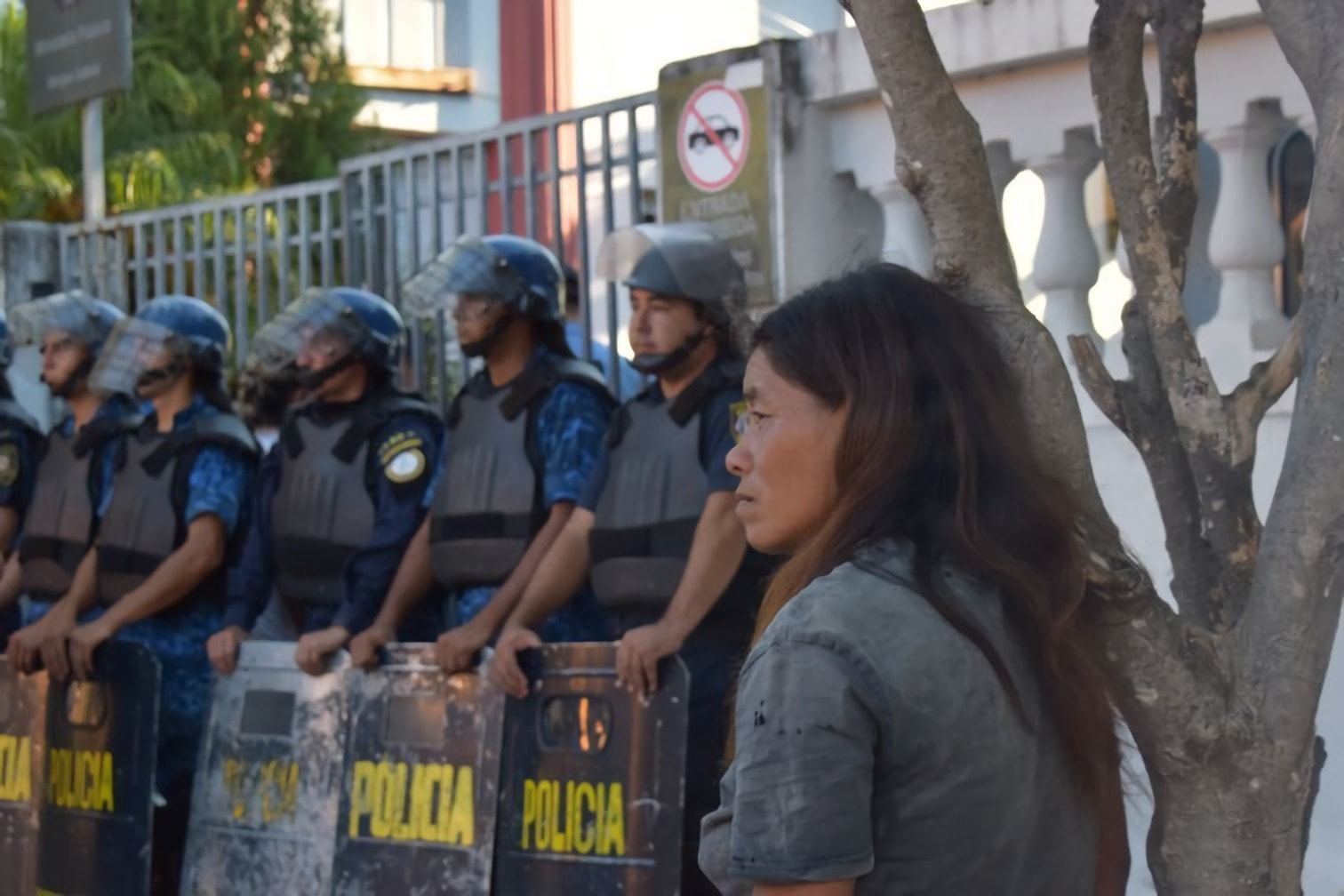
In the 1980s, during Paraguay’s dictatorship, the Tacuara’i were forcibly removed from their lands without consent, leading to decades of displacement. Their ancestral territory was subsequently occupied by private agribusiness interests, notably Brazilian soy farmers. Attempts to reclaim their land have been met with violence, including the tragic disappearance of community member Isidoro Barrios in 2016. In 2018, after a violent eviction, the Tacuara’i undertook a six-month protest in Asunción’s Plaza de Armas, highlighting the systemic neglect and legal obstacles they face in securing their rightful lands.
Despite these challenges, the Tacuara’i have demonstrated remarkable resilience. Their peaceful occupation in the heart of Paraguay’s capital drew national attention and solidarity from other Indigenous communities and peasant organizations. This alliance led to a governmental agreement in March 2019 to seek solutions to their land claims. While the fulfillment of this agreement remains pending, the Tacuara’i’s unwavering commitment to their heritage and rights serves as an inspiring testament to the power of collective action and cultural perseverance.