Last Updated on April 8, 2025
Julio Parra, a Huichol Medicine Man, talks about the Cerro Quemado, sacred mountain of the Huichol People, and why we should help protect it from a Canadian mining company.
In October 2010, the Huichol (Wikárika) People took a stand against the Canadian mining company First Majestic Silver, demanding a moratorium on mining activities and the cancellation of the company’s 22 mining concessions in the Real de Catorce, San Luis Potosi, Mexico.
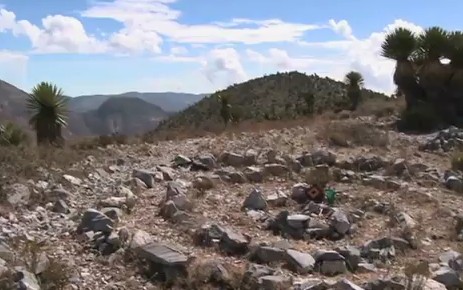
The Real de Catorce, known to the Huichol as Wirikuta, is home to several sacred sites including the Cerro Quemado, “the site where the sun rose for the first time, according to Huichol tradition”, notes The Esperanza Project. The region is also “home to several sacred springs [and it is] where their ancestors are buried and important ceremonies must be conducted each year. Here is the desert where they collect the sacred hikuri that they use for their prayers and ceremonies.” Wirikuta has itself been designated a Protected Natural Area and it is a recognized UNESCO World Cultural Heritage Site.
Despite the protected status of Wirikuta, and its spiritual and cultural importance to the Huichol, the Mexican government has told First Majestic that in can go ahead with their 22 mining operations as early as January, 2011.
That is, unless we work together to stop it.
Interview recorded at the Vision Council – Guardians of the Earth gathering in November 2010, by Leticia Rigatti and Ryan Luckey of the Común Tierra project.
Across the world right now, Indigenous peoples are facing a renewed assault on their lands, rights, and ways of life.
From extractive industries pushing deeper into ancestral territories, to governments rolling back hard-won protections,
the threat is global—and it is growing.
What makes this moment especially dangerous is how little attention it receives.
Stories like this are disappearing in real time. Mainstream media
barely covers it and the coverage is fragmented. The public is left without the context
needed to understand what is truly at stake.
That is exactly why IC Magazine exists..
For more than 20 years, IC has reported on Indigenous struggles worldwide — consistently, independently, and without compromise.
We don’t follow news cycles; we trace patterns. We don’t sensationalize; we provide context.
And when the world looks away, we stay focused.
But this work is increasingly difficult to sustain.
We refuse to lock our reporting behind a paywall. We don’t sell access through subscriptions.
And we don’t answer to advertisers. IC Magazine survives solely because readers like you choose to
support independent Indigenous journalism.
Please donate today if you can. Every contribution helps us to continue this crucial work.
Thank you,
John Ahni Schertow
Founder and Editor in Chief