Last Updated on August 30, 2018
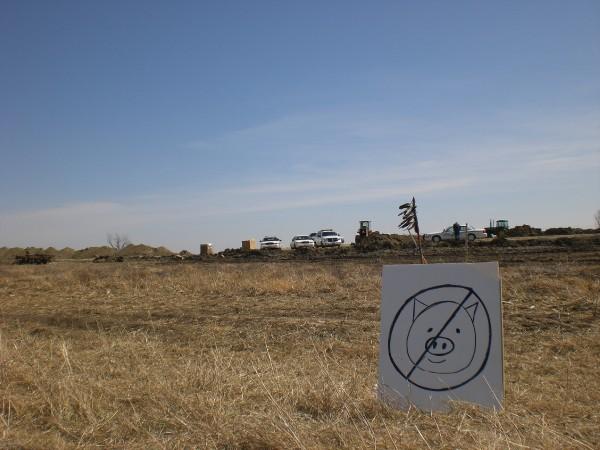
A federal judge ruled last week that the Longview industrial hog farm in South Dakota is not within the Treaty lands of the Ihanktunwan People (Yankton Sioux).
In April, three Tribal members representing the Yankton Sioux Tribe Head Start Concerned Parents filed a lawsuit claiming the farm is within the Ihanktunwan’s jurisdiction as defined by the Treaties of 1851 and 1858.
According to the Associated Press, the lawsuit also stated the farm owners failed to meet federal environmental requirements, failed to follow federal laws requiring a search for historic and cultural sites, and violated federal regulations dealing with children’s health.
Dealing solely with the issue of jurisdiction, on June 18 the federal judge ruled the farm “is not in part of the area that this court ruled was part of the reservation;” adding, “Now that doesn’t mean that you can’t prove that the court’s wrong.” The group of tribal members, who represented themselves in court, plan to continue pressing the issue.
There is another matter of jurisdiction that last week’s ruling does not address. That of course, is surrounding the only road leading to the farm… As Stephanie Woodard explained earlier this month,
Iowa-based Long View Farms is working around the clock, seven days a week, to construct [the farm] on private land within reservation boundaries.
The company’s rush seems to arise from its precarious legal position. In defiance of a tribal court exclusion order, the firm is using a BIA road to access the site.
That was confirmed in a letter sent to Charles Mix County on May 1, reminding them of a 1994 deal that gave the BIA ownership of the road.
A few days after the receiving the reminder, however, the Charles Mix County Commission voted to unilaterally rescind the deal.
This could very well be considered an outright theft of Federal Land.
Across the world right now, Indigenous peoples are facing a renewed assault on their lands, rights, and ways of life.
From extractive industries pushing deeper into ancestral territories, to governments rolling back hard-won protections,
the threat is global—and it is growing.
What makes this moment especially dangerous is how little attention it receives.
Stories like this are disappearing in real time. Mainstream media
barely covers it and the coverage is fragmented. The public is left without the context
needed to understand what is truly at stake.
That is exactly why IC Magazine exists..
For more than 20 years, IC has reported on Indigenous struggles worldwide — consistently, independently, and without compromise.
We don’t follow news cycles; we trace patterns. We don’t sensationalize; we provide context.
And when the world looks away, we stay focused.
But this work is increasingly difficult to sustain.
We refuse to lock our reporting behind a paywall. We don’t sell access through subscriptions.
And we don’t answer to advertisers. IC Magazine survives solely because readers like you choose to
support independent Indigenous journalism.
Please donate today if you can. Every contribution helps us to continue this crucial work.
Thank you,
John Ahni Schertow
Founder and Editor in Chief