Last Updated on March 20, 2023
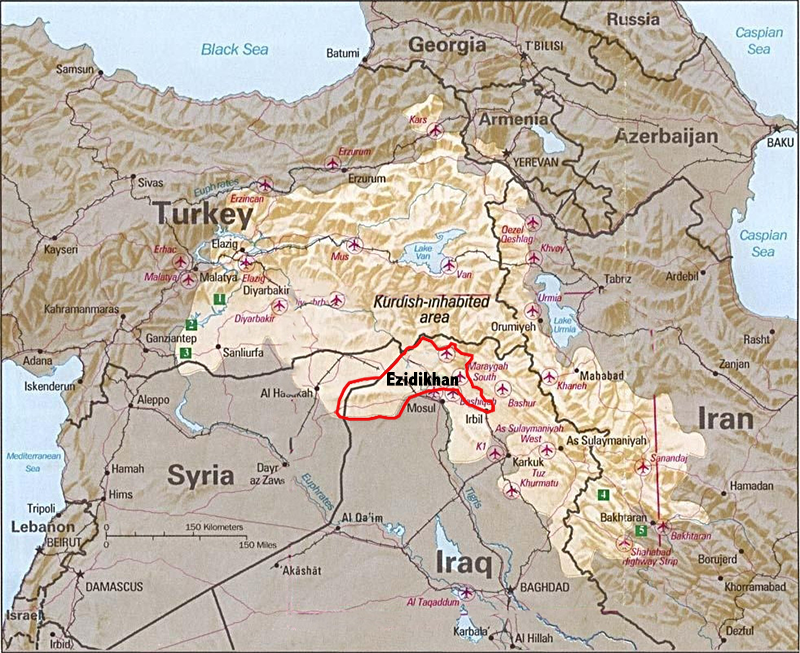
Lalish, Ezidikhan, Iraq–Ezidikhan Prime Minister Barjis Soso Khalaf “rejects most emphatically” as “political extortion” the Kurdish Regional Government and Iraqi Government demand that the Ezidikhan Governing Council retract its 16 November Resolution charging the Kurdish government with acts of genocide and the Iraqi and US governments complicity in those acts.
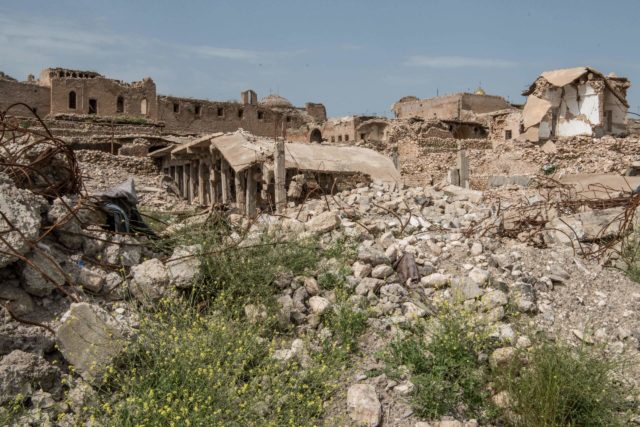
The Ezidikhan Governing Council met in emergency session earlier in November and unanimously adopted a formal resolution charging the Kurdish government’s installation of political and military officials in Ezidikhan communities as an illegal colonial occupation that constitutes an act of genocide. The resolution also calls upon the Special Advisor on Genocide to the UN Secretary General Mr. Adama Dieng to intervene to reverse the actions of the Kurdish government by “withdrawing its political and security forces immediately.”
The Ezidikhan government has received reports that the Kurdish government has expanded on its acts of genocide by the forced removal of Yezidi orphans to “Christian homes” instead of placing these children with Yezidi families. The Kurdish government is also continuing to open Ezidikhan lands to occupation by Arabic peoples near Dohuk without the authorization of the Ezidikhan government. These are further acts of genocide for which the Kurdish government and now the Iraqi government must be held accountable.
“Iraq,” stated the Ezidikhan Prime Minister, “is demanding that the Yezidis and their government of Ezidikhan commit suicide and exonerate the Kurdish Regional Government as well as Iraq and the United States for the ongoing acts of genocide they are perpetrating.” The Prime Minister continued, “Iraq must arrange the withdrawal of Kurdish political and military personnel from Ezidikhan; and to achieve unification of Iraq the Iraqi government must return to the table to negotiate an intergovernmental agreement with the Ezidikhan government that remains to be completed after a year of negotiations.”
In an obvious attempt to extort the retraction of genocide, the Iraqi government has said it will take no more Ezidikhan lands if the Governing Council withdraws charges against the Kurdish Regional Government. Iraq has held out an offer to Ezidikhan that, if Ezidikhan will retract its denunciations of Iraq and the United States, as being complicit in the KRG’s acts of genocide against Yezidis, then no additional lands would be taken from Ezidikhan.
The Iraqi demand to the Ezidikhan Prime Minister requires that he sign a statement saying “there is no genocide” and that Ezidikhan will no longer pursue self-government or democratically conducted negotiations with Iraq to establish constructive relations between the government of Ezidikhan and the government of Iraq. This is rejected.
The Ezidikhan government remains committed to defending its people against genocide and crimes against the peoples of Ezidikhan.
Across the world right now, Indigenous peoples are facing a renewed assault on their lands, rights, and ways of life.
From extractive industries pushing deeper into ancestral territories, to governments rolling back hard-won protections,
the threat is global—and it is growing.
What makes this moment especially dangerous is how little attention it receives.
Stories like this are disappearing in real time. Mainstream media
barely covers it and the coverage is fragmented. The public is left without the context
needed to understand what is truly at stake.
That is exactly why IC Magazine exists..
For more than 20 years, IC has reported on Indigenous struggles worldwide — consistently, independently, and without compromise.
We don’t follow news cycles; we trace patterns. We don’t sensationalize; we provide context.
And when the world looks away, we stay focused.
But this work is increasingly difficult to sustain.
We refuse to lock our reporting behind a paywall. We don’t sell access through subscriptions.
And we don’t answer to advertisers. IC Magazine survives solely because readers like you choose to
support independent Indigenous journalism.
Please donate today if you can. Every contribution helps us to continue this crucial work.
Thank you,
John Ahni Schertow
Founder and Editor in Chief