
Last Updated on December 7, 2014
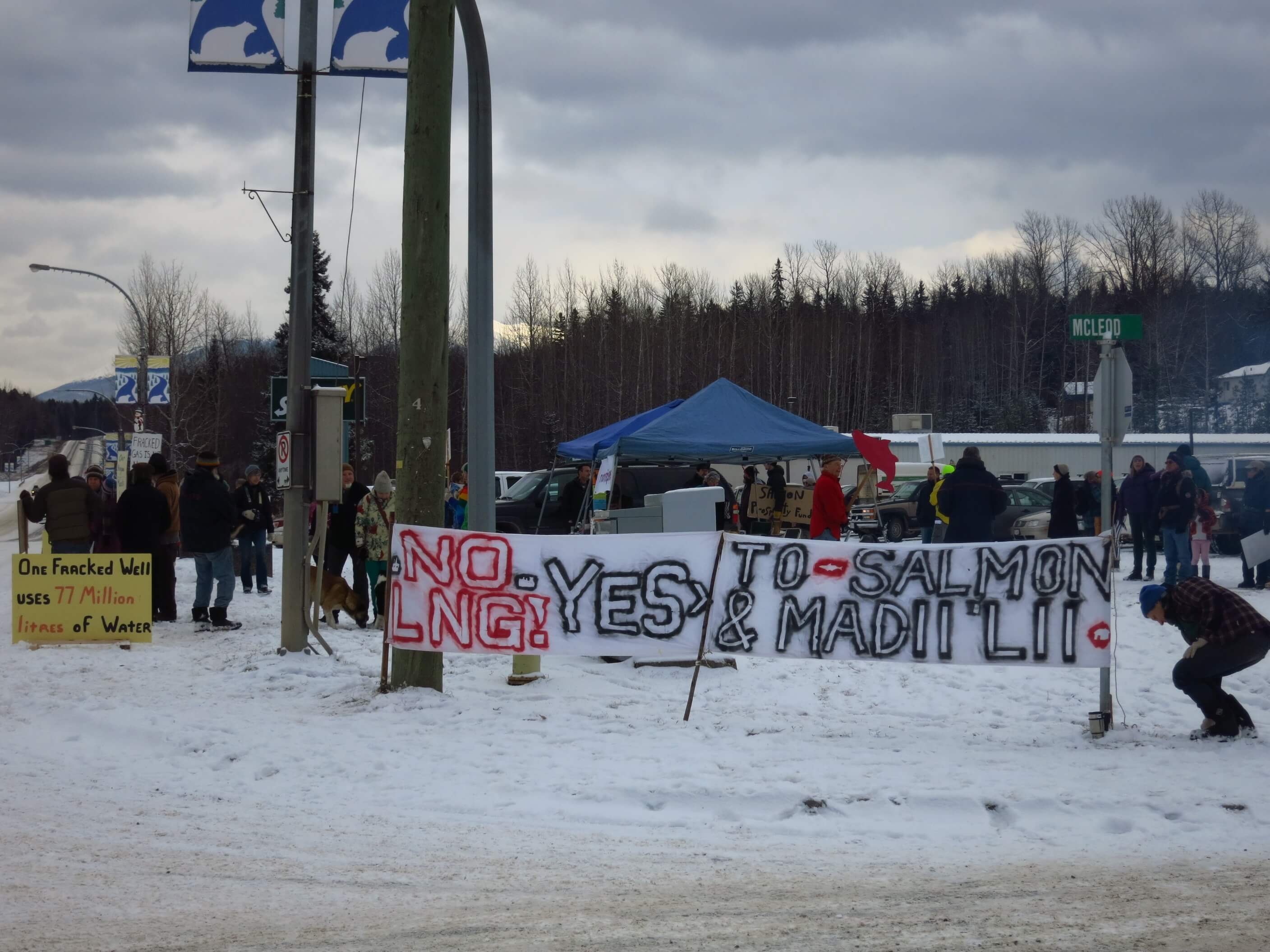
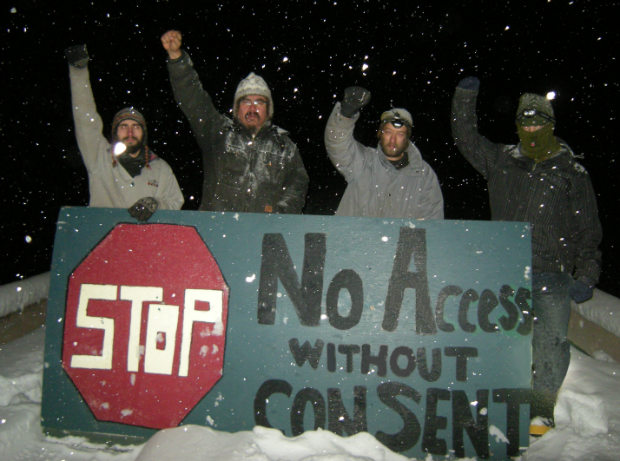
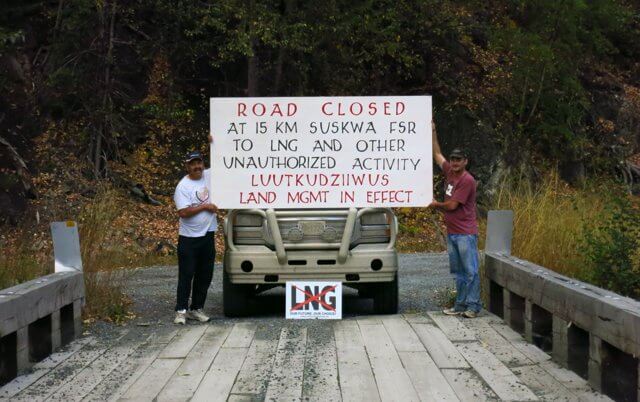
Camp Madii Lii is located at the entrance to Luutkudziiwus territory within the Gitxsan Nation. On Aug. 26, 2014, access to the territory was closed to all LNG traffic and other unauthorized industrial activity, and the Luutkudziiwus Territorial Management Plan was enacted.
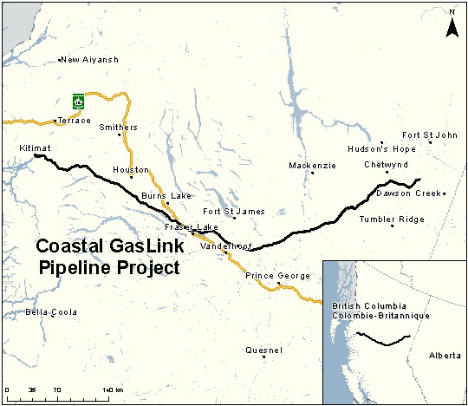
TransCanada is proposing construction and operation of the Prince Rupert Gas Transmission (PRGT) pipeline project. The proposed PRGT will cross Luutkudziiwus territory for about 32 km from Suskwa Pass to the Shegunia River. Approximately one-half – 16 km – lies on top of the Babine Trail, the ancestral grease trail connecting Gitanmaax with Fort Babine.
There will be direct and indirect impacts to Luutkudziiwus rights and title from potential adverse effects to fish and their habitats, wildlife and their habitats, terrestrial and aquatic resources, including cumulative effects, as well as to social, cultural, and economic values. As well, the pipe will be supplying the proposed LNG plant in Skeena estuary, where substantial impacts are predicted to negatively affect our juvenile salmon. The proposed PRGT pipeline project is in deep conflict with core Luutkudziiwus interests and values.
Camp Madii Lii is located at 15 km on the Suskwa Forest Service Road.
For more info or to support the camp, email camp.madiilii@gmail.com
Across the world right now, Indigenous peoples are facing a renewed assault on their lands, rights, and ways of life.
From extractive industries pushing deeper into ancestral territories, to governments rolling back hard-won protections,
the threat is global—and it is growing.
What makes this moment especially dangerous is how little attention it receives.
Stories like this are disappearing in real time. Mainstream media
barely covers it and the coverage is fragmented. The public is left without the context
needed to understand what is truly at stake.
That is exactly why IC Magazine exists..
For more than 20 years, IC has reported on Indigenous struggles worldwide — consistently, independently, and without compromise.
We don’t follow news cycles; we trace patterns. We don’t sensationalize; we provide context.
And when the world looks away, we stay focused.
But this work is increasingly difficult to sustain.
We refuse to lock our reporting behind a paywall. We don’t sell access through subscriptions.
And we don’t answer to advertisers. IC Magazine survives solely because readers like you choose to
support independent Indigenous journalism.
Please donate today if you can. Every contribution helps us to continue this crucial work.
Thank you,
John Ahni Schertow
Founder and Editor in Chief