Last Updated on October 6, 2013
In my essay about the importance of maintaining memory as a community safeguard, I emphasized the value of archives, inquiries and communications in preserving social memory. In the ongoing war of ideas between corporate states and indigenous nations, exposing such things as state terrorism is essential to understanding this conflict and its resolution. For state-funded media like National Public Radio and the Public Broadcasting Service, this poses a dilemma: tell the whole truth and lose your funding, or tell part of the truth and hope for the best.
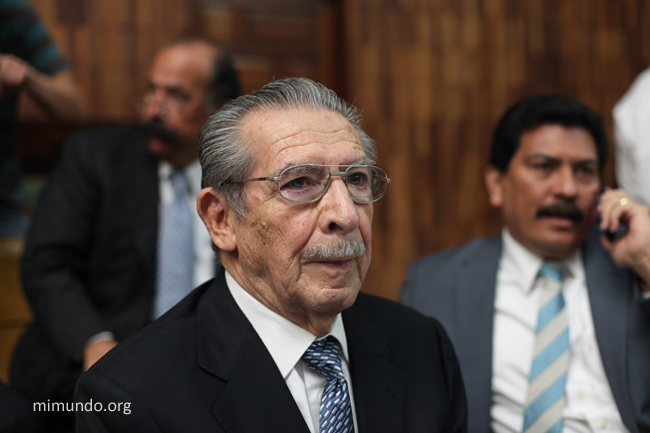
Writing in Upside Down World, Kate Doyle reports on the Government of Guatemala announcement to dismantle the Peace Archives, established in 1996 to recover historical memory and to support judicial proceedings against human rights violators during the 36-year conflict that left nearly a quarter million, mostly Mayan, people dead.
Also writing in Upside Down World, Grahame Russell critiques a National Public Radio This American Life program report on one of the massacres that took place in Guatemala in 1982. While supportive of the program as far as it went, Russell observes that This American Life completely factored out the extensive role the U.S. Government has played in funding, training and arming the Guatemalan military. As Russell notes, truth, memory and justice about the genocidal violence of the Guatemalan military — what amounts to State Terrorism — is necessary for reconciliation, but when government-funded media in the United States distorts truth and memory, justice is not well-served.
Across the world right now, Indigenous peoples are facing a renewed assault on their lands, rights, and ways of life.
From extractive industries pushing deeper into ancestral territories, to governments rolling back hard-won protections,
the threat is global—and it is growing.
What makes this moment especially dangerous is how little attention it receives.
Stories like this are disappearing in real time. Mainstream media
barely covers it and the coverage is fragmented. The public is left without the context
needed to understand what is truly at stake.
That is exactly why IC Magazine exists..
For more than 20 years, IC has reported on Indigenous struggles worldwide — consistently, independently, and without compromise.
We don’t follow news cycles; we trace patterns. We don’t sensationalize; we provide context.
And when the world looks away, we stay focused.
But this work is increasingly difficult to sustain.
We refuse to lock our reporting behind a paywall. We don’t sell access through subscriptions.
And we don’t answer to advertisers. IC Magazine survives solely because readers like you choose to
support independent Indigenous journalism.
Please donate today if you can. Every contribution helps us to continue this crucial work.
Thank you,
John Ahni Schertow
Founder and Editor in Chief