Last Updated on August 14, 2026
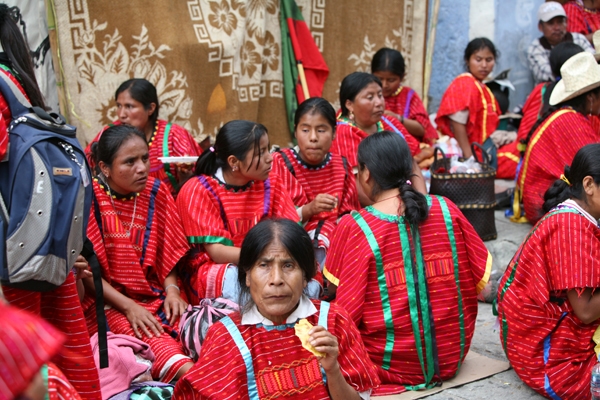
Hundreds of Indigenous campesinos have been tricked into giving away their lands for a wind farm project on the Isthmus of Tehuantepec in Oaxaca, Mexico.
The non-Spanish speaking agrarians signed tenancy agreements with a number of different companies, some of which last up to 60 years. Now the companies refuse to fulfill their end of the agreements.
For instance, the Spanish company Union FENOSA promised agricultural aid to Faustina López Martínez, from the village of Juchitán, so they can run a set of windmills on her 3 hectares of land for the next 30 years. The company, however, will not give her the aid – offering only the lesser part of the agreement, 150 pesos (less than US$15) a year.
Divided between FENOSA, berdrola, Endesa, Preneal, Gamesa and others, there are at least 185 different contract violations like like this. A group of lawyers from human rights organizations in Oaxaca and Mexico are attempting to annul them.
Perhaps serving a greater example — if anything, about the limitations of privately-owned land — the Santiago Niltepec community, located east of the Isthmus, refused to sign a tenancy contract with FENOSA.
“José Santiago Ramírez, secretary of the Santiago Niltepec Community Goods Commission, says the Spanish transnational offered 30-year contracts and 1,000 to 1,200 pesos — $98 to $117 — per hectare (2.5 acres) to the campesinos annually to rent their lands. But no company can have a contract directly with the landowner since 95 percent of the population’s lands is communal,” notes the Latin America Press.
The example, is that instead of having to deal with (as in manipulate) one individual, the company must face an entire community. Further, if the Niltepec had chosen (perhaps by a referendum) to sign the contract with FENOSA, who then betrayed it, at least the community would be in a strong position to defend their land and rights.
It’s always better to be a part of a community than to stand alone, dependent on the kindess of strangers.
Across the world right now, Indigenous peoples are facing a renewed assault on their lands, rights, and ways of life.
From extractive industries pushing deeper into ancestral territories, to governments rolling back hard-won protections,
the threat is global—and it is growing.
What makes this moment especially dangerous is how little attention it receives.
Stories like this are disappearing in real time. Mainstream media
barely covers it and the coverage is fragmented. The public is left without the context
needed to understand what is truly at stake.
That is exactly why IC Magazine exists..
For more than 20 years, IC has reported on Indigenous struggles worldwide — consistently, independently, and without compromise.
We don’t follow news cycles; we trace patterns. We don’t sensationalize; we provide context.
And when the world looks away, we stay focused.
But this work is increasingly difficult to sustain.
We refuse to lock our reporting behind a paywall. We don’t sell access through subscriptions.
And we don’t answer to advertisers. IC Magazine survives solely because readers like you choose to
support independent Indigenous journalism.
Please donate today if you can. Every contribution helps us to continue this crucial work.
Thank you,
John Ahni Schertow
Founder and Editor in Chief