Last Updated on March 13, 2013

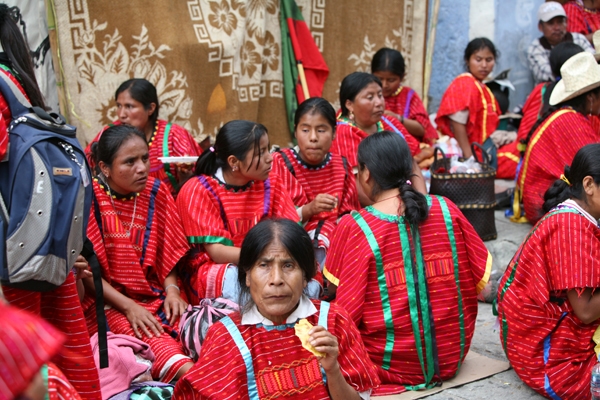
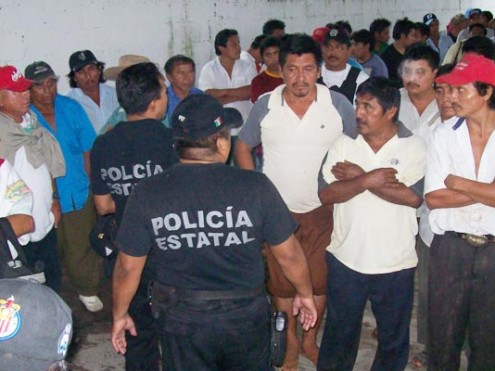
Armed Mexican marines and federal police helped to confiscate 9 tons of gulf corvina from the Cucapa fishing community last weekend, reports Frontera NorteSur
Apparently, non-indigenous fisherman saw them catching the fish and told federal authorities, alleging they were violating a seasonal ban that started last week. It was later confirmed that the Cucapa were violating the ban.
The fishing community, however, maintains their right to harvest the Corvina, also known as the weakfish, because they depend on it for subsistence.
Frontera NorteSur quotes Hilda Hurtado, a Cucapa leader, “We’re surrounded by federal police and soldiers as if we were delinquents,” says Hurtado. “The federal government’s action is very denigrating. It’s very bad. We are indigenous and fisherwomen who work from March to May in order to live the entire year.”
Frontera NorteSur goes on to explain,
Cucapa leaders and legal representatives [also maintain] that current federal regulations ignore centuries of indigenous traditions and uses. Alejandra Navarro, a researcher with the Autonomous University of Baja California, contended that Mexico’s federal government has not delivered scientific studies solicited by the Cucapah group that would prove the need for the fishing restrictions.
“What do they want us to do in order to survive?” Hurtado said. “This is honorable work, and we are proud to be indigenous people and fisherwomen. Maybe there are few of us Cucapahs, and we do not generate a lot of votes, but the government has gone too far and we don’t know what is going to happen.”
An estimated 150 Cucapah families depend on fishing in the Gulf of California and Colorado River Delta. Almost two years ago, the indigenous-federal conflict drew some international attention. Garnering the backing of the Zapatista-inspired “Other Campaign,” Subcomandante Marcos visited the Cucapah to show his support of their cause.
For more information and background, please visit the Cucapa Camp website
Across the world right now, Indigenous peoples are facing a renewed assault on their lands, rights, and ways of life.
From extractive industries pushing deeper into ancestral territories, to governments rolling back hard-won protections,
the threat is global—and it is growing.
What makes this moment especially dangerous is how little attention it receives.
Stories like this are disappearing in real time. Mainstream media
barely covers it and the coverage is fragmented. The public is left without the context
needed to understand what is truly at stake.
That is exactly why IC Magazine exists..
For more than 20 years, IC has reported on Indigenous struggles worldwide — consistently, independently, and without compromise.
We don’t follow news cycles; we trace patterns. We don’t sensationalize; we provide context.
And when the world looks away, we stay focused.
But this work is increasingly difficult to sustain.
We refuse to lock our reporting behind a paywall. We don’t sell access through subscriptions.
And we don’t answer to advertisers. IC Magazine survives solely because readers like you choose to
support independent Indigenous journalism.
Please donate today if you can. Every contribution helps us to continue this crucial work.
Thank you,
John Ahni Schertow
Founder and Editor in Chief