Last Updated on August 3, 2018
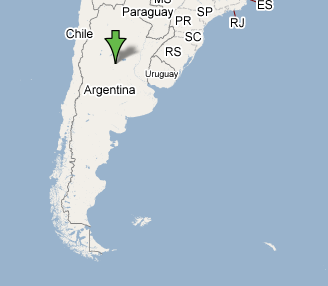
Tired of putting up with the Argentine Justice system’s inaction, several campesinos from the La Rinconada’s community in Rio Seco, Cordoba recently cut down 10 thousand meters of fence that was illegally placed on their lands by an industrialist.
Representatives from the community had talked with the government about this matter on three separate occasions, pointing out that it was a blatant theft which was restricting them and preventing them from living. The public prosecutor assured them that he would personally take action, but the only action they saw came in the form of handbags and various other ‘gifts.’ Elections were coming up…
Marcos Vargas, a member of the community and representative of the National Movement of Indigenous Campesinos, recently said in an interview that the Campesinos believe it was fundamental to take action, that they must defend their rights to live, to farm, and to have community lands.
On September 24, the community will be participating in the National Indigenous Peasant March in Buenos Aires, to expose the abuses and injustices they are being subjected to, and to stand in solidarity with others around the world who are having the exact same problems.
From Real World Radio – Real World Radio’s correspondents in Argentina, Raquel Schrott and Ezequiel Miodownik, interviewed Marcos Vargas—of the Peasant Union from Northeast Cordoba—on the actions carried out by peasants, the violence against them and the massive mobilization that will be held by the National Peasant Indigenous Movement in Buenos Aires, next September 24th.
He said that the peasants believe that it is fundamental to take actions, because they feel threatened and cannot produce. He added that these actions were decided at meetings held by the peasants. Vargas said that they started to remove the wires from the fields, for the peasants to be able to take their animals to Dulce river. He said that their strategy to keep living and producing was to remove the wires for the animals to drink at the river.
He said the actions were aimed at “defending their right to live, their right to keep producing, their right to have community lands, like we used to”. He added that they would resist the justice and the businessmen. “That is why we will carry out an action with the National Peasant Indigenous Movement next September 24th in Buenos Aires, where we will march for this, for food sovereignty, to keep living, because our fields are being wired”.
Vargas said that they will expose the “consequences of what we are suffering, the abuse”. He said they also aim to defend the forests and their health. He added that soy plantations are causing soil damage and polluting water. Peasants say this is a global issue, they are not just defending their lands, he added.
“There are almost no more peasants, and they are part of our culture”, he said. He added that “this is the reality that we are going to show, we will march for it, for the reserves we have in Argentina, the minerals, the environment and what is ours. We are part of the land”. (source)
Across the world right now, Indigenous peoples are facing a renewed assault on their lands, rights, and ways of life.
From extractive industries pushing deeper into ancestral territories, to governments rolling back hard-won protections,
the threat is global—and it is growing.
What makes this moment especially dangerous is how little attention it receives.
Stories like this are disappearing in real time. Mainstream media
barely covers it and the coverage is fragmented. The public is left without the context
needed to understand what is truly at stake.
That is exactly why IC Magazine exists..
For more than 20 years, IC has reported on Indigenous struggles worldwide — consistently, independently, and without compromise.
We don’t follow news cycles; we trace patterns. We don’t sensationalize; we provide context.
And when the world looks away, we stay focused.
But this work is increasingly difficult to sustain.
We refuse to lock our reporting behind a paywall. We don’t sell access through subscriptions.
And we don’t answer to advertisers. IC Magazine survives solely because readers like you choose to
support independent Indigenous journalism.
Please donate today if you can. Every contribution helps us to continue this crucial work.
Thank you,
John Ahni Schertow
Founder and Editor in Chief