Last Updated on April 10, 2025
Indigenous nations and individuals from those nations are beginning to recognize their political power in a world dominated by centralized states elites, corporations, organized crime and trans-state religions—basically all corporate organizations. In the face of determined efforts by these corporate entities to eliminate indigenous peoples and their nations (and they are determined to do just that even with the UNDRIP), it is satisfying to see in the news reports of Fourth World nations and their members actually determining the agenda for local, regional and international policy. I wrote in an earlier post about the Wallonia (indigenous to the eastern part of Belgium) holding up the Comprehensive Economic and Trade Agreement (CETA) between Canada and the European Union. The Walloon government wanted provisions in CETA to protect their farmers, laborers and environment. Withholding their vote, the 3 million Walloons forced Canada and the European Union to negotiate into the agreement changes acceptable to the Walloon government. The Agreement will now go forward with Walloon support—the power of indigenous peoples.
But, it doesn’t stop there. Consider the $3.7 billion “Dakota Access Pipeline” faceoff between the Standing Rock Sioux and the United States government (Army Corp of Engineers), state governments and oil companies. If there was ever a situation where the principle of “free, prior and informed consent” should have been applied, the Dakota Access Pipeline is just such a situation. The Lakota were ignored and did not give their consent to a pipeline through their sacred lands and under their principal water source. Since April 2016 the Lakota, joined now by indigenous nations from around the world have set about blocking the pipeline development with their bodies. The pipeline has been temporarily stopped, and the US President has now intervened to call on the Army Corp of Engineers to find another route—the power of indigenous peoples.
The Xochicoatla in Central Mexico took action to defend their lands and their people against the willful destruction of their homes and territory by the Mexico government building a highway through their territory. After months of attempting to negotiate with the Mexican Federal Government, public protests, arrests, destruction of dwellings and threats to Otomi lives, the leaders of San Francisco Xochicoatla forced highway construction to be halted—the power of indigenous peoples.
And quite remarkably the son of an important leader of the Puyallup Indian Tribe in the US State of Washington has the unusual role of serving as one of 535 Electors who will determine who will be the next President of the United States of America. More importantly, Robert Satiacum, (whose father Robert Satiacum Sr. led efforts in the 1960s and 1970s to protect the Puyallup’s salmon fishery) is one of 12 electors from the State of Washington who will vote on December 16 for the US president. Satiacum issued a statement on Friday (November 4) saying he will not vote for Hillary Clinton or for Donald Trump—reducing the Washington State electors to eleven. Satiacum criticizes Clinton for her lack of policies to protect Indian rights and particularly the environment. He suggests that there may be a possibility that he will change his opinion if she shows strong support of Indian rights and convinces him that her government will defend and advance those rights—the power of indigenous peoples.
* * *
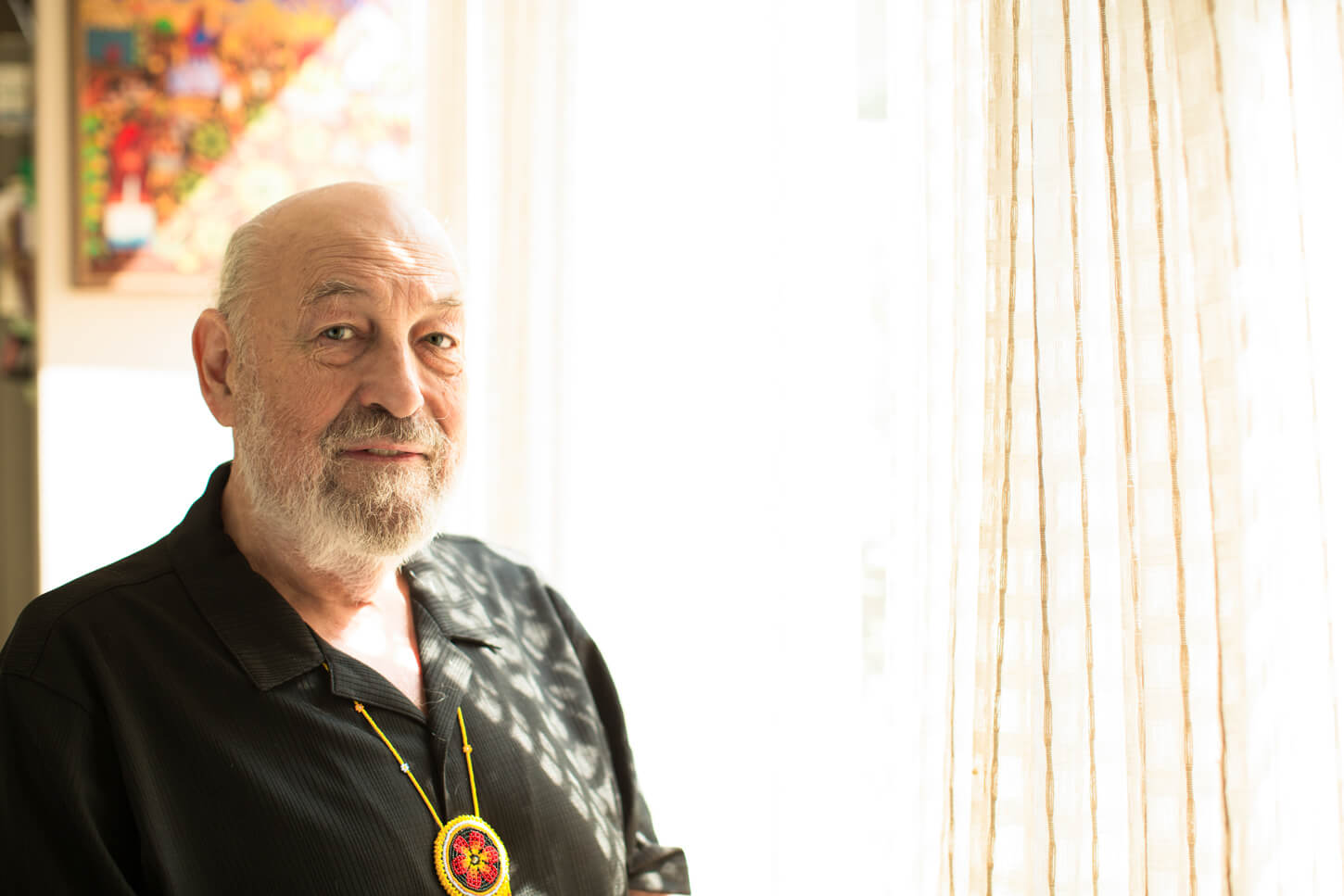
Dr. Rÿser is the Chairman of the Center for World Indigenous Studies. He served as Senior Advisor to the President George Manuel of the World Council of Indigenous Peoples, Advisor and Speechwriter to Quinault President Joe DeLaCruz, a former Acting Executive Director of the National Congress of American Indians, and a former staff member of the American Indian Policy Review Commission. He holds a doctorate in international relations, teaches Fourth World Geopolitics through the CWIS Certificate Program (www.cwis.org. He is the author of “Indigenous Nations and Modern States” published by Routledge in 2012.
Across the world right now, Indigenous peoples are facing a renewed assault on their lands, rights, and ways of life.
From extractive industries pushing deeper into ancestral territories, to governments rolling back hard-won protections,
the threat is global—and it is growing.
What makes this moment especially dangerous is how little attention it receives.
Stories like this are disappearing in real time. Mainstream media
barely covers it and the coverage is fragmented. The public is left without the context
needed to understand what is truly at stake.
That is exactly why IC Magazine exists..
For more than 20 years, IC has reported on Indigenous struggles worldwide — consistently, independently, and without compromise.
We don’t follow news cycles; we trace patterns. We don’t sensationalize; we provide context.
And when the world looks away, we stay focused.
But this work is increasingly difficult to sustain.
We refuse to lock our reporting behind a paywall. We don’t sell access through subscriptions.
And we don’t answer to advertisers. IC Magazine survives solely because readers like you choose to
support independent Indigenous journalism.
Please donate today if you can. Every contribution helps us to continue this crucial work.
Thank you,
John Ahni Schertow
Founder and Editor in Chief