Last Updated on April 1, 2026
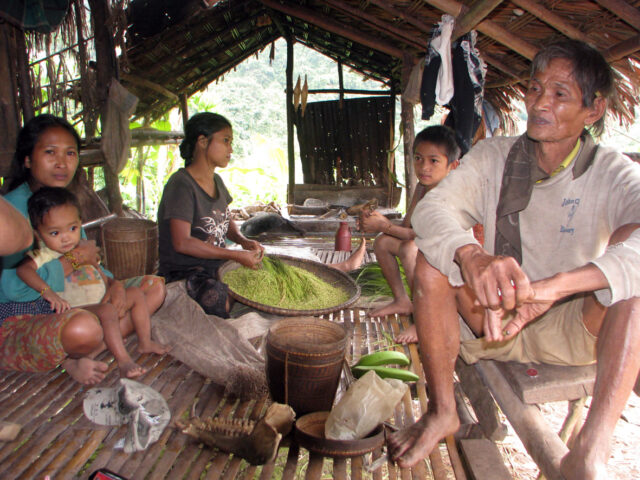
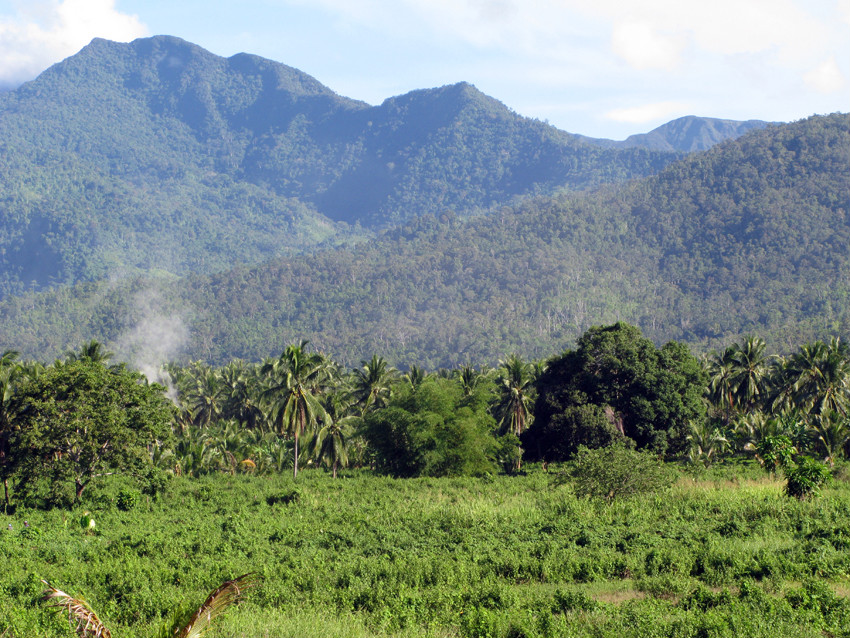
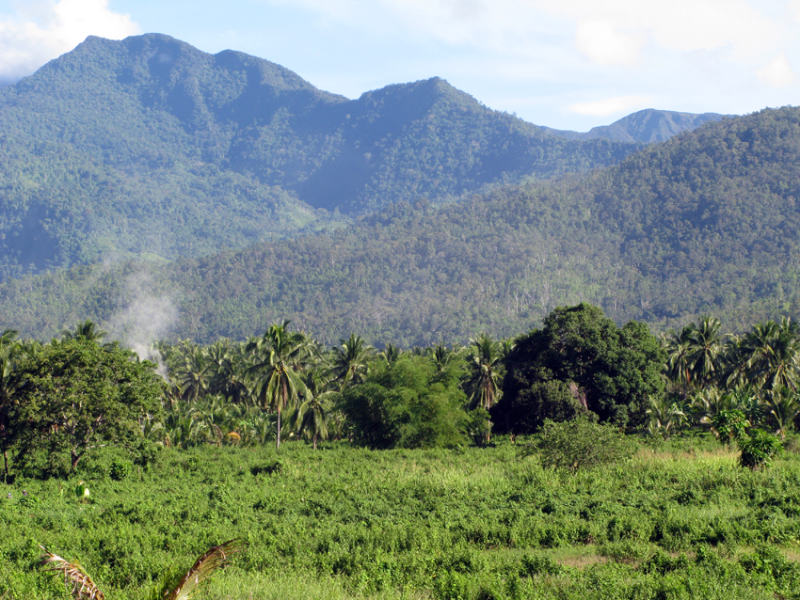
March 26 began like any other day in Sitio Linao in the municipality of Brooke’s Point, Palawan – until it didn’t. By mid‑morning, two backhoes belonging to CALMIA Nickel, Inc. (CNI) rumbled past the invisible boundary that has long separated the lowland frontier from the upland ancestral domain of the Pala’wan peoples. For the first time, heavy machinery pierced a landscape where self‑sufficiency still thrives: forests teeming with wildlife, upland rice and cassava fields, and dozens of freshwater springs that sustain entire communities.
“They took advantage of the fact that we were preparing our upland rice fields,” recounts tribal leader Panglima Celso Paida. “They entered our ancestral domain without consulting us at all.”
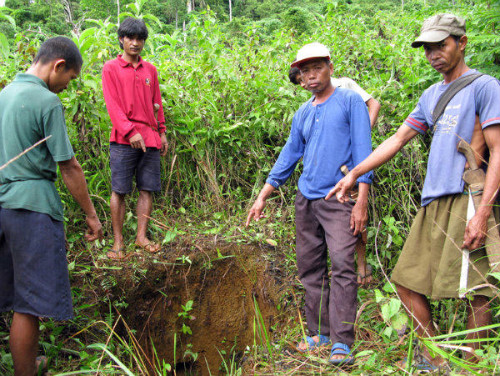
The intrusion triggered an immediate response. Indigenous residents blocked the road with two motorcycles, then reinforced it the next day with a barricade of wood and stones. What began as a small act of defiance quickly grew into a community‑wide stand. Men, women, and children streamed to the site, declaring they would not move until the company withdrew.
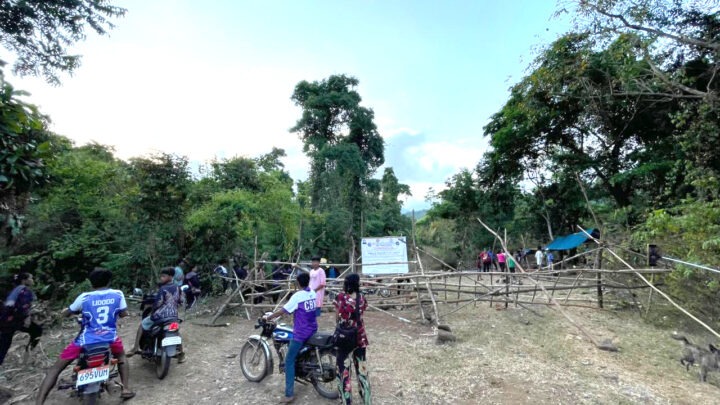
Indigenous peoples’ barricade in Sitio Linao (Barangay Ipilan)
“When we confronted the company guards, they claimed they only wanted to ‘fix’ the road” one resident said. “But we never asked for that.”
The barricade has since become a living wall of resistance – an assertion of ancestral rights and a defense of the watershed that sustains not only upland communities but also farmers and fisherfolk downstream.
Calmia Nickel Inc. (CNI) is the operating partner of MacroAsia Mining Corporation (MMC), which seeks to revive the 1970s Infanta Nickel Project. The project covers more than 1,100 hectares across three barangays and aims to extract 660,000 metric tons of ore annually, over a projected 10‑year mine life. Surely, CNI expects the global nickel market driven by electric vehicle batteries, renewable energy technologies, and military applications in Western countries – to justify the project’s revival.
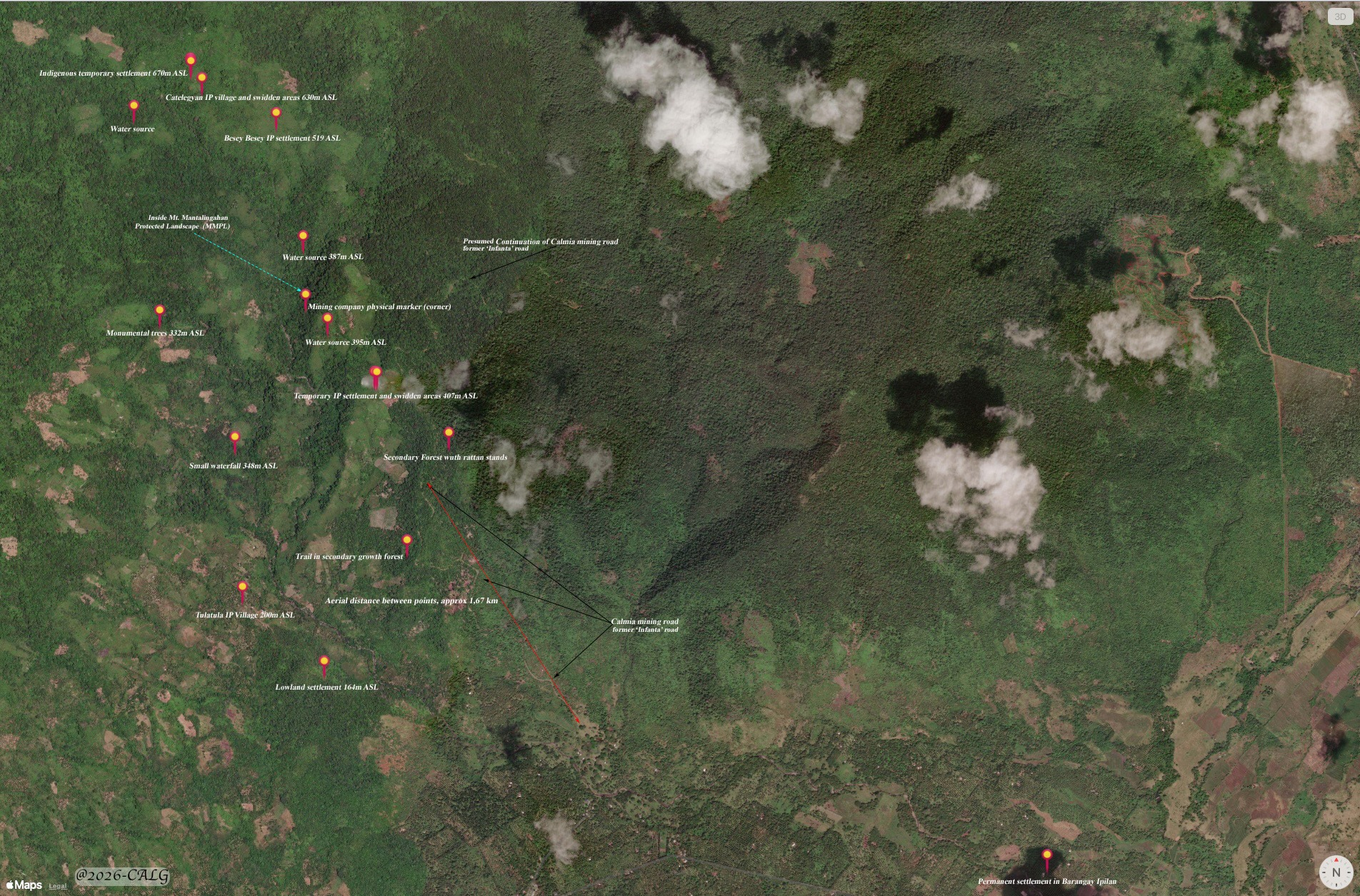
But the legal and ethical contradictions are glaring. The mining tenements overlap with the Mount Mantalingahan Protected Landscape (MMPL), a UNESCO‑recognized biodiversity hotspot and the island’s most critical watershed. MMPL feeds 33 rivers and provides ecosystem services valued at over US$5.5 billion, supporting the livelihoods of 200,000 people.
Despite this, the Mines and Geosciences Bureau approved the CNI‑MMC Memorandum of Agreement in 2022 – an approval critics say reflects the familiar pattern of corruption, clientelism, and impunity that has long plagued resource governance in the Philippines.
Mining in Brooke’s Point has faced fierce opposition for more than a decade. In 2010, united indigenous communities successfully halted earlier attempts by MacroAsia and other companies to enter their ancestral domain.
Today, the resistance is, once again, gaining momentum. An international petition has gathered nearly 74,000 signatures, and 121 global organizations have sent a letter to the Philippine President demanding an immediate halt to mining operations in Palawan.
“Taking over the ‘last Philippine frontier’ will not be easy,” says a member of a local environmental NGO. “The world is watching.”
CNI claims it is merely completing its permitting phase for the Declaration of Mining Project Feasibility. But Brooke’s Point Mayor Cesareo Benedito Jr. has publicly stated that the company has no authorization from the local government to conduct operations.
On March 30, Vice Mayor Mary Jean Feliciano, accompanied by councilors Jimart Naingue and Sarah Jane C. Abon, visited the barricade to show solidarity. In a telling display of tension, mining security guards initially refused to let the vice mayor enter the area. Only after prolonged negotiation was she allowed through.
Vice-Mayor Mary Jean Feliciano (center) visiting the IPs Protesters at the blockade, on March 30
“If their bulldozers want to proceed, they will have to pass over our bodies.”
The words of one indigenous activist capture the gravity of the moment: “The company entered our land without consultation. They moved heavy equipment to the uplands, but we stopped them. Now we stand here with our wives and children until the company leaves”.
More than 35 residents now guard the barricade in rotating day‑and‑night shifts. Their message is unwavering: there will be no surrender until the company fully withdraws from their ancestral domain.
A growing barricade of residents is not the only sign of resistance in Brooke’s Point – civil society is making its voice impossible to ignore.
On March 31, a large delegation of Indigenous peoples, farmers, and fisherfolk from Barangays Aribungos, Mambalot, Amas, Maasin, Ipilan, Barongbarong, and nearby communities marched to the Municipal Hall to personally deliver a People’s Petition to the Mayor.
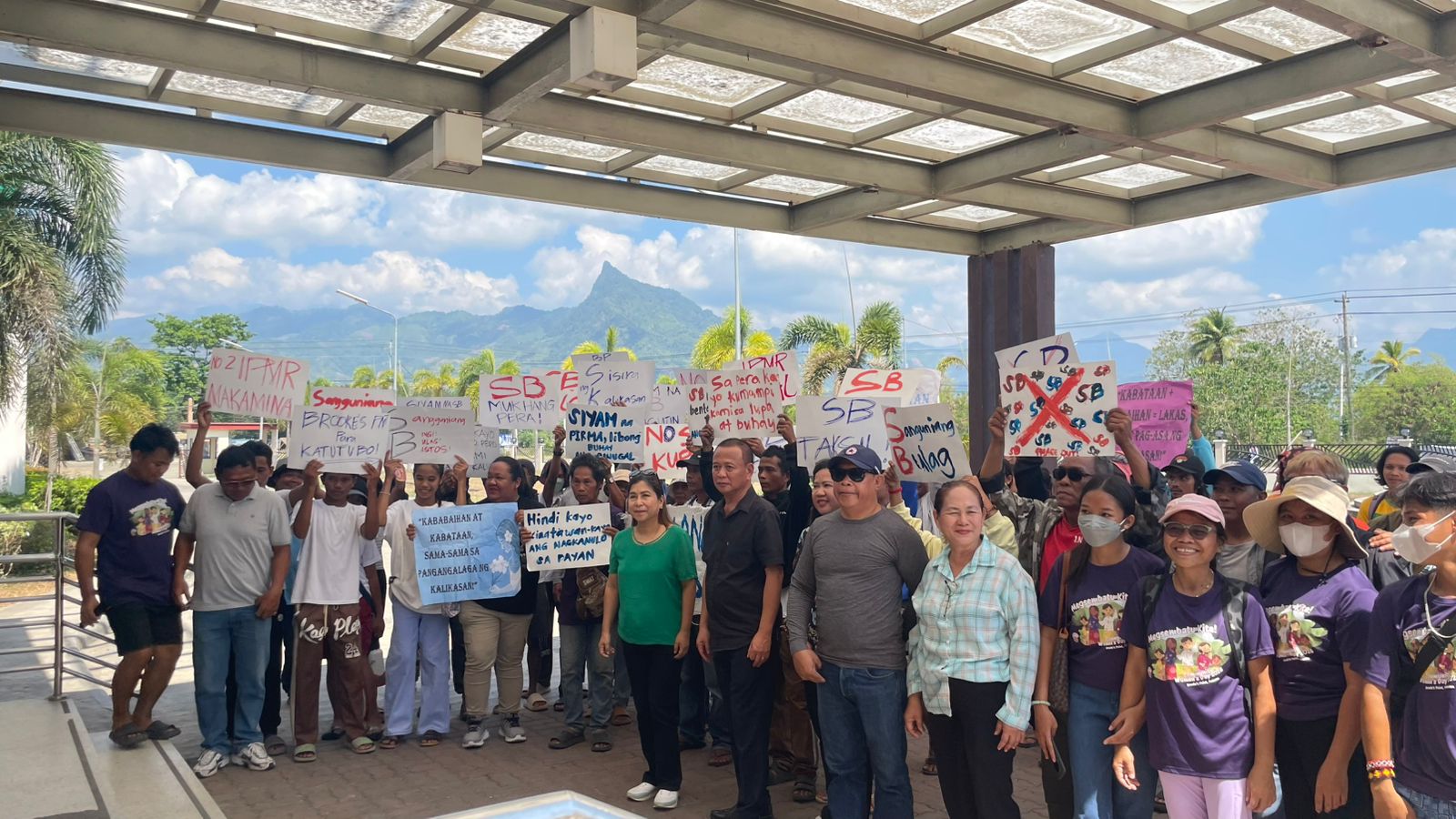
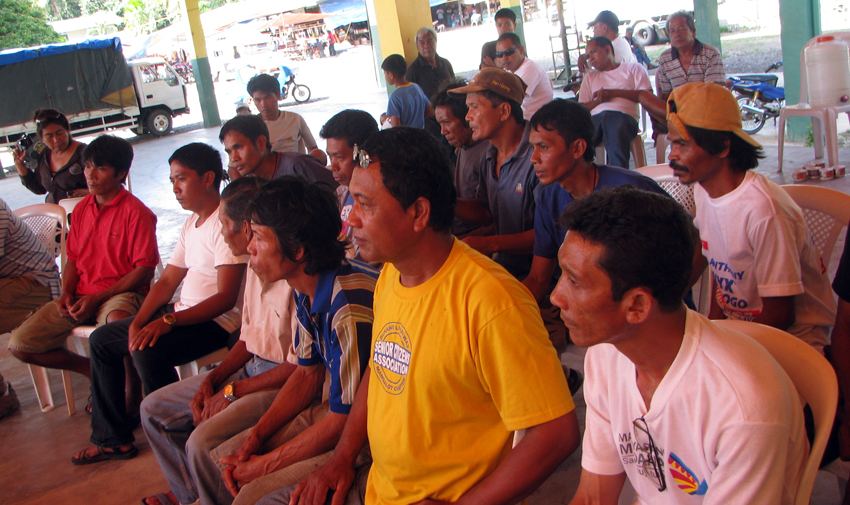
Vice-Mayor Mary Jean Feliciano (green-shirt center) and Mayor Cesareo Benedito meeting the Indigenous, farmers and fisher folks protesters on March 31.
Their demand was unequivocal: reject the endorsement signed by nine municipal councilors in favor of renewing the business permit of Ipilan Nickel Corporation (INC).
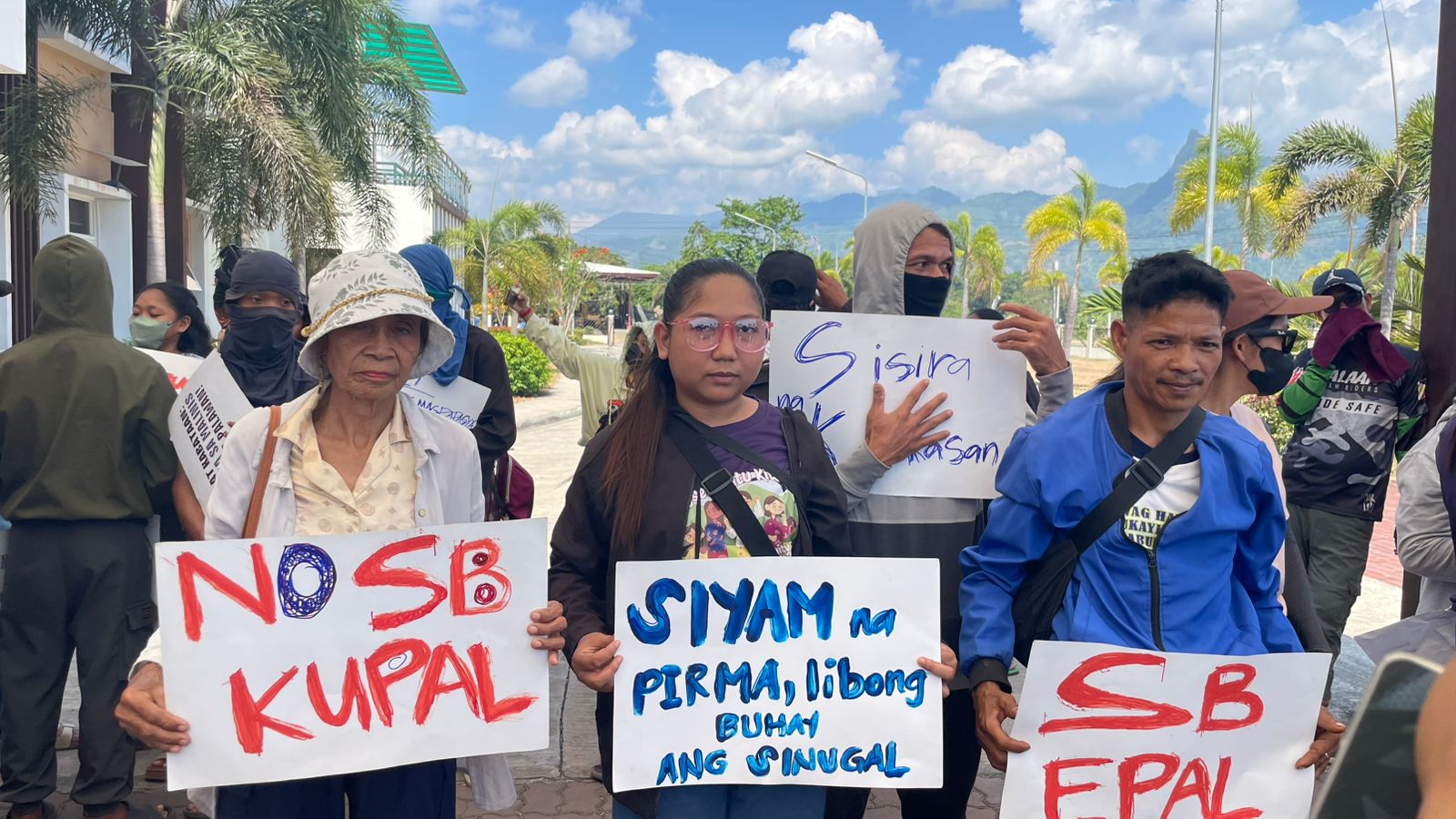
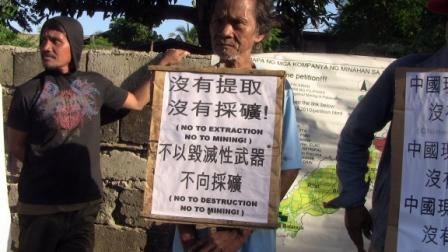
IPs protesters at the sit-in of March 31: central signboard “Nine signatures, a thousand lives were gambled” referring to the irresponsible decision by 9 members of the Municipal Government to endorse a business permit to Ipilan Nickel Corporation (INC).
Mayor Benedito received the petition and listened to the community’s appeal, assuring them that he would act in accordance with their call.
On April 1, 2026, representatives from the National Commission for Indigenous Peoples (NCIP), led by Atty. Jansen Jotilla, arrived in Sitio Linao, Brgy. Ipilan. They came with officials from the Indigenous Peoples Development Organization (IPDO) of BarongBarong, Ipilan, Calasaguen, Aribungos, Mambalot, and Maasin (BICAMM). Their mission was unmistakable: to meet the community that has held the Linao barricade with unwavering resolve.
But the people standing guard knew exactly what was at stake. IPDO members were not allowed to enter. Community defenders made their position clear.
“Several of these people are not truly Indigenous” one protester whispered from behind the barricade. “They are fake, self‑proclaimed leaders who collaborate with mining companies for personal gain. They speak in our name without our consent. We do not trust them. They are traitors. Yet NCIP validates them as leaders instead of us – the true custodians of this ancestral domain.”
Only the NCIP representative was permitted to cross the barricade. He met with community members and their recognized leader, Panglima Celso Paida. There, Atty. Jansen read a letter from the mining company, asking whether the community would reconsider mining operations if the company finally fulfilled the long‑broken promises in the Memorandum of Agreement (MOA).
Panglima Celso’s response cut through the noise with the clarity of a people who have endured enough: “We don’t believe in sweet promises. No more mining on our ancestral land.”
In that single statement, the community reaffirmed what they have been asserting for years – that no amount of corporate persuasion can outweigh their right to protect their ancestral territory, their culture, and their future.
What you can do: To support this struggle, please sign and send this email letter to Hon. Cesareo Benedito Jr., Mayor of Brooke’s Point (details in link)
Across the world right now, Indigenous peoples are facing a renewed assault on their lands, rights, and ways of life.
From extractive industries pushing deeper into ancestral territories, to governments rolling back hard-won protections,
the threat is global—and it is growing.
What makes this moment especially dangerous is how little attention it receives.
Stories like this are disappearing in real time. Mainstream media
barely covers it and the coverage is fragmented. The public is left without the context
needed to understand what is truly at stake.
That is exactly why IC Magazine exists..
For more than 20 years, IC has reported on Indigenous struggles worldwide — consistently, independently, and without compromise.
We don’t follow news cycles; we trace patterns. We don’t sensationalize; we provide context.
And when the world looks away, we stay focused.
But this work is increasingly difficult to sustain.
We refuse to lock our reporting behind a paywall. We don’t sell access through subscriptions.
And we don’t answer to advertisers. IC Magazine survives solely because readers like you choose to
support independent Indigenous journalism.
Please donate today if you can. Every contribution helps us to continue this crucial work.
Thank you,
John Ahni Schertow
Founder and Editor in Chief