Last Updated on October 7, 2013
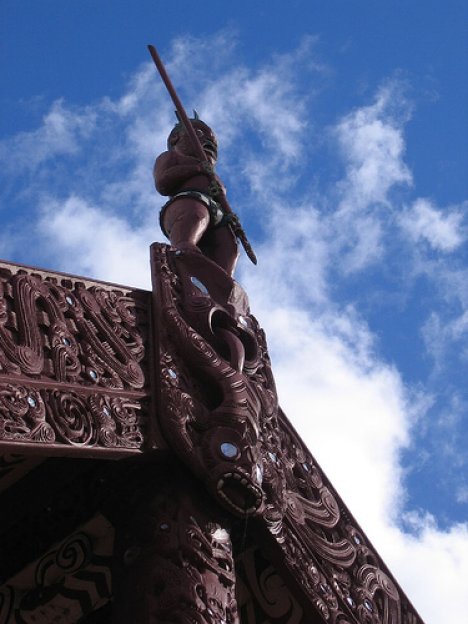
Before there were universities, knowledge was curated in monasteries. Prior to organized religion, knowledge was archived in stories, songs, dances and art embedded in everyday life.
Appropriation of this indigenous knowledge by church and state initially served to consolidate the power that accompanies the knowledge that was previously dispersed through communal ceremonies and rituals. Eventually, through plagiarizing and distortion, this socially-constructed knowledge came to be publicly viewed as the property of church and state—a commodity to mold, controlled and sold in the universal marketplace of ideas. In time, this commodity was commercialized by markets and institutions, in order to hoard this wealth of knowledge our ancestors took pains to learn for their and our benefit.
Today, as this history of the ownership of knowledge is obscured by bureaucrats, politicians and entrepreneurs, our ability to endure — indeed, to survive — is impaired by the ignorance imposed by its withdrawal from public consciousness. Only by restoring this intellectual property to its rightful owners, who themselves might choose to share it with others, can the power of knowledge once again serve humanity; at some point, hoarding and theft must be called to account.
Across the world right now, Indigenous peoples are facing a renewed assault on their lands, rights, and ways of life.
From extractive industries pushing deeper into ancestral territories, to governments rolling back hard-won protections,
the threat is global—and it is growing.
What makes this moment especially dangerous is how little attention it receives.
Stories like this are disappearing in real time. Mainstream media
barely covers it and the coverage is fragmented. The public is left without the context
needed to understand what is truly at stake.
That is exactly why IC Magazine exists..
For more than 20 years, IC has reported on Indigenous struggles worldwide — consistently, independently, and without compromise.
We don’t follow news cycles; we trace patterns. We don’t sensationalize; we provide context.
And when the world looks away, we stay focused.
But this work is increasingly difficult to sustain.
We refuse to lock our reporting behind a paywall. We don’t sell access through subscriptions.
And we don’t answer to advertisers. IC Magazine survives solely because readers like you choose to
support independent Indigenous journalism.
Please donate today if you can. Every contribution helps us to continue this crucial work.
Thank you,
John Ahni Schertow
Founder and Editor in Chief