Last Updated on April 7, 2025
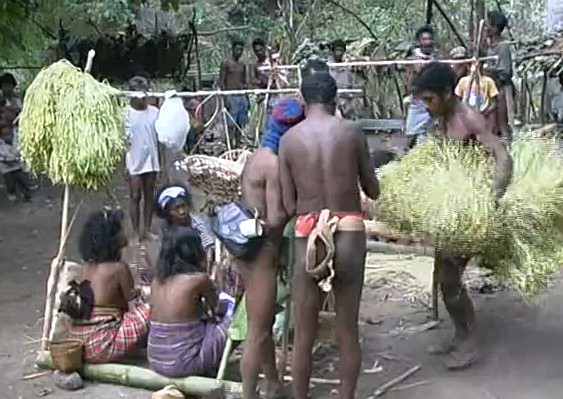
Here are two videos about an ongoing situation which began in 2003, when the Queen of Thailand seized all the land of Hooh Yoh Akha, displacing the Akha and forcing them to work on their own lands.
From the Ahka Heritage Foundation website
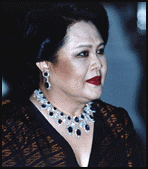
For years we have been protesting how the Queen of Thailand and other Royals come to Chiangrai province and take the land of the Akha for this and that national project in Thailand, selling the project as beneficial to the hill tribe and proof that the Queen loves the hill tribe. How you show your love for a people by taking their land and making them into slaves to farm the land they once owned, is beyond comprehension.
As one Akha woman said after all of her choice vegetable and farming land was taken in Pah Nmm Akha, “They came and told me, hey, its your land, you fix it for the Queen’s tea growing land, make terraces for the tea, we’ll pay you 3 baht a meter”. “That was perfect land, perfect soil.”
We oppose the Queen of Thailand for taking the land of the Akha people, thousands of acres, all the lands of entire villages like Hooh Yoh Akha. The Thais laugh, they think this will not become an international incident. They think this will be ok.
But we protest these events each year at the United Nations Permanent Forum for Indigenous Peoples and we protest it to the highest levels of the United Nations Office of the High Commissioner for Human Rights at Geneva.
When the truth becomes known to the world, the people of the world will think differently about the Queen of Thailand than she would have them think. “Why does someone who has it all, need to take the land from the poorest who have nothing?”
Go to this page for more info on this issue
Across the world right now, Indigenous peoples are facing a renewed assault on their lands, rights, and ways of life.
From extractive industries pushing deeper into ancestral territories, to governments rolling back hard-won protections,
the threat is global—and it is growing.
What makes this moment especially dangerous is how little attention it receives.
Stories like this are disappearing in real time. Mainstream media
barely covers it and the coverage is fragmented. The public is left without the context
needed to understand what is truly at stake.
That is exactly why IC Magazine exists..
For more than 20 years, IC has reported on Indigenous struggles worldwide — consistently, independently, and without compromise.
We don’t follow news cycles; we trace patterns. We don’t sensationalize; we provide context.
And when the world looks away, we stay focused.
But this work is increasingly difficult to sustain.
We refuse to lock our reporting behind a paywall. We don’t sell access through subscriptions.
And we don’t answer to advertisers. IC Magazine survives solely because readers like you choose to
support independent Indigenous journalism.
Please donate today if you can. Every contribution helps us to continue this crucial work.
Thank you,
John Ahni Schertow
Founder and Editor in Chief