Last Updated on November 6, 2025
In our world, the rivers remember. The mountains listen. The wind carries the voices of our ancestors, reminding us that giving and receiving are one breath, woven into the sacred rhythm of reciprocity. To resource, in the Indigenous way, is not merely to fund; it is to return what was taken, to restore balance between people, land, and spirit. It is an act of ceremony, of remembrance, of relationship. The Indigenous Peoples’ Advisory Board (IPAB) was born from a prayer that Indigenous Peoples no longer be spoken for, but speak as leaders of our own resourcing journeys. It represents more than a vehicle for funding grassroots movements; it is a return to ancestral forms of governance, where councils, elders, and community assemblies decide with spirit, consensus, and care. After decades of funding and building deep relationships with Indigenous communities, the Global Greengrants Fund formally launched the IPAB in 2024 to move more money into Indigenous communities, with their leadership.
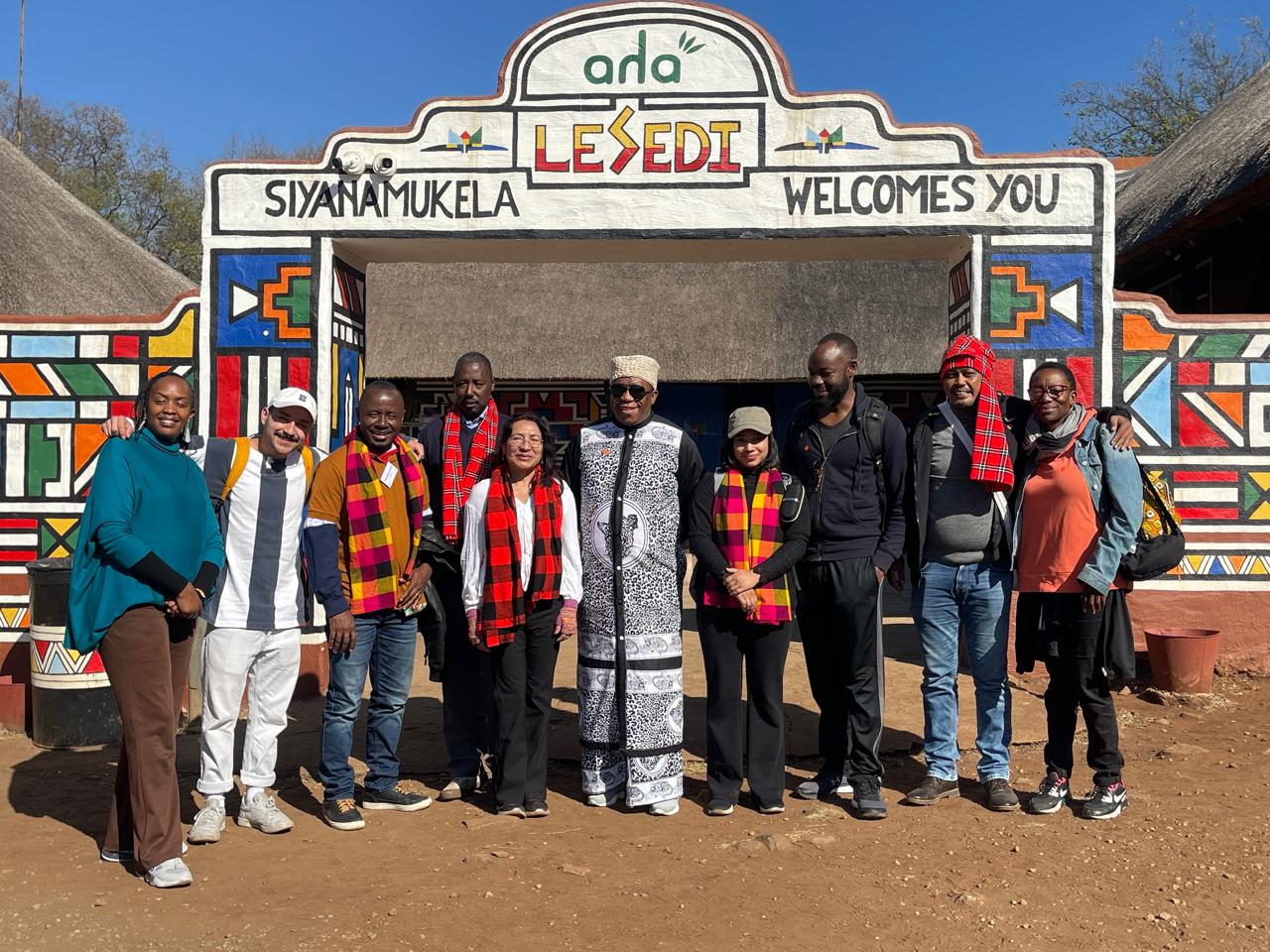
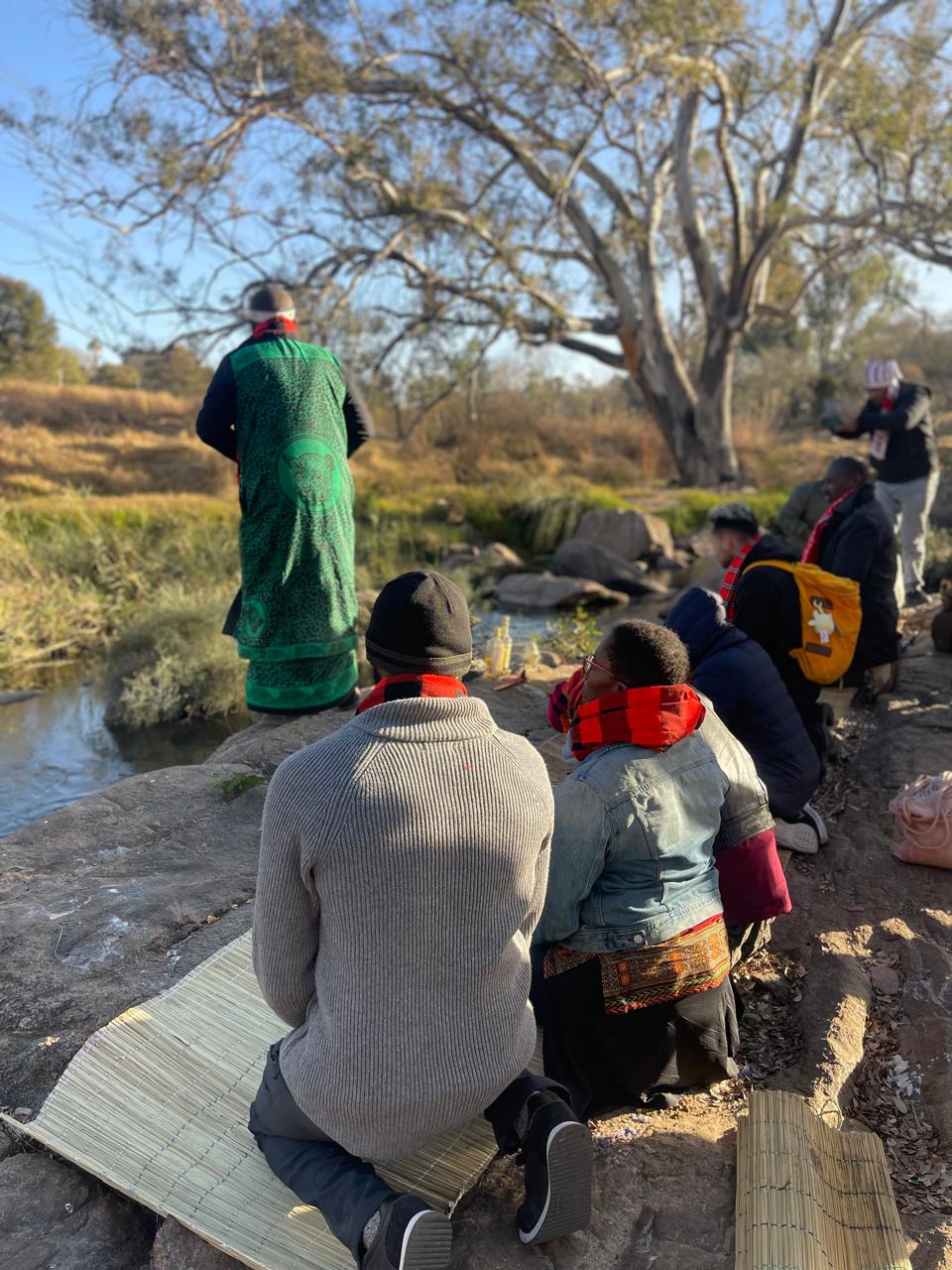
Our story begins not with money, but with meaning. Our first board gathering was in South Africa, under the blessing of healers and ancestors, at the sacred grounds of the NEOSI Healing Institute. Guided by the Sangoma, Mkhulu Manzolwandle, we entered a space of purification, where ceremony met purpose. There, before the spirits of the land, our Advisors received blessings to begin their sacred work together. As the Sangoma reminded us that day:
“What the caterpillar calls the end of the world, we call a butterfly.”
It was a call to transformation, to shed the old skin of extractive philanthropy and emerge into a new form: one where Indigenous Peoples define how resources flow, guided by spirit, community, and reciprocity.
Credit: Global Greengrants Fund
To understand Indigenous resourcing, one must first listen. For generations, people and movements have been told that resources are scarce, that competition is natural, and that survival belongs to those who take. But our elders teach us another truth: that the world is abundant when we live in relationship, not domination.
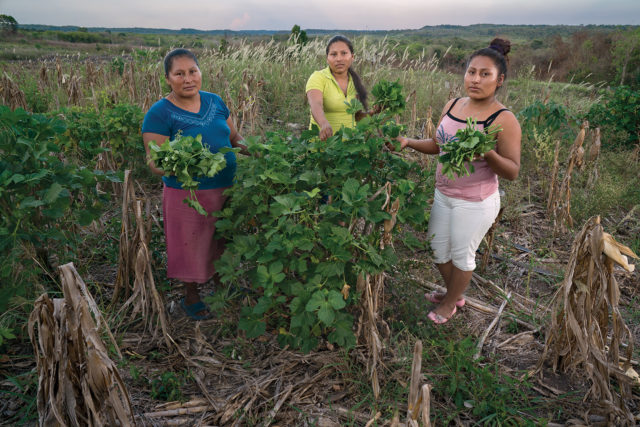
In its first pilot year, IPAB awarded 26 grants across 12 countries totaling $249,000 —not as transactions but as acts of renewal. Women, elders, and youth gathered to decide what their lands and spirits needed most: ceremonies, language revitalization, healing the soil, and healing each other.
Every grant was a story, a fire lit in a community, an offering made back to the Earth. Funding was not a contract; it was kinship. Through stories, songs, and collective wisdom, communities defined their priorities. Resourcing became not an extractive flow from North to South, but a circular movement, a giving and receiving, a rhythm of abundance.
As Deepak, our advisor from the Adivasi community in India, shared, “We are not poor. We are rich in ways the world has forgotten.” This is the insight of abundance, a resistance to scarcity thinking, and a return to the fullness of being. Philanthropy, when guided by Indigenous cosmologies, is not charity; it is an obligation to restore balance and harmony among all relations, human, animal, and spirit alike.
Credit: Global Greengrants Fund
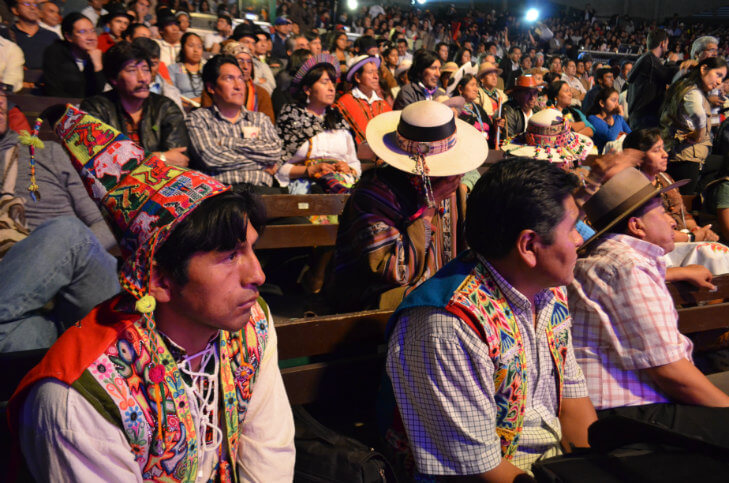
At its heart, IPAB is not just a funding body; it is a living council of wisdom. Seven Indigenous Advisors from across continents gather as kin, not as experts. The meetings echo the traditional councils of the Maasai, Adivasi, Baka, Maya, and others, where decisions rise like dawn from the horizon of dialogue. In these spaces, no one commands; instead, truth emerges through listening and presence.
In Tanzania, the Maasai elders gather beneath acacia trees to bless land governance decisions with prayer. In Cameroon, the Baka youth walk with elders into the forest, learning survival skills and the songs of their lineage. In India, Adivasi youth record ancestral stories as part of their efforts to reclaim governance from mining empires. In Colombia and Guatemala, each act, each voice from the Maya healers becomes governance for communities, reborn from an Indigenous parliament of the spirit. These systems of decision-making remind us that power is not control; it is care. Authority is not ownership; it is responsibility. Governance, in the Indigenous way, is a circle where every being has a place and a purpose.
For us, climate justice begins with healing. We cannot restore the land unless we first restore the spirit. The Earth’s crisis is a crisis of disconnection from our ancestry, sacred lands, and ourselves. Across continents, with support from Global Greengrants funding, the IPAB grantees are healing both land and soul. In Colombia, Inga women gather in sacred circles, practicing sumak kawsay or good living to realign body, spirit, and territory. In Argentina, ceremonial gatherings and medicinal plant workshops rekindle harmony after generations of violence. In Papua New Guinea and Nepal, communities teach ancestral languages, songs, and scripts, ensuring that the spirit of their people will never be erased. Every act of healing is a political act. Every prayer is a protest against systems that profit from disconnection. When we sing to the rivers, we are also demanding justice for them. When we light incense for our ancestors, we are calling for a world that remembers balance. As Sangoma Mkhulu Manzolwandle teaches, healing is the art of returning to the whole. It is remembering that our spirit, our land, and our people are one and that to heal one, we must heal all.
The IPAB is not an experiment. It is a return to how our ancestors governed, shared, and cared for life. Through participatory Indigenous grantmaking, we are showing philanthropy that true innovation lies not in new systems, but in ancient wisdom.
This work is deeply political. It challenges philanthropy to move beyond comfort, to redistribute not only funds but power to destabilize hierarchies that have long spoken over Indigenous voices. To fund Indigenous governance is to trust Indigenous sovereignty, to recognize that self-determination is the foundation of justice. Philanthropy must become ceremony–an offering that honors relationship, accountability, and reciprocity. It must learn to sit at the feet of Indigenous movements that have always known how to sustain life.
Credit: Global Greengrants Fund
While funding by and for Indigenous Peoples and Local Communities is on the rise, we have a long way to go. According to reports by the Forest Tenure Funders Group (FTFG), only 2.9% of the $321 million provided by donors went directly to Indigenous and local community organizations in 2021, but in 2024, 7.6% of the $527 million provided went directly to these groups. Additionally, the Tropical Forests Forever Facility (TFFF), a Brazil-led initiative that will formally launch at COP 30 in Belém, Brazil, aims to compensate countries for preserving tropical forests, with 20% of the funds allocated for Indigenous peoples.
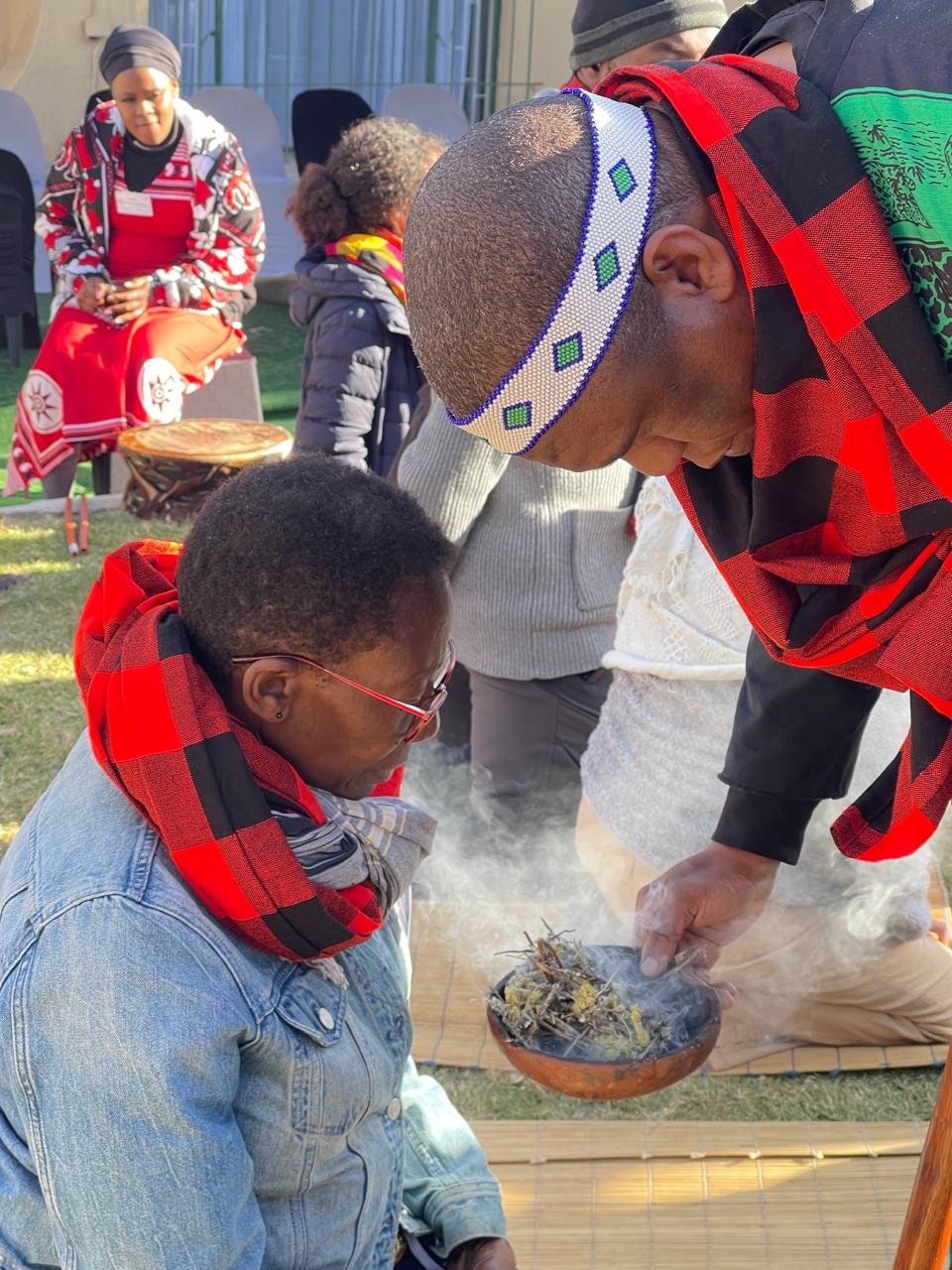
As the first chapter of IPAB’s journey closes, we do not count grants; we count blessings. We remember the prayers whispered in NEOSI’s healing garden, the smoke rising in ceremony, the Advisors who returned home carrying seeds of a new resourcing spirit.
We’ve come together to share our experiences through laughter, tears, and prayers. Each Advisor has journeyed with their communities through healing, governance, and renewal. Grants have supported not only projects but also dreams, songs, and ceremonies. And so, we close this story not with an ending, but with a continuation—like the Sangoma’s butterfly, we are still unfolding our wings, moving from a pilot to practice.
Ancestors, hear us.
We walk in your footsteps and plant seeds in your soil.
May every coin that moves carry prayer,
Every meeting be a circle of truth,
Every fund a gesture of return.
May Indigenous resourcing continue as ceremony, an act of love, of memory, of repair. And may all who join this path learn again the sacred rhythm of reciprocity.
Naomi Lanoi, East Africa Advisory Board Coordinator and Program Coordinator for Global Indigenous Grantmaking, Global Greengrants Fund
Across the world right now, Indigenous peoples are facing a renewed assault on their lands, rights, and ways of life.
From extractive industries pushing deeper into ancestral territories, to governments rolling back hard-won protections,
the threat is global—and it is growing.
What makes this moment especially dangerous is how little attention it receives.
Stories like this are disappearing in real time. Mainstream media
barely covers it and the coverage is fragmented. The public is left without the context
needed to understand what is truly at stake.
That is exactly why IC Magazine exists..
For more than 20 years, IC has reported on Indigenous struggles worldwide — consistently, independently, and without compromise.
We don’t follow news cycles; we trace patterns. We don’t sensationalize; we provide context.
And when the world looks away, we stay focused.
But this work is increasingly difficult to sustain.
We refuse to lock our reporting behind a paywall. We don’t sell access through subscriptions.
And we don’t answer to advertisers. IC Magazine survives solely because readers like you choose to
support independent Indigenous journalism.
Please donate today if you can. Every contribution helps us to continue this crucial work.
Thank you,
John Ahni Schertow
Founder and Editor in Chief