Last Updated on October 5, 2013
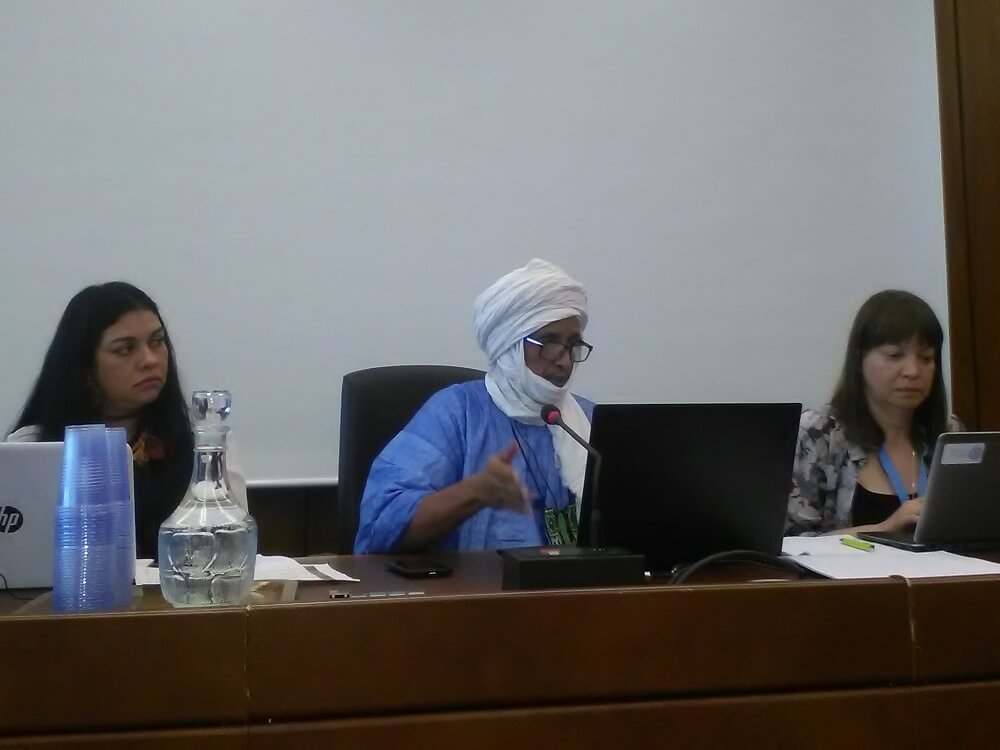
Likening indigenous usage of landscapes to indigenous application within ideoscapes, UN Special Rapporteur on the Rights of Indigenous Peoples James Anaya informed the World Intellectual Property Organization that property rights bias towards the individual rather than the collective in international law is fundamental to the historic lack of recognition accorded to the accumulated traditional knowledge of indigenous peoples that produced such products as the four thousand varieties of the potato. Where outmoded doctrines like terra nullius have been rejected under contemporary international law as a discriminatory colonial rationalization of theft of indigenous peoples lands, insistence on legal patents acquired through expensive legal processes continue to exclude indigenous peoples from benefiting as rightful owners of traditional knowledge and genetic resources they developed collectively over time. Allowing the colonization of their intellectual properties through international legal regimes is in essence a continuation of the largely European process that historically alienated their rights to their inherent territories.
Across the world right now, Indigenous peoples are facing a renewed assault on their lands, rights, and ways of life.
From extractive industries pushing deeper into ancestral territories, to governments rolling back hard-won protections,
the threat is global—and it is growing.
What makes this moment especially dangerous is how little attention it receives.
Stories like this are disappearing in real time. Mainstream media
barely covers it and the coverage is fragmented. The public is left without the context
needed to understand what is truly at stake.
That is exactly why IC Magazine exists..
For more than 20 years, IC has reported on Indigenous struggles worldwide — consistently, independently, and without compromise.
We don’t follow news cycles; we trace patterns. We don’t sensationalize; we provide context.
And when the world looks away, we stay focused.
But this work is increasingly difficult to sustain.
We refuse to lock our reporting behind a paywall. We don’t sell access through subscriptions.
And we don’t answer to advertisers. IC Magazine survives solely because readers like you choose to
support independent Indigenous journalism.
Please donate today if you can. Every contribution helps us to continue this crucial work.
Thank you,
John Ahni Schertow
Founder and Editor in Chief