
Last Updated on April 10, 2025
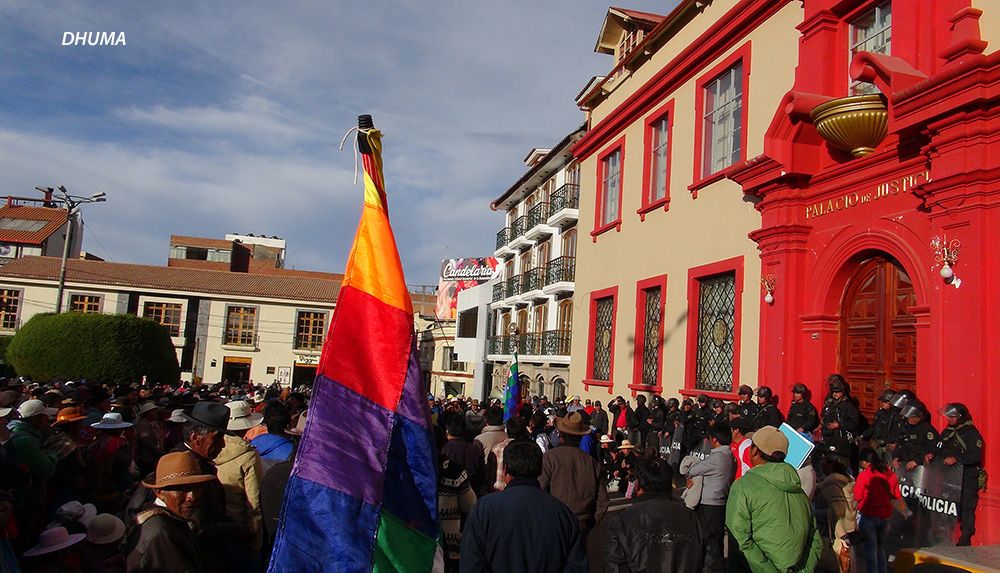
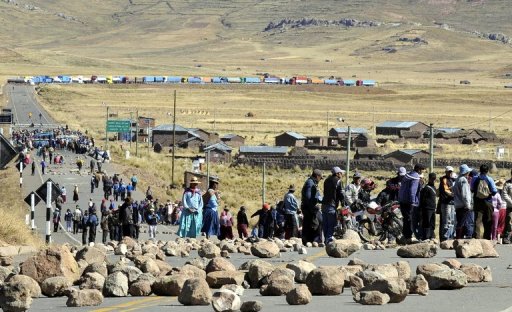
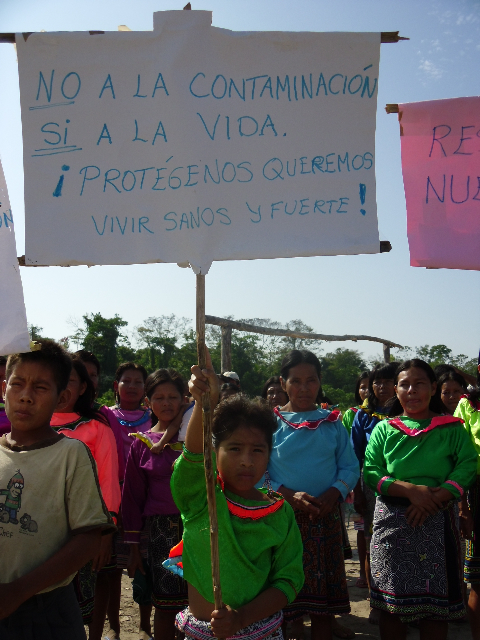
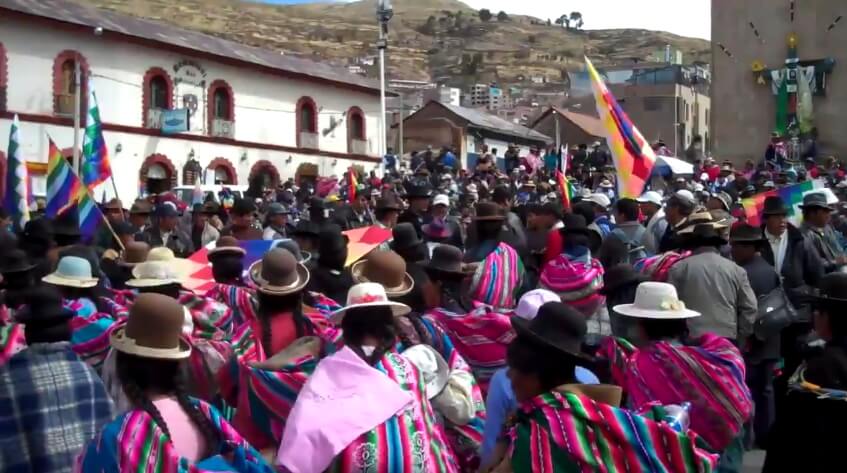
It’s been six years since the socio-environmental conflict known as the ‘Aymarazo’ in Peru, a mobilization that happened in the province of Puno in 2011, against the mining project ‘Santa Ana’, owned by the Canadian company Bear Creek Mining Corporation.
The project proposed is an open-cast mine near the border with Bolivia, which had planned to extract more that 63 million ounces of silver over a period of 11 years, beginning in 2012. The local population rejected the project because of the potential exploitation and contamination of water sources in the area, including the important Desaguadero River and Lake Titicaca, which Peru and Bolivia share.
As a consequence of the suspending of the project, 18 community leaders are facing criminal charges. They are accused of the alleged crimes of obstruction of public services, disturbing the peace, and aggravated extortion. Among them is Francisca Sarmiento, the only woman leader who is being charged. The public prosecutor is asking for the accused to face 18-28 years of prison and pay over 2 million dollars in compensation. The trial is now in its final stages.
Meanwhile, Bear Creek has sued the Peruvian state at the International Center for Settlement of Investment Disputes – ICSID – at the World Bank (the case was filed in August of 2014). Under the Free Trade Agreement between Canada and Peru, the corporation seeks a compensation of 1.2 billion dollars for not allowing the Santa Ana silver mine to proceed. Despite this, the corporation is still present in the region, pushing forward with other projects, like the Corani Mining project, also located in the province of Puno.
This is the reality communities that oppose mining in Peru face – they are criminalized and stigmatized for rejecting mining projects, and in this case, for being Indigenous Peoples. The aggressive pro-mining policies that reign in the country have caused many socio-environmental conflicts in indigenous territories, land dispossession, displacement of communities and the violation of human and collective rights. These policies are pushed by transnational corporations like Bear Creek, which benefit from the extraction of natural resources and the violations of the rights of local communities, communities who are fighting to defend their territories.
This is a co-production between The Democracy Center (Leny Olivera Rojas, Sian Cowman, and Aldo Orellana López) and the organization Human Rights and Environment – Puno (DHUMA). DHUMA is part of the organization National Coordination for Human Rights and the Muqui Network in Peru.
Across the world right now, Indigenous peoples are facing a renewed assault on their lands, rights, and ways of life.
From extractive industries pushing deeper into ancestral territories, to governments rolling back hard-won protections,
the threat is global—and it is growing.
What makes this moment especially dangerous is how little attention it receives.
Stories like this are disappearing in real time. Mainstream media
barely covers it and the coverage is fragmented. The public is left without the context
needed to understand what is truly at stake.
That is exactly why IC Magazine exists..
For more than 20 years, IC has reported on Indigenous struggles worldwide — consistently, independently, and without compromise.
We don’t follow news cycles; we trace patterns. We don’t sensationalize; we provide context.
And when the world looks away, we stay focused.
But this work is increasingly difficult to sustain.
We refuse to lock our reporting behind a paywall. We don’t sell access through subscriptions.
And we don’t answer to advertisers. IC Magazine survives solely because readers like you choose to
support independent Indigenous journalism.
Please donate today if you can. Every contribution helps us to continue this crucial work.
Thank you,
John Ahni Schertow
Founder and Editor in Chief