Last Updated on August 17, 2018
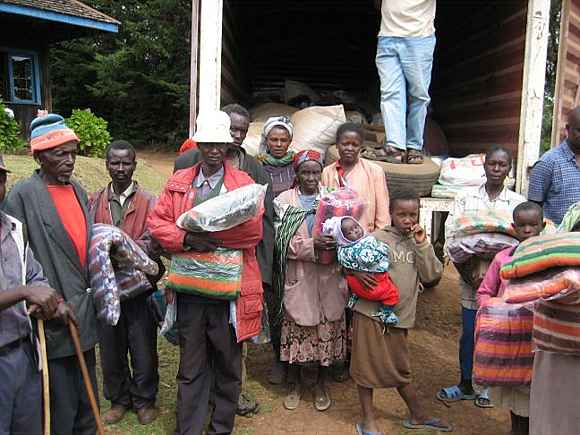
For the past 8 months, the Kenyan government has carried out a brutal campaign of violence against the Indigenous Samburu People in north-central Kenya.
The most infamous attack took place in February 2009, when the Kenyan police reportedly sprayed a caustic chemical onto group of children, severely burning them. The children were hiding in the bush at the time, while the police “strafed the unarmed villagers with machine guns” from the air and “used clubs to beat them on the ground.” Following the cruel and unwarranted attack, the police confiscated 4,000 head of cattle–robbing the Samburu of their main source of food and wealth.
In the weeks leading up to this attack, “Government forces brutally shut down” several wildlife conservancies the Samburu pastoralists managed in collaboration with environmental organizations, explains Cultural Survival, who just received “reports of further air and land attacks on the Samburu by hundreds of Kenyan police troops during the week of November 16.”
Though unconfirmed, there have been reports that a Kenyan military officer has leaked documents suggesting this ongoing campaign is aimed at forcing the Samburu to abandon their way life.
The documents are said to explicitly mention the intent to “bring these people into the modern era” and show that the attacks, including the one just described, were planned months in advance.
PHOTO CREDIT: lionresearch
To support the Samburu people, please send letters to government officials in Kenya, asking them to:
A list of contacts and a sample letter can be found at http://www.culturalsurvival.org/take-action/kenya/stop-police-brutality-against-samburu-people
Across the world right now, Indigenous peoples are facing a renewed assault on their lands, rights, and ways of life.
From extractive industries pushing deeper into ancestral territories, to governments rolling back hard-won protections,
the threat is global—and it is growing.
What makes this moment especially dangerous is how little attention it receives.
Stories like this are disappearing in real time. Mainstream media
barely covers it and the coverage is fragmented. The public is left without the context
needed to understand what is truly at stake.
That is exactly why IC Magazine exists..
For more than 20 years, IC has reported on Indigenous struggles worldwide — consistently, independently, and without compromise.
We don’t follow news cycles; we trace patterns. We don’t sensationalize; we provide context.
And when the world looks away, we stay focused.
But this work is increasingly difficult to sustain.
We refuse to lock our reporting behind a paywall. We don’t sell access through subscriptions.
And we don’t answer to advertisers. IC Magazine survives solely because readers like you choose to
support independent Indigenous journalism.
Please donate today if you can. Every contribution helps us to continue this crucial work.
Thank you,
John Ahni Schertow
Founder and Editor in Chief