Last Updated on April 10, 2025
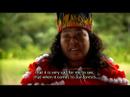
In this video, you will hear Indigenous representatives from Suriname speaking about their centuries-old struggle for rights and for recognition by the government. The video was created for the Organization of Indigenous People in Suriname and taken to the United Nations Permanent Forum of Indigenous Issues (UNPFII), in April 2008.
Here’s a brief overview of the present-day struggle, from the book, Indigenous Resurgence in the Contemporary Caribbean:
Suriname is a small former Dutch colony on the north-east coast of mainland South America. It is a member of CARICOM and according to historical and demographic factors is considered to be Caribbean rather than Latin American.
Until recently, its substantial tropical rainforests, which cover at least 80 percent of the surface area of the country, were regarded as one of the best prospects for long term, sustainable use and conservation. These forests are the ancestral home of five distinct indigenous peoples comprising up to five percent of the population and six tribal peoples (known as Maroons) totaling between ten and fifteen percent of the population. In real numbers, this translates as approximately 20,000 indigenous people and 40-60,000 tribal people.
Less than 30 years ago, Suriname was one of the most prosperous states in South America. A brutal military dictatorship, civil war, endemic corruption, declining prices for bauxite and the periodic suspension of Dutch aid money has left the country with serious economic problems.
In an attempt to secure revenue to service foreign debt and stimulate economic recovery, Suriname has granted numerous concessions for gold, bauxite and timber that encompass close to 40 percent of the country’s land mass. Additionally, some 30,000 Brazilian garimpeiros have been licensed to mine by the state. In most cases, these concessions have been granted on lands traditionally occupied and used by indigenous and tribal peoples, provoking serious conflict and allegations of widespread human rights abuses.
While Suriname claims that the concessions will provide desperately needed revenue, analyses of contracts for both logging and mining operations have revealed that the Surinamese treasury will receive few if any benefits and that the environment and indigenous and tribal peoples will suffer irreparable harm.
Indigenous and tribal peoples, whose rights to their territories and resources are not recognized in Surinamese law, have vigorously condemned this invasion of their lands and territories. They have demanded that all existing concessions be suspended and that no more be issued until their rights are recognized in accordance with international human rights standards and enforceable guarantees are in place in Surinamese law. They have also begun to organize and proactively seek recognition and protection of their rights in various domestic and international fora.
Across the world right now, Indigenous peoples are facing a renewed assault on their lands, rights, and ways of life.
From extractive industries pushing deeper into ancestral territories, to governments rolling back hard-won protections,
the threat is global—and it is growing.
What makes this moment especially dangerous is how little attention it receives.
Stories like this are disappearing in real time. Mainstream media
barely covers it and the coverage is fragmented. The public is left without the context
needed to understand what is truly at stake.
That is exactly why IC Magazine exists..
For more than 20 years, IC has reported on Indigenous struggles worldwide — consistently, independently, and without compromise.
We don’t follow news cycles; we trace patterns. We don’t sensationalize; we provide context.
And when the world looks away, we stay focused.
But this work is increasingly difficult to sustain.
We refuse to lock our reporting behind a paywall. We don’t sell access through subscriptions.
And we don’t answer to advertisers. IC Magazine survives solely because readers like you choose to
support independent Indigenous journalism.
Please donate today if you can. Every contribution helps us to continue this crucial work.
Thank you,
John Ahni Schertow
Founder and Editor in Chief