Last Updated on May 18, 2019
The people of Nigeria versus Shell is a short 5 minute video that discusses a new legal effort against Royal Dutch Shell.
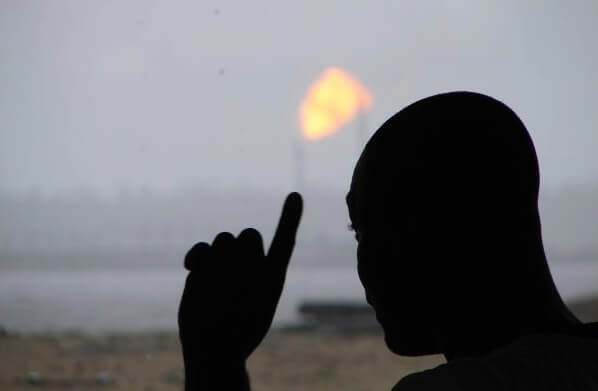
On May 15th 2008, Friends of the Earth Netherlands, her Nigerian sister organization ERA and four Nigerian plaintiffs took legal action against Royal Dutch Shell over a series of oil spills in the Niger Delta.
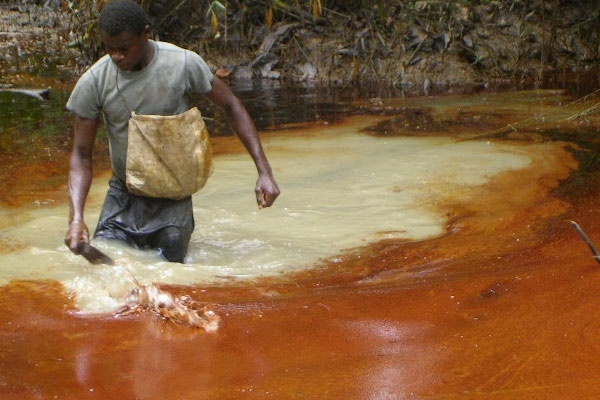
The plaintiffs, farmers and fishermen from the villages of Goi (Ogoniland), Ikot Ada Udo and Orumain, have seen considerable damage to their lands and communities as a result of the spills.
“Due to the oil spill and accompanying fire, my land was destroyed: my fish ponds, my canoes, my vegetable gardens and fruitbearing trees that I planted. I was left behind empty-handed. I hope that the judge in the Netherlands can force Shell to take the right action. That is where my hope lies, ” says one of the plaintiffs, Chief Barizaa Dooh from Goi.
“Shell only comes to repair the leaks. After that they leave the village without clean-up and recovery of the area or paying compensation for the damage. The people of Ikot Ada Udo are angry, very angry,” says another plaintiff, Friday Akpan from Ikot Ada Udo.
“Subsistence farming and fishing are the mainstay of the 27 million people living in the oil-exploited Niger Delta,” explains a press release by press release from Friends of the Earth. “For decades, oil spills from Shell installations and pipelines have been affecting local people. Shell Nigeria reports 250 oil spills annually. Shell’s Nigerian subsidiary company acknowledges that it has a backlog in assuring the adequate condition of its installations and pipelines, in order to prevent oil spills. The cleaning-up of oil spills is often done superficially, leaving much poisonous oil in soil and water. Fisheries in the Niger Delta have declined at an alarming rate.
If the case goes forward, it would be the first time that Shell would be held liable in its home country for pollution it’s caused overseas.
“The behaviour of Shell-headquarters on Nigerian oil pollution is fairly clear: it knows about it, it is able to act, it neglects to act. By means of this legal steps, we want to ensure that victims of Nigerian oil pollution can obtain justice in the Netherlands,” said Anne van Schaik, Friends of the Earth Netherlands.
“In a globalised world, European companies should be held accountable in their home countries when they operate overseas in ways they would never dream of in their own backyard,” adds Nnimmo Bassey, Executive Director of Friends of the Earth Nigeria.
Across the world right now, Indigenous peoples are facing a renewed assault on their lands, rights, and ways of life.
From extractive industries pushing deeper into ancestral territories, to governments rolling back hard-won protections,
the threat is global—and it is growing.
What makes this moment especially dangerous is how little attention it receives.
Stories like this are disappearing in real time. Mainstream media
barely covers it and the coverage is fragmented. The public is left without the context
needed to understand what is truly at stake.
That is exactly why IC Magazine exists..
For more than 20 years, IC has reported on Indigenous struggles worldwide — consistently, independently, and without compromise.
We don’t follow news cycles; we trace patterns. We don’t sensationalize; we provide context.
And when the world looks away, we stay focused.
But this work is increasingly difficult to sustain.
We refuse to lock our reporting behind a paywall. We don’t sell access through subscriptions.
And we don’t answer to advertisers. IC Magazine survives solely because readers like you choose to
support independent Indigenous journalism.
Please donate today if you can. Every contribution helps us to continue this crucial work.
Thank you,
John Ahni Schertow
Founder and Editor in Chief