Last Updated on March 13, 2013
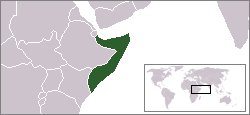
The rights of the Southern Somali indigenous people
By: Mohamed Ahmed, yementimes.com
Somalia’s president agreed last month to a national reconciliation conference to try to end 16 years of anarchy in the war-ravaged country after intense pressure from the EU, USA, AL and UN.
The current proposal is a good thing, but what I suggest to the international community, is not to honor only the armed clans and those who have committed human rights abuses in Somalia. What about the hitherto occupied and victimized Southern Somali indigenous communities? Instead of rewarding only the warmongers, the international community should consider also inviting these indigenous communities to the table for a genuine and inclusive reconciliation process.
Who are the Southern Somali indigenous communities?
Hereinafter known as the Banaadiri people, consist of various socio-cultural groups who forged throughout the centuries a common tradition to live in peace and harmony.
That, because of its history, conquest, colonization, migrations, and forced displacements, the Somali nation is multi-ethnic, multicultural and multilingual in nature.
The indigenous peoples of the Banaadir have been particularly subject to de facto levels of discrimination, exploitation and injustice, on account of their origin, culture and language and that, like many other sectors of the national community, they have to endure unequal and unjust treatment and conditions on account of their economic and social status.
This historical reality has affected and continues to affect these peoples profoundly, denying them the full exercise of their rights and political participation, and hampering the configuration of a national unity which should adequately reflect the rich and diversified structure of Somalia with its wealth of values.
That until this problem affecting the Somali society is resolved, its economic, political, social and cultural potential will never be able to develop fully and neither will it be able to take its place in the community of nations due to it by virtue of its ancient history and the spiritual grandeur of its peoples.
That it will be possible to eliminate oppression and discrimination in Somalia only if due recognition is given to all aspects of the identity and rights of the peoples who have inhabited and continue to inhabit it, all of whom are components of its present reality and protagonists in its development, in all senses.
I conclude that the international community should avoid empowering individuals who abused the country and the society for over decades. This will only lead to a wider marginalization of the silent majority in this long conflict and will be a recipe for disaster.
Mohamed Ahmed
benadir_star@yahoo.co.uk
(source)
Across the world right now, Indigenous peoples are facing a renewed assault on their lands, rights, and ways of life.
From extractive industries pushing deeper into ancestral territories, to governments rolling back hard-won protections,
the threat is global—and it is growing.
What makes this moment especially dangerous is how little attention it receives.
Stories like this are disappearing in real time. Mainstream media
barely covers it and the coverage is fragmented. The public is left without the context
needed to understand what is truly at stake.
That is exactly why IC Magazine exists..
For more than 20 years, IC has reported on Indigenous struggles worldwide — consistently, independently, and without compromise.
We don’t follow news cycles; we trace patterns. We don’t sensationalize; we provide context.
And when the world looks away, we stay focused.
But this work is increasingly difficult to sustain.
We refuse to lock our reporting behind a paywall. We don’t sell access through subscriptions.
And we don’t answer to advertisers. IC Magazine survives solely because readers like you choose to
support independent Indigenous journalism.
Please donate today if you can. Every contribution helps us to continue this crucial work.
Thank you,
John Ahni Schertow
Founder and Editor in Chief