Last Updated on April 10, 2025
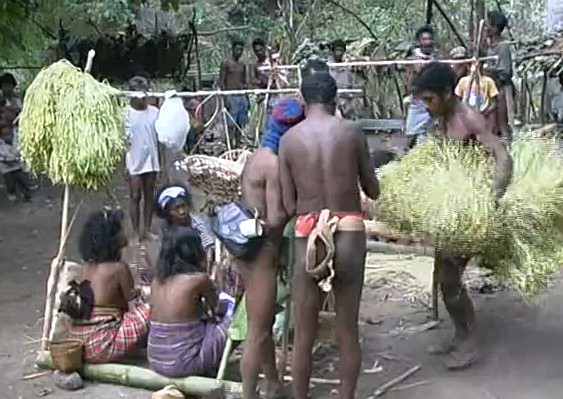
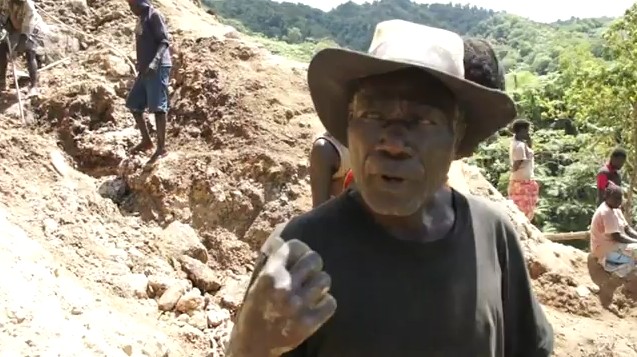
Prostitution, marine life destruction, pollution and bad smells. Watch how the tuna industry is damaging the Madang Lagoon people and their resources in Papua New Guinea.
In 1905, the Catholic Church acquired 860 hectares of the Kananam peoples traditional territory, at a time when Madang, a province in Papua New Guinea, was administered by the Germans. Soon after, the Church built a mission and a local economy, planting some 28,650 coconut palms and 28,550 rubber trees.
Years later, as the local population swelled and economic needs reached new heights, the Kananam started asking the Church to give back the land, which they did not have any legal right to in the first place. The Kananam were turned down time and again, eventually leading the people to sabotage the mission property.
The Church conceded in 1996. However, instead of returning the land to the traditional owners, they gave it to the provincial government. The Church said at the time that it was “for the benefit of the people”—so the land could be developed. The government, in turn, sold it to RD Tuna Canners Ltd., a branch of the RD Group of companies based in the Philippines.
RD Tuna, who today ships out to various food chains in Canada, the United States, Belfast and elsewhere, wasted no time setting up shop.
Admittedly, the company brought in some news jobs, but with them came the inevitable consequence of “development,” opening the gates to a new era of hardship for the Kananam People: Environmental pollution (from Sewage and fish waste being poured directly into local rivers and solid waste buried in various locations) and chemical spills (which have claimed human and marine life in the past), discrimination, and the gradual breakdown of Kananam society.
And prostitution, according to the Friends of Kananam and the Idawad Association of Kananam landowners, who are actively opposing RD Tuna. Both groups say that Kananam Women, and in some cases, young girls, are pressured into trading sex for Tuna and money. The spread of HIV/AIDS is a major concern right now.
To make matters even worse, the government is preparing a massive expansion of RD Tuna’s operation. They want to build another 10 canneries.
This could mean the end of the Kananam’s way of life. It most certainly guarantees the end of the Bluefin, Yellowfin and Big Eye populations, all of which will be wiped out in the next few years if they are not allowed to recover.
To learn more, please visit http://www.rdtunapng.com/. Thanks to the Mineral Policy Institute.
Across the world right now, Indigenous peoples are facing a renewed assault on their lands, rights, and ways of life.
From extractive industries pushing deeper into ancestral territories, to governments rolling back hard-won protections,
the threat is global—and it is growing.
What makes this moment especially dangerous is how little attention it receives.
Stories like this are disappearing in real time. Mainstream media
barely covers it and the coverage is fragmented. The public is left without the context
needed to understand what is truly at stake.
That is exactly why IC Magazine exists..
For more than 20 years, IC has reported on Indigenous struggles worldwide — consistently, independently, and without compromise.
We don’t follow news cycles; we trace patterns. We don’t sensationalize; we provide context.
And when the world looks away, we stay focused.
But this work is increasingly difficult to sustain.
We refuse to lock our reporting behind a paywall. We don’t sell access through subscriptions.
And we don’t answer to advertisers. IC Magazine survives solely because readers like you choose to
support independent Indigenous journalism.
Please donate today if you can. Every contribution helps us to continue this crucial work.
Thank you,
John Ahni Schertow
Founder and Editor in Chief