Last Updated on August 14, 2026
The UK-based company Vedanta Resources tried to enter the Dongria Kondh’s territory last night.
Fortunately, the vigilant and unwavering Dongria Kondh met the company with a road block, preventing Vedanta from going any further.
“Last night’s action follows high level meetings at the weekend between Vedanta’s billionaire chairman Anil Agarwal and Orissa Chief Minister Naveen Patnaik, who backs the mine,” says Survival International. “After the meeting, Agarwal told journalists that mining would start ‘within a month or two’.”
This of course spits in the face of Agarwal’s promise that “we will only start work if we have complete permission of the court and the people.”
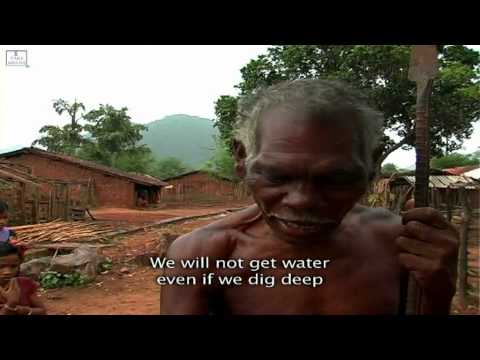
Sure enough, the court gave Vedanta the go-ahead – but the Dongria Kondh, the custodians of the Niyamrigi hills in Orissa, India, have continuously stated that they cannot support the exploitation and destruction of the hills. Without them, the Kondh say, “there is no life for us.”
“The stand-off between local villagers and Vedanta’s bulldozers at the blockade site continues,” reports Survival. “Protestor Ajun Chandi, who has received a series of threatening phone calls from Vedanta, says, ‘You must let the whole world know what Vedanta is doing.'”
Survival’s Director, Stephen Corry adds, “Vedanta won’t be able to hide its work by invading the Kondhs’ land at night. It doesn’t even have official approval. Whether or not it gets it, the Dongria aren’t likely to agree to their homeland and most sacred site being destroyed. Vedanta is trying to intimidate the tribespeople. This is an appalling way for a major British company to behave, it isn’t going to work and Vedanta must now expect international opposition to grow.”
For more information please contact Miriam Ross at Survival International on (+44) (0)20 7687 8734 or (+44) (0)7504 543 367 or email mr@survival-international.org
Across the world right now, Indigenous peoples are facing a renewed assault on their lands, rights, and ways of life.
From extractive industries pushing deeper into ancestral territories, to governments rolling back hard-won protections,
the threat is global—and it is growing.
What makes this moment especially dangerous is how little attention it receives.
Stories like this are disappearing in real time. Mainstream media
barely covers it and the coverage is fragmented. The public is left without the context
needed to understand what is truly at stake.
That is exactly why IC Magazine exists..
For more than 20 years, IC has reported on Indigenous struggles worldwide — consistently, independently, and without compromise.
We don’t follow news cycles; we trace patterns. We don’t sensationalize; we provide context.
And when the world looks away, we stay focused.
But this work is increasingly difficult to sustain.
We refuse to lock our reporting behind a paywall. We don’t sell access through subscriptions.
And we don’t answer to advertisers. IC Magazine survives solely because readers like you choose to
support independent Indigenous journalism.
Please donate today if you can. Every contribution helps us to continue this crucial work.
Thank you,
John Ahni Schertow
Founder and Editor in Chief