Last Updated on November 9, 2010
From the Mexican news agency APRO, Sept. 20 via Chiapas95 (our translation):
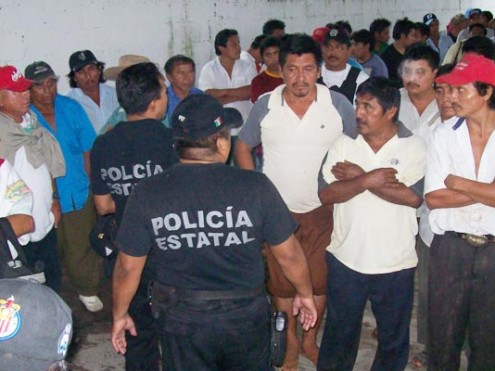
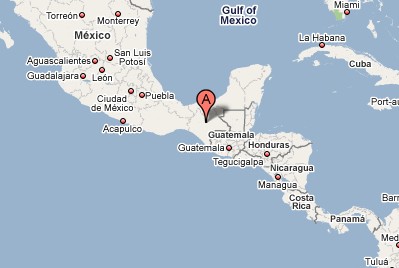
JALAPA – Protesting the failure of authorities to indemnify hundreds of families left homeless by a flood this past June, and to complete public works in the region, hundreds of indigenous people of the Sierra Soteapan closed the valves of the Yuribia Dam that supplies water to an important southern zone of Veracruz.
The occupation of the Yuribia installations since last Sunday leaves the municipalities of Coatzacoalcos, Minatitlan and Cosoleacaque without drinking water.
No agreement has been reached to re-establish the supply, confirmed the governor, Fidel Herrera Beltran.
The inhabitants of various Nahua and Populuca communities, supported by the mayor of Tatahuicapan de Juarez, Julian Cruz Gomez, took possession of the dam installations to press demands that the state government fulfill its commitments to the impacted communities.
The region affected by the cut-off of water supply, above all in Minatitlan, Coatzacoalcos and Cosoleacaque, house the country’s main petrochemical plants, property of Petroleos Mexican (Pemex).
The Yuribia dam, built on the Rio Tixizapan, crosses the municipality of Tatahuicapan, in the Sierra Soteapan indigenous reagion, and feeds the aqueducts that supply of drinking water to the industrial corridor of Coatzacoalcos, Minatitlan and Cosoleacaque.
As of this afternoon, the conflict continues without a solution, reproted Herrera Beltran, recognizing that the indigenous residents of Tatahuicapan de Juarez demand public works in their communities, which the has not been able to carry out, “but they are going to do so.”
In popular assembly, the protesters sent a document to the state government, through the municipal president, Julian Gomez Cruz, demanding a signed agreement with the municipal governments of Coatzacoalcos, Minatitlan and Cosoleacaque with that of Tatahuicapan for the maintanance of the dam and local aquifer.
In the document, the peasants demand an end to the ecological damage caused by the super-exploitation of the waters, “which has generated millions of pesos in the past years without any benefit to the inhabitants of the place.”
The statement warned that if their demands were not met, and if authorities proceeded with plans to enlarge the dam’s capacity, they would be forced to take radical measures, because the environmental damage to their communities would be irreversable.
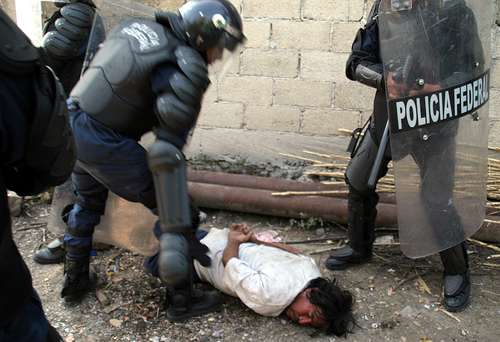
The indigenous inhabitants also erected vigilance roadblocks on the highways to San Pedro Soteapan, Pajapan, Mecayapan, Chinameca and Cosoleacaque, as a preventative measure against an eventual eviction.
Across the world right now, Indigenous peoples are facing a renewed assault on their lands, rights, and ways of life.
From extractive industries pushing deeper into ancestral territories, to governments rolling back hard-won protections,
the threat is global—and it is growing.
What makes this moment especially dangerous is how little attention it receives.
Stories like this are disappearing in real time. Mainstream media
barely covers it and the coverage is fragmented. The public is left without the context
needed to understand what is truly at stake.
That is exactly why IC Magazine exists..
For more than 20 years, IC has reported on Indigenous struggles worldwide — consistently, independently, and without compromise.
We don’t follow news cycles; we trace patterns. We don’t sensationalize; we provide context.
And when the world looks away, we stay focused.
But this work is increasingly difficult to sustain.
We refuse to lock our reporting behind a paywall. We don’t sell access through subscriptions.
And we don’t answer to advertisers. IC Magazine survives solely because readers like you choose to
support independent Indigenous journalism.
Please donate today if you can. Every contribution helps us to continue this crucial work.
Thank you,
John Ahni Schertow
Founder and Editor in Chief