Last Updated on November 13, 2011
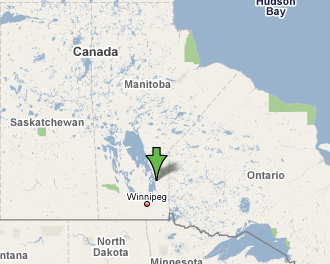
On Sunday, members of the Hollow Water First Nation set up a blockade near Highway 304 in Manitoba, preventing access to a cottage development being constructed on Traditional Territory.
Some cottages were already occupied by Canadians, whom were given four hours to vacate the area. No one has been allowed back in since then.
Chief Ian Bushie said on Monday that Hollow Water has not been consulted at any point. All the government has done so far, is send letters and faxes telling them their plans. Now Hollow Water is calling upon the government to negotiate a deal to share revenue and resources generated in the area before access will be once again available.
In response to the blockade, the Manitoba government has since contacted Hollow Water; However they clearly did not go far enough, as last night another blockade was announced. Here’s the Media Release:
We received correspondence from the Province of Manitoba Representatives which by no means addresses the concerns brought forth by the Hollow Water First Nation. Provincial Officials must realize that an area once untouched has now been possibly irreversibly damaged. In an effort to ensure Provincial Officials understand the seriousness of the situation; the Hollow Water First Nation is now prepared to deny access to the 304 Highway. This highway crosses the Hollow Water First Nation’s Traditional Area and provides access to Wanipigow Lake and the Bissett Region. As of 11:00 pm measures have been put in place to provide such a barricade.
According to the Winnipeg Sun, as of 7:30am today, the highway (which also goes through traditional territory) remained open, but a blockade is currently sitting nearby in wait.
Across the world right now, Indigenous peoples are facing a renewed assault on their lands, rights, and ways of life.
From extractive industries pushing deeper into ancestral territories, to governments rolling back hard-won protections,
the threat is global—and it is growing.
What makes this moment especially dangerous is how little attention it receives.
Stories like this are disappearing in real time. Mainstream media
barely covers it and the coverage is fragmented. The public is left without the context
needed to understand what is truly at stake.
That is exactly why IC Magazine exists..
For more than 20 years, IC has reported on Indigenous struggles worldwide — consistently, independently, and without compromise.
We don’t follow news cycles; we trace patterns. We don’t sensationalize; we provide context.
And when the world looks away, we stay focused.
But this work is increasingly difficult to sustain.
We refuse to lock our reporting behind a paywall. We don’t sell access through subscriptions.
And we don’t answer to advertisers. IC Magazine survives solely because readers like you choose to
support independent Indigenous journalism.
Please donate today if you can. Every contribution helps us to continue this crucial work.
Thank you,
John Ahni Schertow
Founder and Editor in Chief