Last Updated on August 3, 2018
In 2002, El Hajj Omar Bongo Ondimba, then President of the Republic of Gabon, signed into existence thirteen National Parks. The Parks were designed to represent different biomes and important biodiversity enclaves in this Congo Basin country.
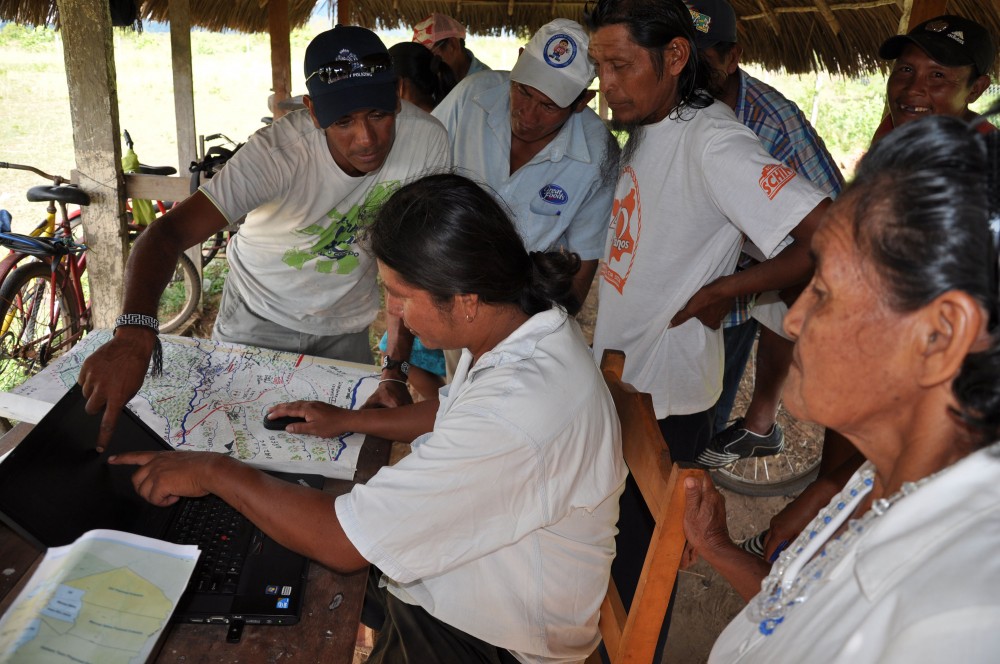
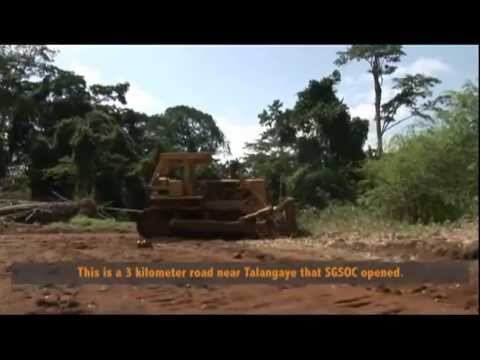
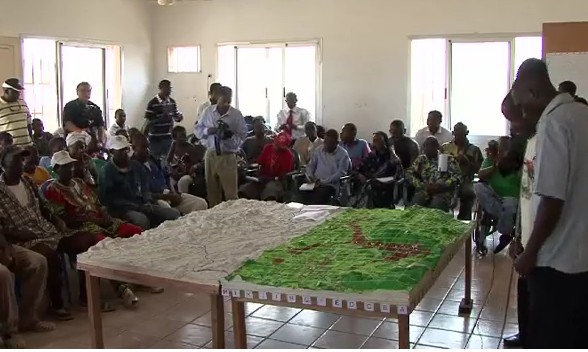
This video, made in 2010, documents the experience of Babongo and Mitsogho villagers building a three dimensional model of their home territory which includes the Waka National Park in the Chaillu Massif, Ngounié Province. Waka NP is purported to have the highest primate density of any place on Earth, in an isolated mountainous equatorial rainforest threatened by foreign logging concessions. This territory, mostly in Ikobey District, is also home to Babongo “Pygmies”, an indigenous hunter-gatherer people and their neighbours, the hunting-farming Mitsogho people.
The Participatory 3 Dimensional Mapping (P3DM) exercise provides an opportunity for indigenous and local people to engage with government about their rights, good governance and decision making in relation to the Protected Area, using their own languages and intimate knowledge of cultural and natural landscape. With the support of national and international NGOs and indigenous peoples’ organisations from across the Congo Basin, the Babongo and Mitsogho villagers were able to use the map as a platform to speak to local and Provincial government about their concerns and to present a vision of participation and democratic governance. The video speaks to the challenge of conserving biodiversity and sustaining local cultural diversity, Protected Areas governance and livelihoods. The project was supported by MINAPYGA, Brainforest Gabon, Rainforest UK, CTA and IPACC with the cooperation of Wildlife Conservation Society (Gabon) and the Agence National des Parcs Nationaux of the Republic of Gabon.
More information on the case is found at tinyurl.com/27rrogz .
More information on the P3DM methodology is found at tinyurl.com/3txe4hv
Across the world right now, Indigenous peoples are facing a renewed assault on their lands, rights, and ways of life.
From extractive industries pushing deeper into ancestral territories, to governments rolling back hard-won protections,
the threat is global—and it is growing.
What makes this moment especially dangerous is how little attention it receives.
Stories like this are disappearing in real time. Mainstream media
barely covers it and the coverage is fragmented. The public is left without the context
needed to understand what is truly at stake.
That is exactly why IC Magazine exists..
For more than 20 years, IC has reported on Indigenous struggles worldwide — consistently, independently, and without compromise.
We don’t follow news cycles; we trace patterns. We don’t sensationalize; we provide context.
And when the world looks away, we stay focused.
But this work is increasingly difficult to sustain.
We refuse to lock our reporting behind a paywall. We don’t sell access through subscriptions.
And we don’t answer to advertisers. IC Magazine survives solely because readers like you choose to
support independent Indigenous journalism.
Please donate today if you can. Every contribution helps us to continue this crucial work.
Thank you,
John Ahni Schertow
Founder and Editor in Chief