Last Updated on October 3, 2013
Collective amnesia and social attention deficit often erase the memory required to understand where new phenomena like green greed came from. Of course, greed isn’t new, nor is fraud, but this particular combination might be new to those just encountering it. It’s why we have memory systems like archives, stories and films.
In the 20th century, industrial extraction was unapologetically brutal–hiring propagandists, ideologues, field agent provocateurs and thugs to silence critics and crush opponents. They still do that, but now they deny it, or conceal it with confusing cover stories.
Likewise, they always co-opted less committed critics, but not to the present degree of comprising vertically-integrated industries where they have their own green NGOs and news services that enable them to promote green greed as sustainable, even humanitarian.
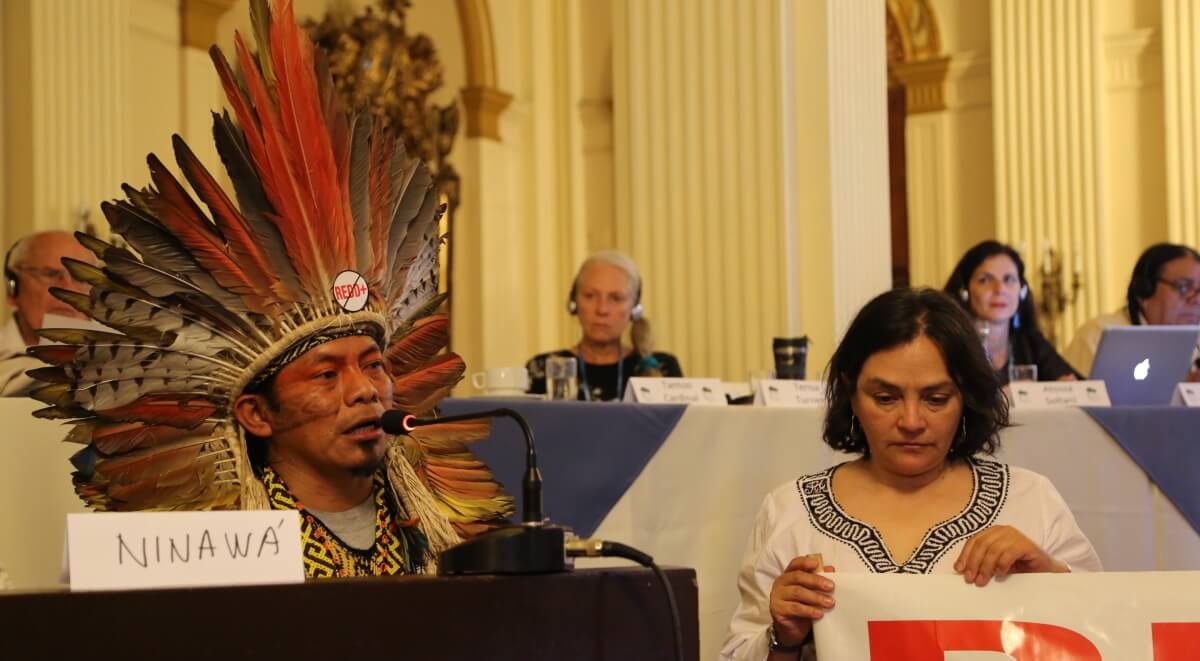
Initially, the Wise Use movement in the 1980s sought to intimidate community activists opposed to environmental destruction, literally threatening and assaulting them. After Congressional hearings on this extraction industry-financed thuggery in the 1990s, they trotted out the concept of Free-Market environmentalism, whereby extraction industries and real estate developers could cash in on public environmental sentiments with minor concessions–often little more than public relations gimmicks. With the development of climate change scams like REDD — perhaps the epitome of green greed — securities traders and other sectors of the financial services industry are now getting in on the action.
Looking at the lineup of players involved, the overlap between REDD and Wise Use is remarkably consistent; even the usual suspects in the bank bailouts that led to global austerity measures have a continuous presence.
One interesting aspect of REDD and Wise Use is the fact that both are anti-democratic by design — thereby corrosive of accountable governance — and both view Indigenous peoples rights and Fourth World sovereignty as targets to be strategically undermined and destroyed. In the 1980s and 1990s, extraction industry-financed organizations and networks were used to foment racism and violence against American Indians over treaty-protected resources. The same funding went to political campaigns to elect anti-Indian officials willing to thwart federal law on behalf of the industries.
Building on their earlier success, they have now corrupted international institutions like the United Nations, facilitating the development of anti-democratic, anti-Indigenous, anti-environmental programs under the guise of saving the planet–a public relations ploy perhaps beyond their wildest dreams as little as a decade ago. Then again, maybe not.
Across the world right now, Indigenous peoples are facing a renewed assault on their lands, rights, and ways of life.
From extractive industries pushing deeper into ancestral territories, to governments rolling back hard-won protections,
the threat is global—and it is growing.
What makes this moment especially dangerous is how little attention it receives.
Stories like this are disappearing in real time. Mainstream media
barely covers it and the coverage is fragmented. The public is left without the context
needed to understand what is truly at stake.
That is exactly why IC Magazine exists..
For more than 20 years, IC has reported on Indigenous struggles worldwide — consistently, independently, and without compromise.
We don’t follow news cycles; we trace patterns. We don’t sensationalize; we provide context.
And when the world looks away, we stay focused.
But this work is increasingly difficult to sustain.
We refuse to lock our reporting behind a paywall. We don’t sell access through subscriptions.
And we don’t answer to advertisers. IC Magazine survives solely because readers like you choose to
support independent Indigenous journalism.
Please donate today if you can. Every contribution helps us to continue this crucial work.
Thank you,
John Ahni Schertow
Founder and Editor in Chief