Last Updated on August 3, 2018
The Chittagong Hill Tracts (CHTs) is a region located in the south-eastern part of Bangladesh, bordering Myanmar to the south and south-east, and India to the north and north-east. Today, CHTs consists of three hill districts – Khagrachari, Rangamati and Bandarban. For centuries, CHTs has been home to over eleven distinct groups of indigenous peoples. They continue to live in close conformity with their ancestral ways of life maintaining their individual identities, languages, cultures and beliefs.
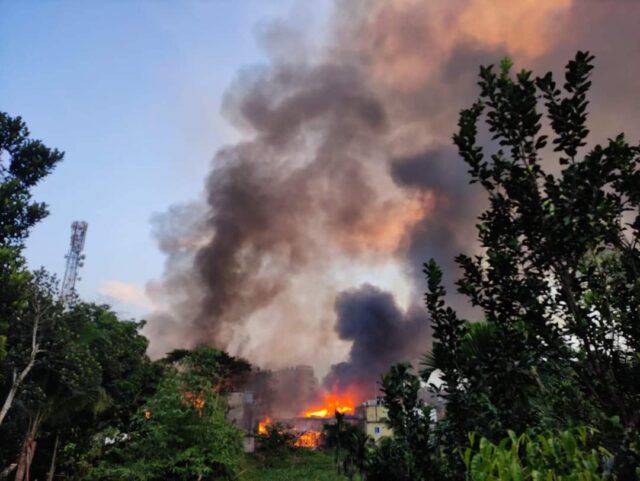
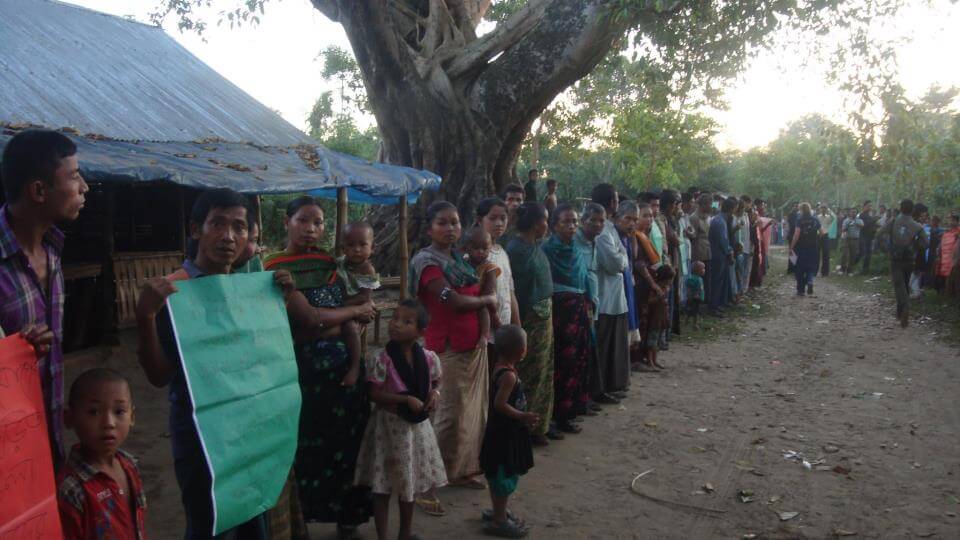
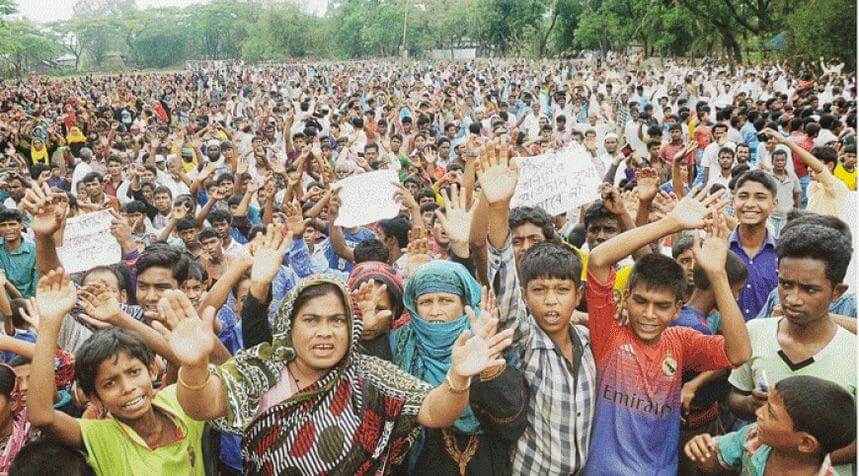
From the time of British colonization (in 1860) to the present, CHTs and its peoples have been subject to repeated exploitation. Colonial oppression (from 1860 until 1947), state hegemony & forced displacement (under Pakistan Government from 1947 until 1971) and militarization & a two decade long civil war (under Bangladesh Government from 1971 onwards). To put an end to the conflict a Peace Treaty was signed on December 2, 1997. 14 years have passed since the signing of the treaty. However, the failure to implement the central clauses of the treaty by the Government of Bangladesh has resulted in renewed violence, mass human rights violations, rampant land grabbing and forced displacement of these native peoples from their ancestral lands.
With this backdrop, ‘Life is still not ours: a story of Chittagong Hill Tracts’ – explores the historical development of the CHT region from the beginning of British colonization and how it has led to today’s struggles. The film presents the reality of ‘what happens to a region and its peoples when decisions concerning their lives and future are made without keeping them in confidence, but instead policies are adopted by external authorities with the sole motive of profit’.
Life is still not ours: a story of Chittagong Hill Tracts – is an attempt to weave together the complex history of the region featuring expert commentaries of, among others, Shapan Adnan (Sociologist & Member of Chittagong Hill Tracts Commission), Sugata Chakma (Former Director, Rangamati Tribal Cultural Institute), Sanjeeb Drong (General Secretary, Bangladesh Indigenous Peoples Forum), Philip Gain (Director – Society for Environment and Human Development [SEHD]), Zobaida Nasreen (Anthropologist, University of Dhaka), Ida Nicolaisen (Anthropologist & Former Chairperson of Chittagong Hill Tracts Commission), Raja Devasish Roy (Chakma Circle Chief & Member of United Nations Permanent Forum on Indigenous Issues[UNPFII]) and Willem Van Schendel (Chair in Modern Asian History – University of Amsterdam & co-author of “The Chittagong Hill Tracts: Life in a Borderland”).
For more information about this film, visit: StoryOfCHT.com
Across the world right now, Indigenous peoples are facing a renewed assault on their lands, rights, and ways of life.
From extractive industries pushing deeper into ancestral territories, to governments rolling back hard-won protections,
the threat is global—and it is growing.
What makes this moment especially dangerous is how little attention it receives.
Stories like this are disappearing in real time. Mainstream media
barely covers it and the coverage is fragmented. The public is left without the context
needed to understand what is truly at stake.
That is exactly why IC Magazine exists..
For more than 20 years, IC has reported on Indigenous struggles worldwide — consistently, independently, and without compromise.
We don’t follow news cycles; we trace patterns. We don’t sensationalize; we provide context.
And when the world looks away, we stay focused.
But this work is increasingly difficult to sustain.
We refuse to lock our reporting behind a paywall. We don’t sell access through subscriptions.
And we don’t answer to advertisers. IC Magazine survives solely because readers like you choose to
support independent Indigenous journalism.
Please donate today if you can. Every contribution helps us to continue this crucial work.
Thank you,
John Ahni Schertow
Founder and Editor in Chief