Last Updated on May 20, 2019
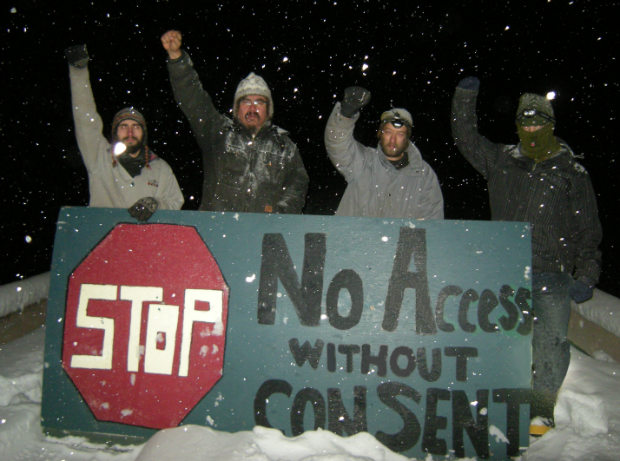
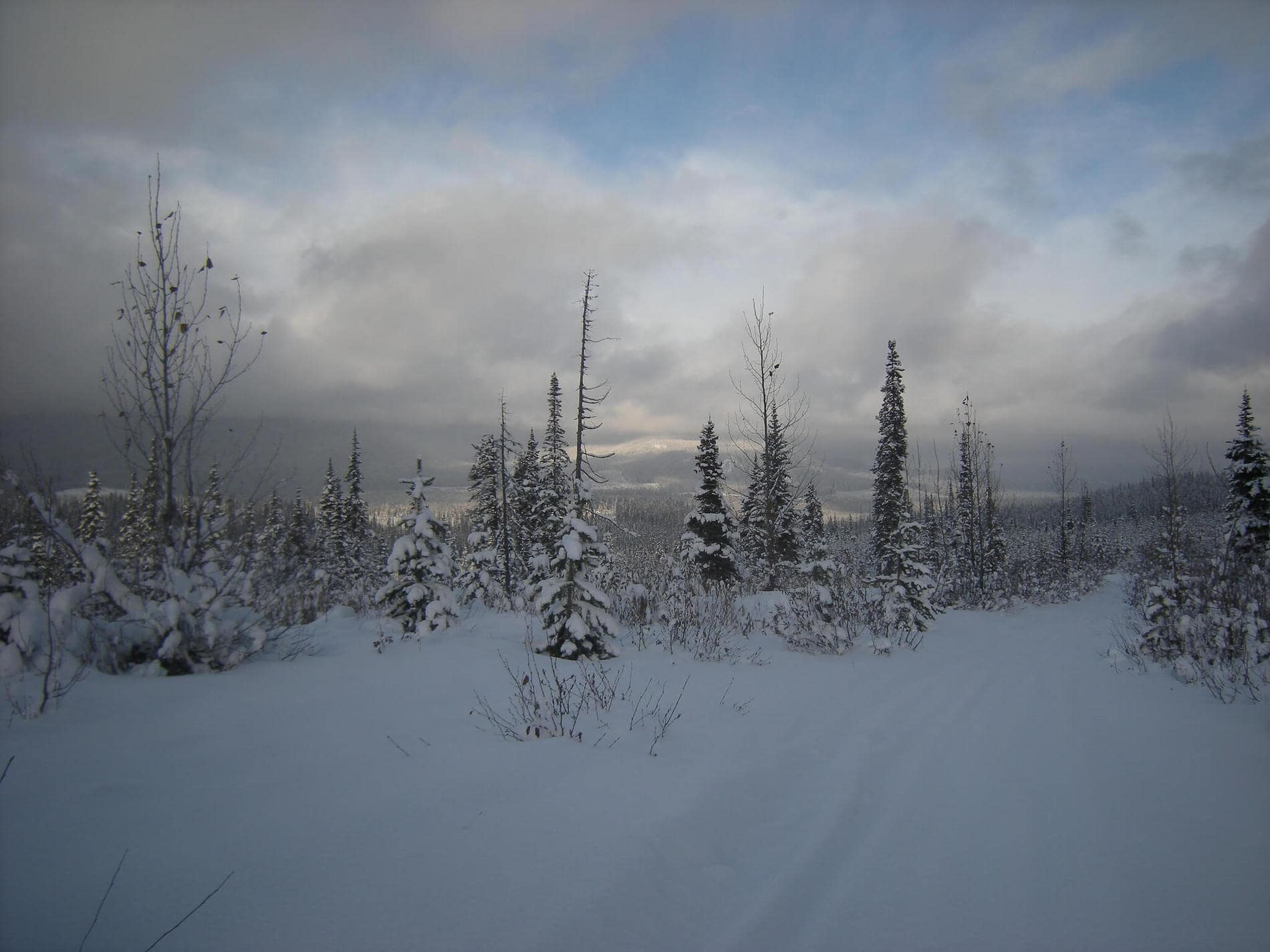
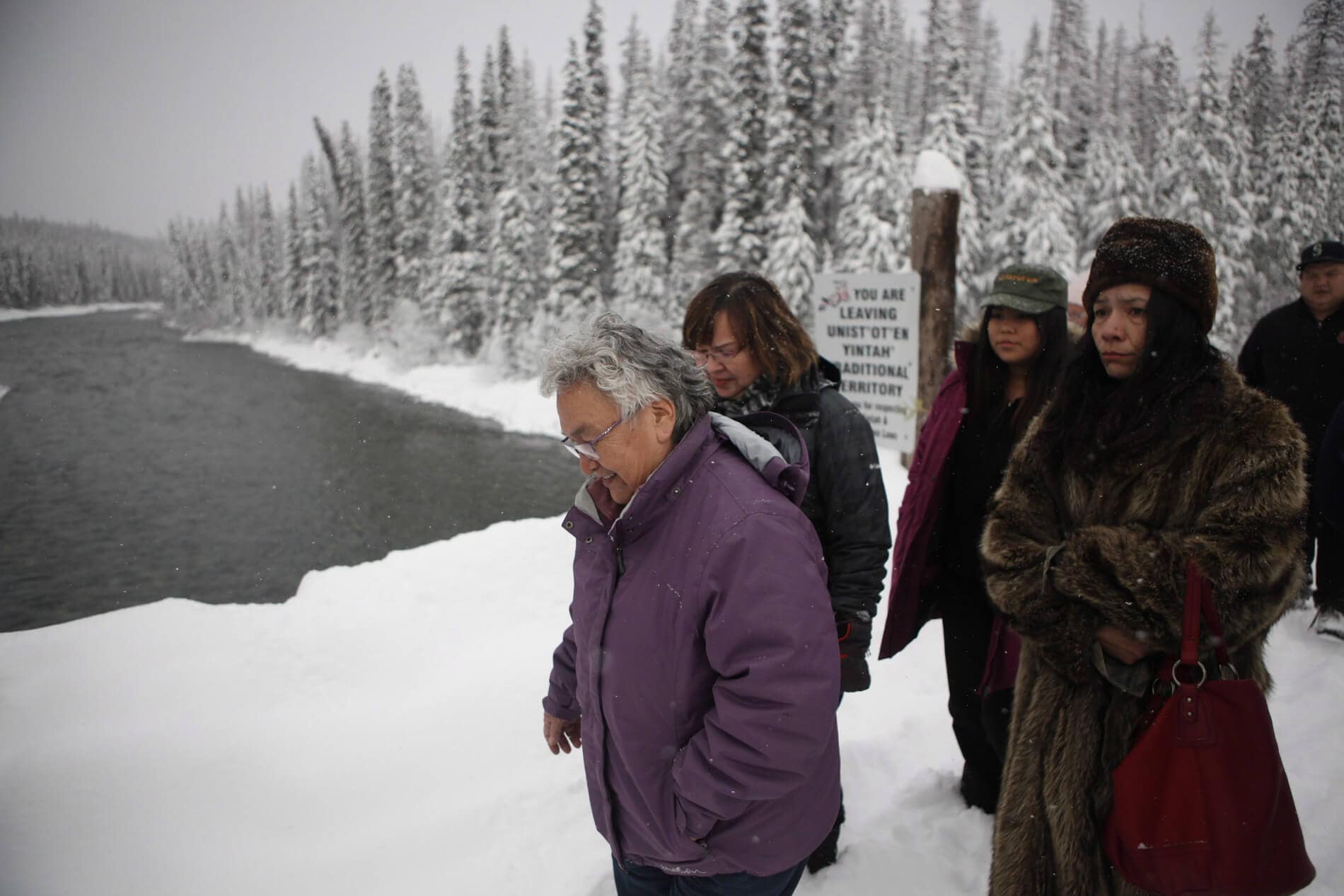
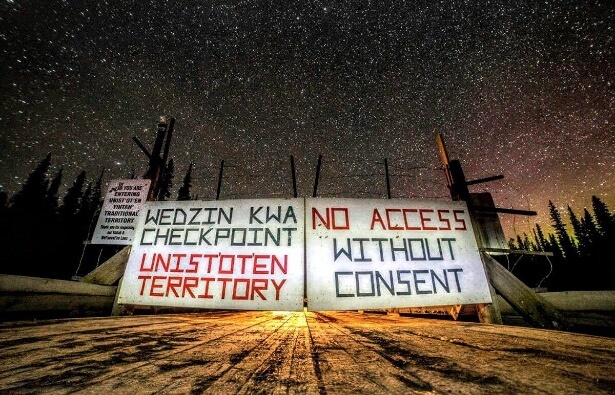
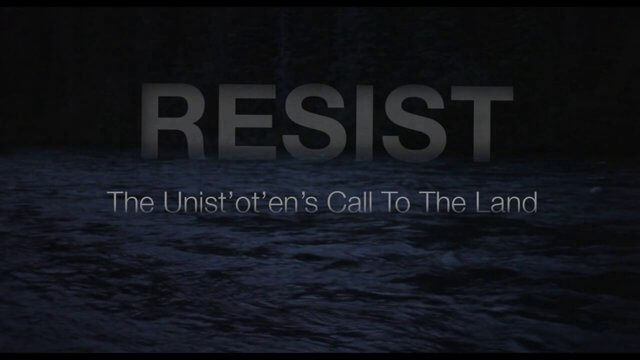
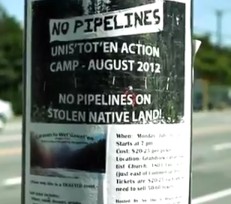
May 28, 2013 – The Unist’ot’en People (a.k.a C’ilhts’ekhyu) of the Wet’suwet’en Nation maintain a “Soft Blockade” keeping pipeline workers and subcontractors out of their territories. The blockade is located 66km on the Morice West Forest Service Road south of the town of Houston BC.
Hundreds of supporters, volunteers, recreationalists, and mushroom pickers have been able to cross into the guarded territory by showing respect to the territory owners and answering some simple questions. The questions were as follows:
There were some people who have chosen not to answer any of the questions and were not permitted into the lands. Some of the people rejected were outright racist and belligerent; some people refused to recognize the authority of the territory owners; and some were simply unable to truthfully answer any of the questions until they could develop a relationship with the Unist’ot’en.
The decision to control territory traffic came when workers for the proposed Apache/Chevron Fracking Gas Pipelines were caught in the territory last November after being previously warned for trespassing. The Unist’ot’en have been leading a movement among the larger Wet’suwet’en population to stop ALL proposed Pipelines (including Fracking and Tar Sands) from crossing their territories.
In 2008, the Unist’ot’en alongside the other four Clans of the Wet’suwet’en walked away from the BC Treaty Commission negotiation process. They found that since the 1997 Supreme Court of Canada’s Delgamuukw v. Queeen Court decision, government and industry have only escalated their activities on their lands at an alarming rate without meaningful consultation.
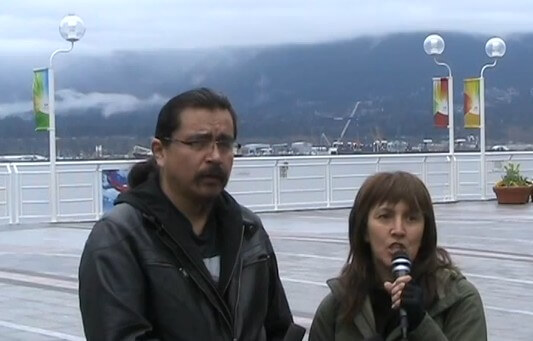
Freda Huson, the Spokeswoman for the Unist’ot’en states, “The plaintiffs in the landmark Delgamuukw Supreme Court of Canada case are the Hereditary Chiefs and their members. Government and Industry are breaking their own laws when they choose to only consult with Indian Act band councils. The propaganda writers for the Pacific Trails Pipeline like to say that they have 15 First Nation People’s support, when in fact they have only been talking to Indian Act communities. That has to stop. This struggle to protect our lands is not about holding out for financial gain. It is about protecting our lands from destructive practices from industry. Our actions will not only benefit our future generations but everyone’s future generations.”
The logging road leading into the territory is managed by the CANFOR logging company and CANFOR is taking the lead to begin a meaningful process of consultation. The Unist’ot’en are welcoming this new relationship with CANFOR and are hopeful that other industry projects will choose to begin asking permission rather than implementing projects without meaningful consultation.
For more information or requests for interviews, please contact Freda Huson at fhuson@gmail.com
Across the world right now, Indigenous peoples are facing a renewed assault on their lands, rights, and ways of life.
From extractive industries pushing deeper into ancestral territories, to governments rolling back hard-won protections,
the threat is global—and it is growing.
What makes this moment especially dangerous is how little attention it receives.
Stories like this are disappearing in real time. Mainstream media
barely covers it and the coverage is fragmented. The public is left without the context
needed to understand what is truly at stake.
That is exactly why IC Magazine exists..
For more than 20 years, IC has reported on Indigenous struggles worldwide — consistently, independently, and without compromise.
We don’t follow news cycles; we trace patterns. We don’t sensationalize; we provide context.
And when the world looks away, we stay focused.
But this work is increasingly difficult to sustain.
We refuse to lock our reporting behind a paywall. We don’t sell access through subscriptions.
And we don’t answer to advertisers. IC Magazine survives solely because readers like you choose to
support independent Indigenous journalism.
Please donate today if you can. Every contribution helps us to continue this crucial work.
Thank you,
John Ahni Schertow
Founder and Editor in Chief