
Last Updated on June 8, 2014
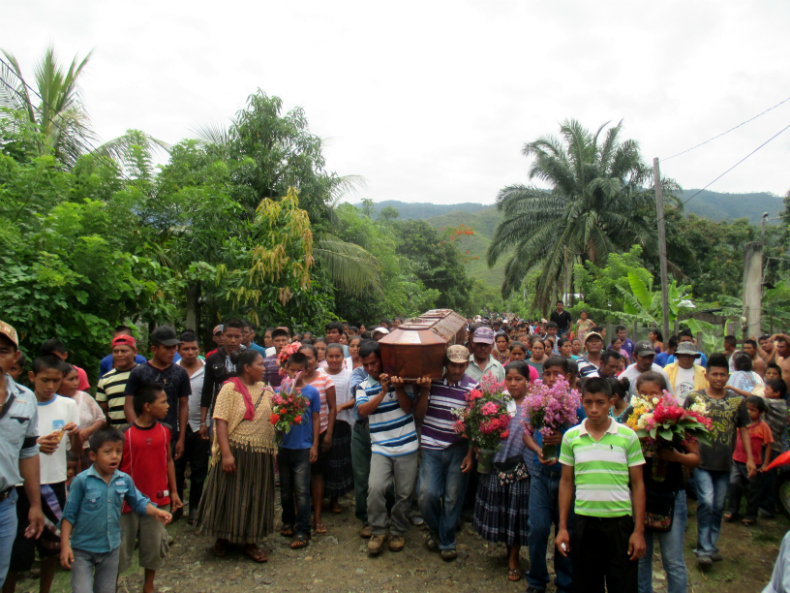
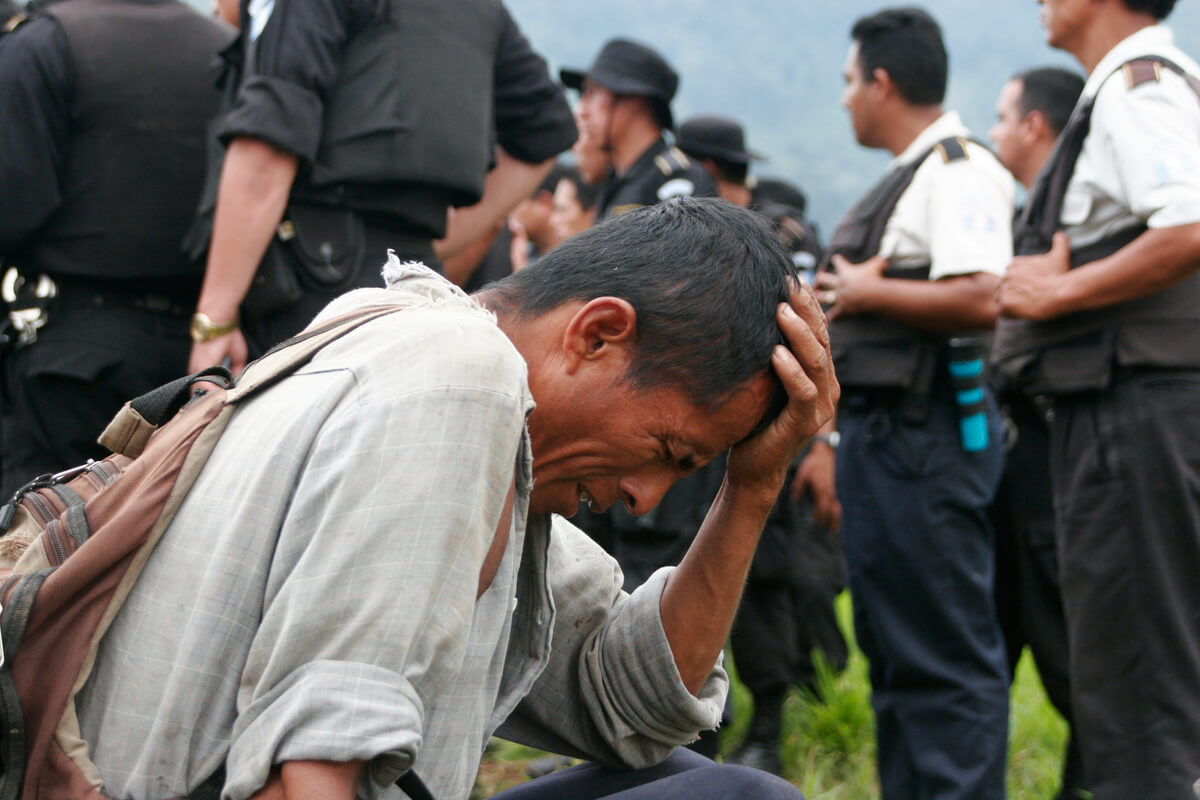
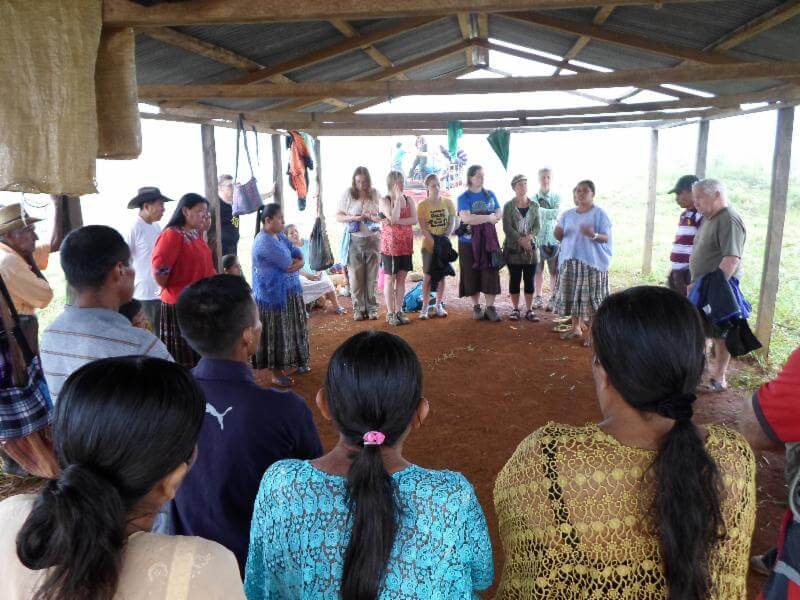
June 7, 2014, Guatemala–Early this morning, at least a dozen heavily armed CGN guards drove illegally into and were found occupying this very Community Center, re-built here in the center of the former Lote 8 community that was violently attacked and burned to the ground in January 2007, by CGN/ Hudbay Minerals security guards, Guatemalan police and soldiers. On January 17, 2007, eleven Lote 8 women were gang-raped by Hudbay/CGN security guards, soldiers and police, and over 100 homes were burned and destroyed.
The Lote 8 community had been planning yet another meeting today to discuss the on-going land dispute with the CGN mining company. Ever since the Canadian mining giant INCO illegally acquired these lands in the 1960s, the Mayan Q’eqchi’ people have suffered repeated violent, illegal evictions, killings, shootings, rapes.
When they came to the Community Center this morning, they found it occupied. The people of Lote 8 are alerting the national and international community to the threat of possible repression and eviction they again face.
A History of Mining, Repression and Impunity
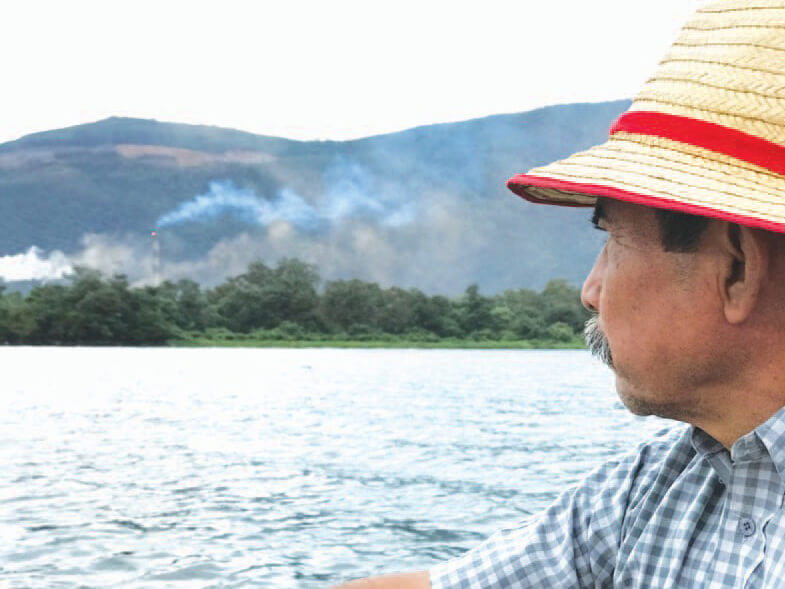
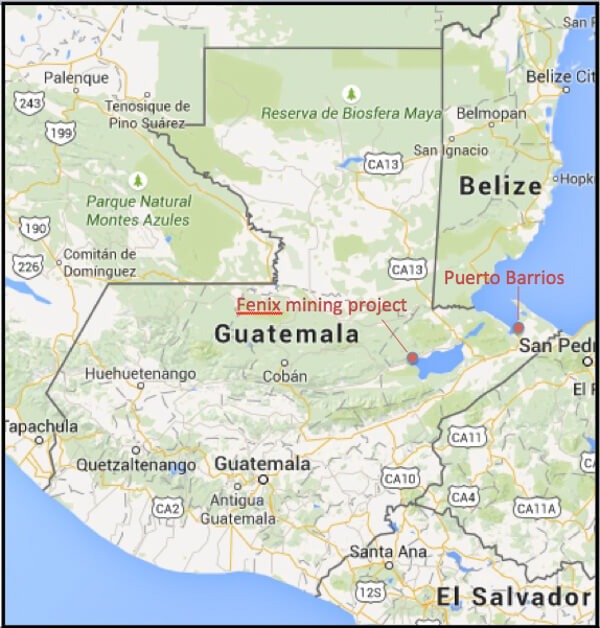
Last week, Guatemalan leader General Otto Perez Molina arrived in El Estor to “inaugurate” the mining operation of CGN, despite the 40 year history of repression, violent forced evictions, racism and impunity carried out by mainly Canadian nickel mining companies (INCO, Skye Resources, Hudbay Minerals).
This renewed mining operation is inaugurated despite the impunity and lack of justice in Guatemala and Canada for 40 years of illegally evictions and other crimes; violent evictions and repression that have been met by the on-going by silence of the governments of Guatemala and Canada:
Across the world right now, Indigenous peoples are facing a renewed assault on their lands, rights, and ways of life.
From extractive industries pushing deeper into ancestral territories, to governments rolling back hard-won protections,
the threat is global—and it is growing.
What makes this moment especially dangerous is how little attention it receives.
Stories like this are disappearing in real time. Mainstream media
barely covers it and the coverage is fragmented. The public is left without the context
needed to understand what is truly at stake.
That is exactly why IC Magazine exists..
For more than 20 years, IC has reported on Indigenous struggles worldwide — consistently, independently, and without compromise.
We don’t follow news cycles; we trace patterns. We don’t sensationalize; we provide context.
And when the world looks away, we stay focused.
But this work is increasingly difficult to sustain.
We refuse to lock our reporting behind a paywall. We don’t sell access through subscriptions.
And we don’t answer to advertisers. IC Magazine survives solely because readers like you choose to
support independent Indigenous journalism.
Please donate today if you can. Every contribution helps us to continue this crucial work.
Thank you,
John Ahni Schertow
Founder and Editor in Chief