
Last Updated on December 18, 2025
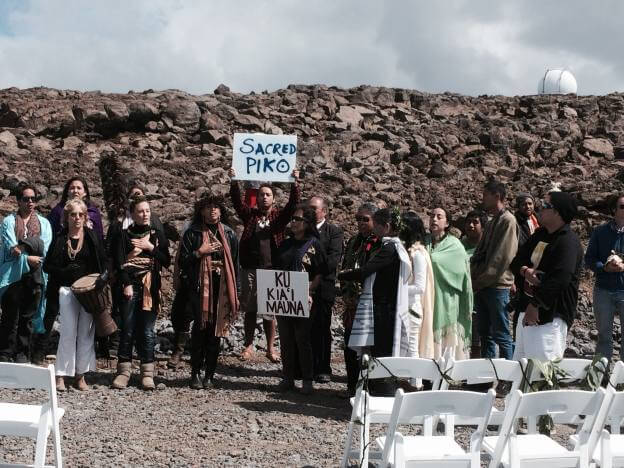
On Tuesday, October 7, a ground-breaking ceremony was attempted to kick off construction of the Thirty Meter Telescope (TMT), a $1.5 billion desecration of sacred Mauna Kea. The project has been rammed through by the so-called “state” of Hawai’i despite environmental, cultural, and legal concerns. Native Hawaiians led a protest and, joined by non-Hawaiians, successfully disrupted and halted the ceremony, forcing the organizers to shut off the live stream and go home early.
This is a multinational project with funding from India, Japan, Canada and California, including Cal Tech and the UC system as partners. The ceremony was intended to convince astronomers and the international audience that the TMT has the general backing of Native Hawaiians, going so far as to incorporate traditional Hawaiian cultural and ceremonial practices. The protesters broke through the charade and made clear the fierce opposition to the project. 250 people gathered to participate in the protest, though only a few were able to reach the ceremony at the summit.
This was an unprecedented victory for Hawaiians against an occupation [that] routinely ignores their cultural and legal rights. But much more needs to be done to stop the project for good.
Email: sacredmaunakea@gmail.com Website: Sacred Mauna Kea /
Facebook
Deep Green Resistance Hawai’i was unable to participate in the event, but we’re honored to publish these original photos from the event:
The blockade of the road was at 9000 feet. It was a bit chaotic with so many law enforcement vehicles, including homeland security. People didn’t want to get arrested before the people doing the ground breaking ceremony arrived.
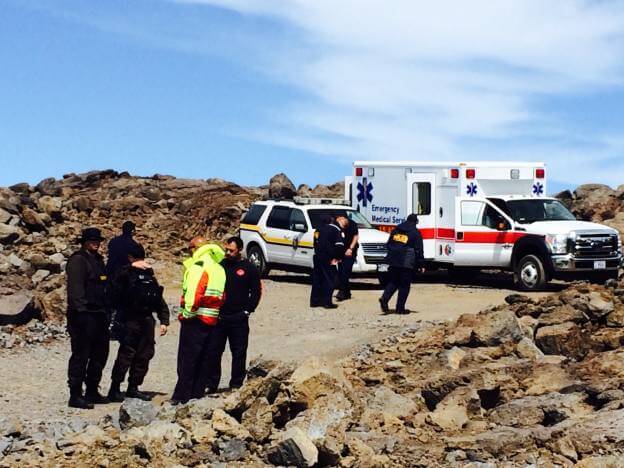
But the desecraters had been smuggled past in paramedics vehicles
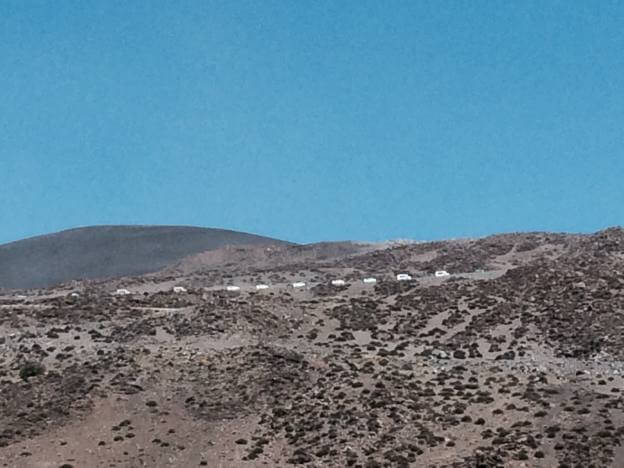
Then they climbed into white SUVs and drove up. It was an ill feeling to look up and see this line of vehicles.
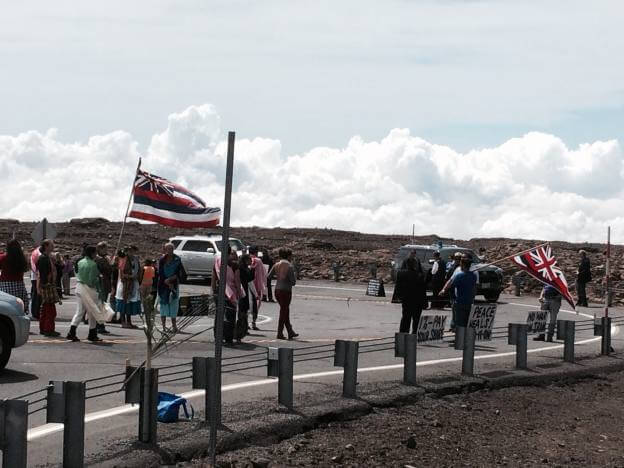
The protest spread out.
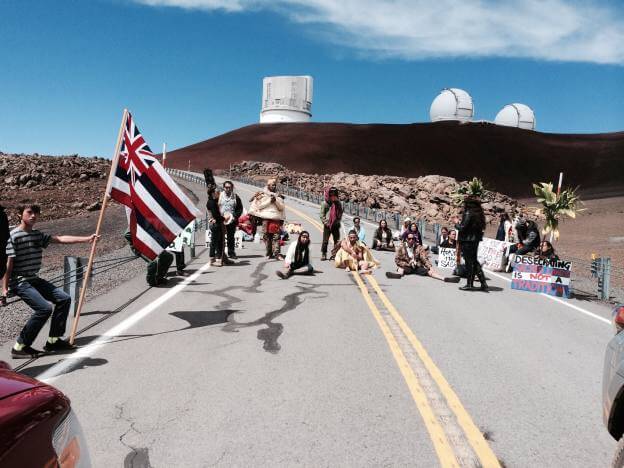
It’s grossly unfair to accuse Hawaiians of selfishly opposing western science, with 13 telescopes on Mauna Kea now.
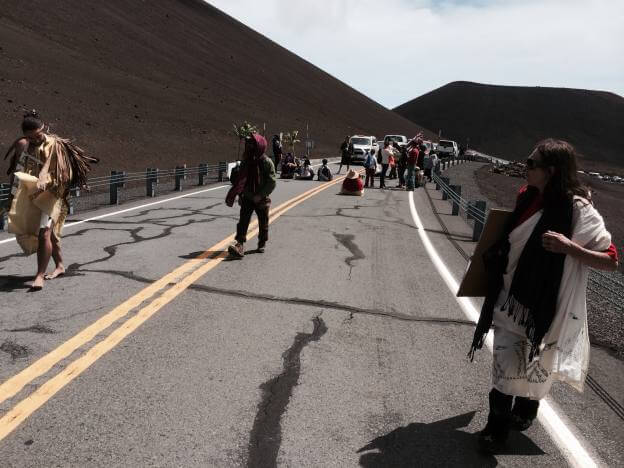
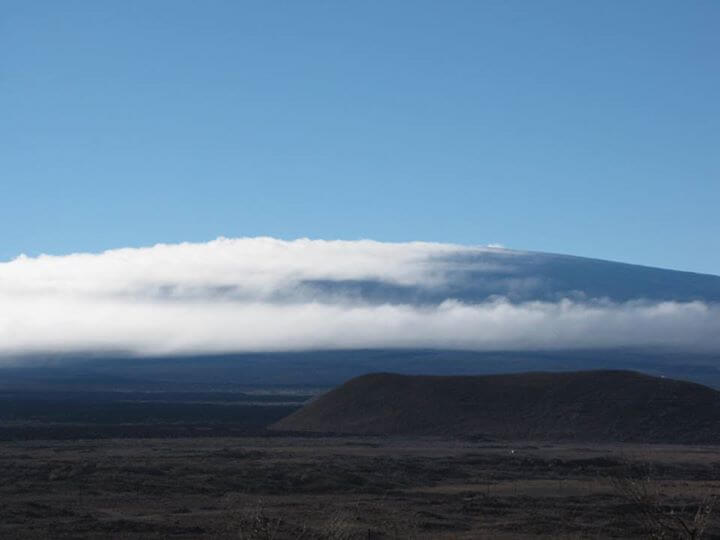
People started to fan out and some drove to the summit, elevation about 14,000 ft.
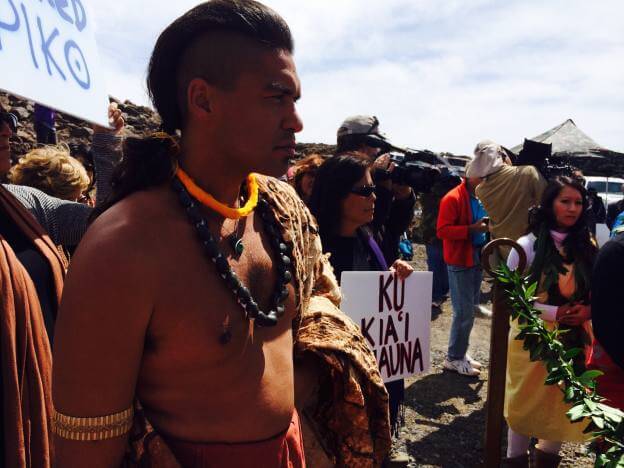
Lanakila was the first one to find and intervene in the event. He stood there and challenged them for 15 minutes before other protesters could join him, just in time to stop the ground breaking.
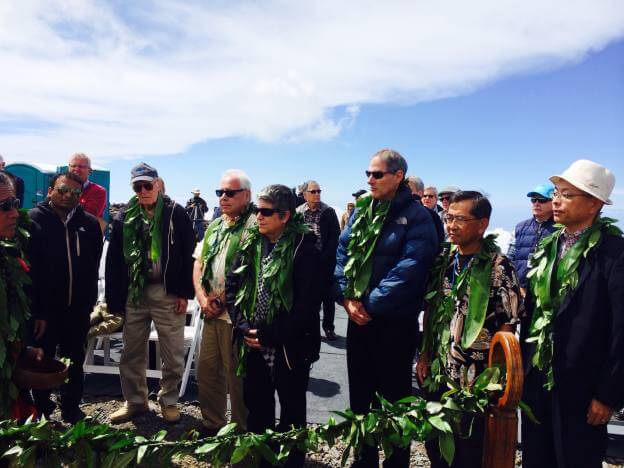
The financial backers had to stand there and listen to Hawaiians telling them they don’t want their money for this desecration.
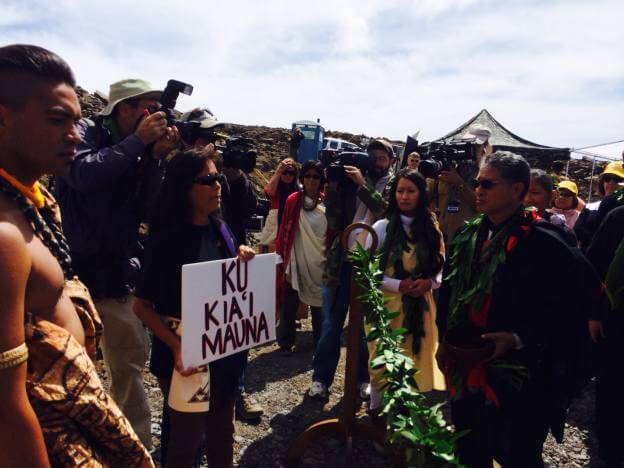
The minister on the right, former Senator Daniel Akaka’s son, was about to sell out fellow Hawaiians by blessing the project. Instead, his own people told him he had to stop.
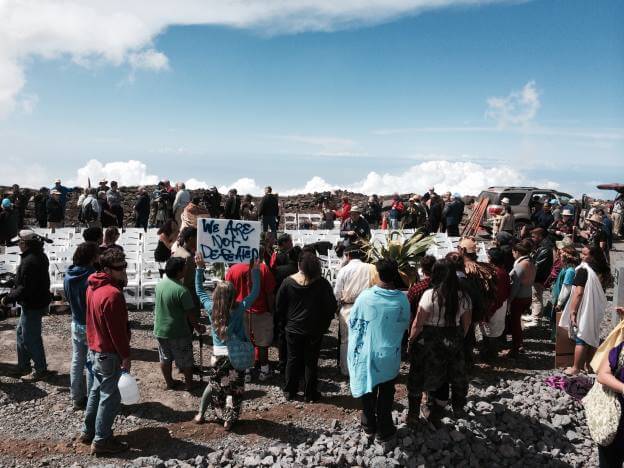
Hawaiians mobbed the event and chanted.
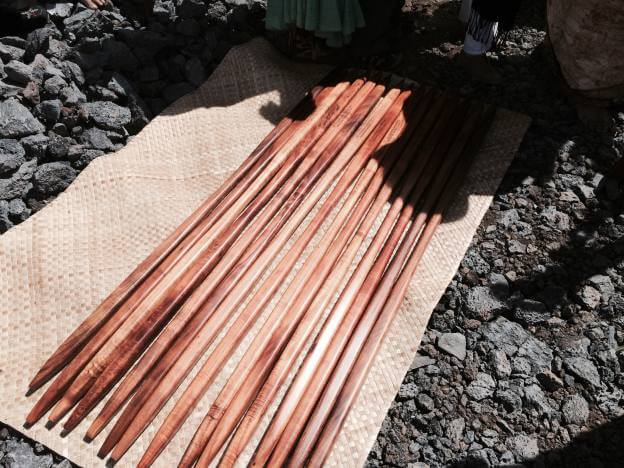
The VIPs were to line up, each holding an o’o with his or her name carved into it. “Cultural practitioner” Akaka was to chant to them, commanding them to pound and dig. This grotesque pimping of Hawaiian culture was halted, and these o’o went unused.
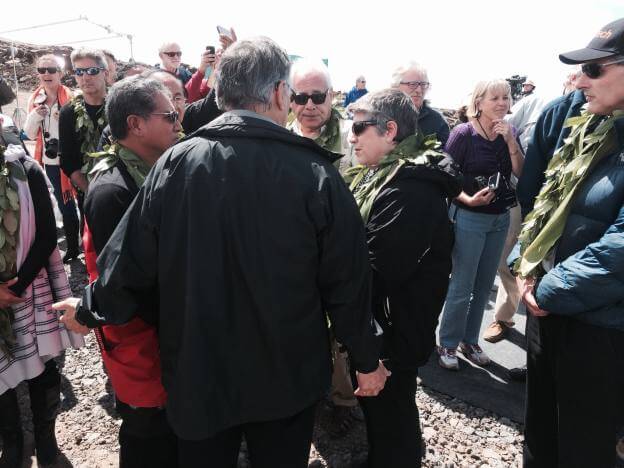
The organizers decided to give up their ceremony and to leave.
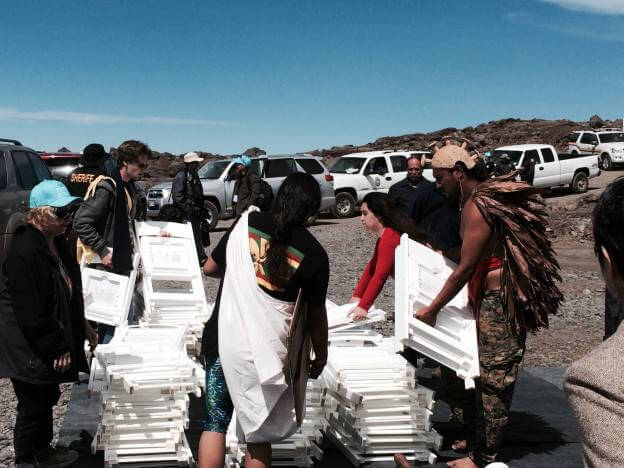
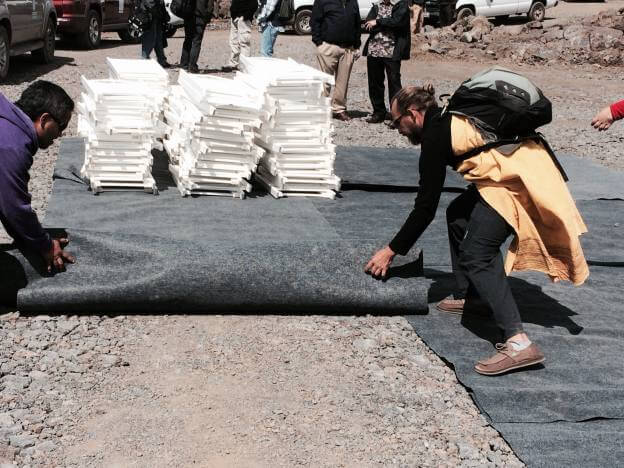
Hawaiians helped speed the desecraters on their way by packing up their chairs and rolling up their carpet.
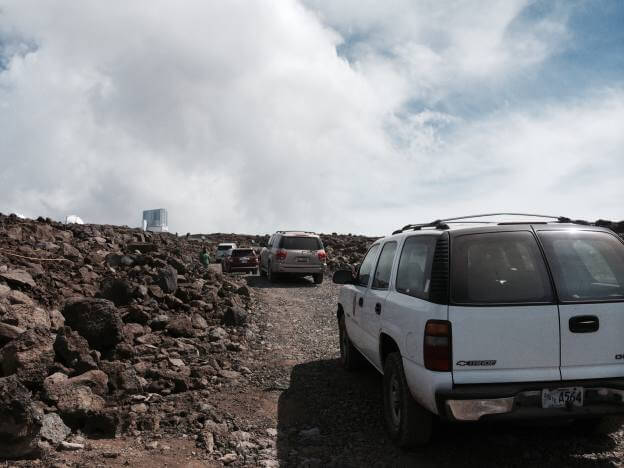
The sight of their leaving marked a historic victory in Hawaiian resistance to occupation. This is just the start!
Across the world right now, Indigenous peoples are facing a renewed assault on their lands, rights, and ways of life.
From extractive industries pushing deeper into ancestral territories, to governments rolling back hard-won protections,
the threat is global—and it is growing.
What makes this moment especially dangerous is how little attention it receives.
Stories like this are disappearing in real time. Mainstream media
barely covers it and the coverage is fragmented. The public is left without the context
needed to understand what is truly at stake.
That is exactly why IC Magazine exists..
For more than 20 years, IC has reported on Indigenous struggles worldwide — consistently, independently, and without compromise.
We don’t follow news cycles; we trace patterns. We don’t sensationalize; we provide context.
And when the world looks away, we stay focused.
But this work is increasingly difficult to sustain.
We refuse to lock our reporting behind a paywall. We don’t sell access through subscriptions.
And we don’t answer to advertisers. IC Magazine survives solely because readers like you choose to
support independent Indigenous journalism.
Please donate today if you can. Every contribution helps us to continue this crucial work.
Thank you,
John Ahni Schertow
Founder and Editor in Chief