
Last Updated on April 10, 2025
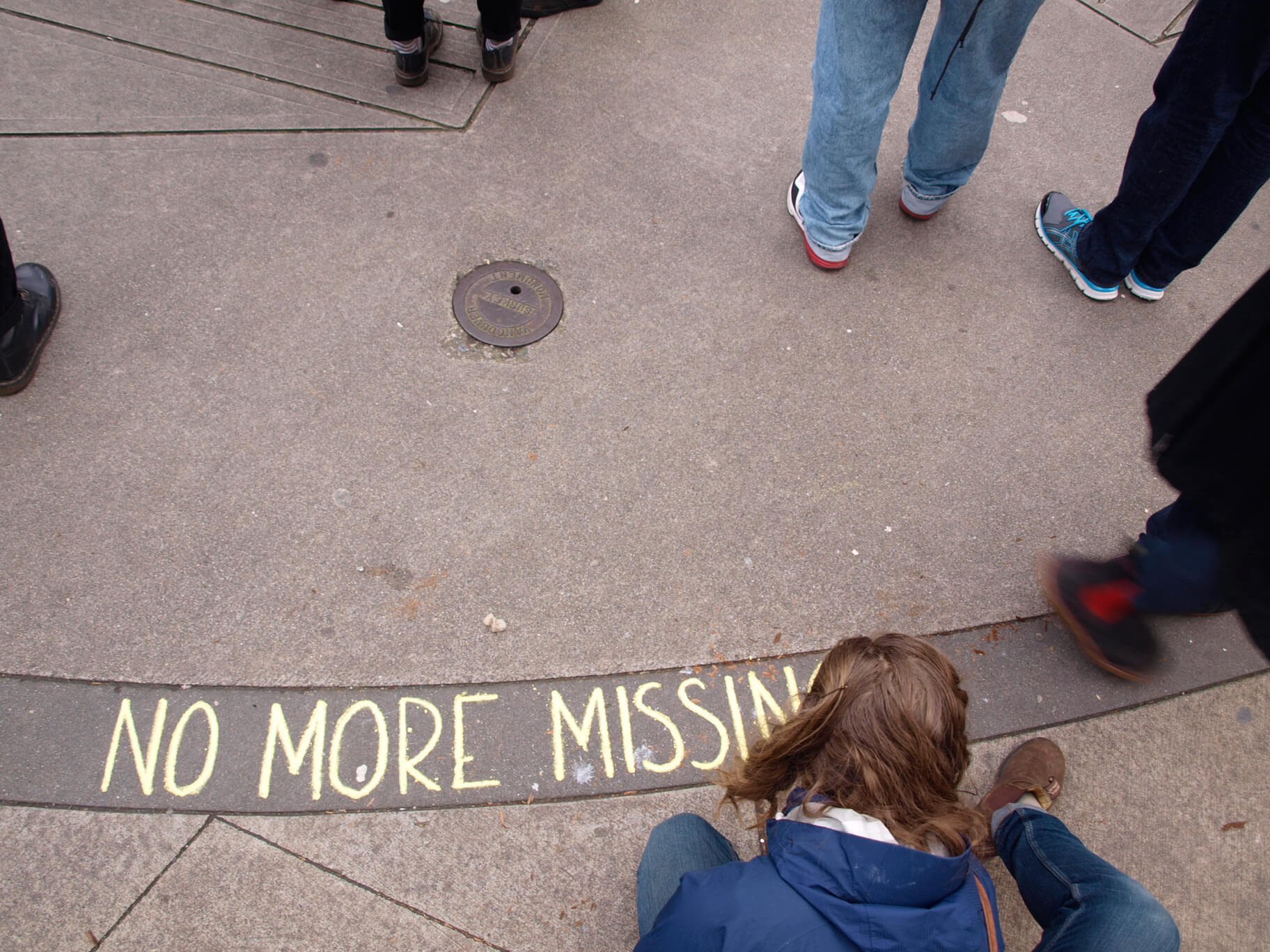
Yesterday, the Senate Committee on Indian Affairs passed Savanna’s Act — a bill that would require new law enforcement guidelines for addressing cases related to missing and murdered Native Americans.
Savanna’s Act is named after Savanna Greywind, a member of the Spirit Lake Nation in east-central North Dakota. Greywind was only 22 when she was brutally attacked by Brooke Crews — who is currently serving a life sentence without parole for cutting the unborn child out of Greywind while she was still alive.
This gruesome and stunning act seemed to finally force the phenomenon of violence against Indigenous women onto the radar of U.S. federal legislators.
Now that the bill has passed the Committee, it will move on for a full Senate review before the bipartisan-sponsored bill is expected to pass there, too.
This bill was originally introduced by now former North Dakota Senator Heidi Heitkamp, on Oct. 5, 2018. Heitkamp lost her Senate seat after her highly publicized opposition to Supreme Court Justice Brett Kavanaugh.
Newly elected Laguna Pueblo Congresswoman Deb Haaland, recently pledged her support to push for justice for missing and murdered Indigenous Women — in an interview on Democracy Now, Haaland issued a plea for solidarity beyond the Indigenous community, saying she felt like recognition of this issue would concern all women.
According to Congress.Gov, the bill, once passed, would “[require] the Department of Justice (DOJ) to update the online data entry format for federal databases relevant to cases of missing and murdered Indians to include a new data field for users to input the victim’s tribal enrollment information or affiliation.”
Additionally, the DOJ will have to “make standardized law enforcement and justice protocols that serve as guidelines for law enforcement agencies with respect to missing and murdered Indians”, “develop protocols to investigate those cases that are guided by the standardized protocols”, and “provide tribes and law enforcement agencies with training and technical assistance relating to the development and implementation of the law enforcement and justice protocols”.
Further, “Federal law enforcement agencies that investigate and prosecute crimes related to missing and murdered Indians must modify their law enforcement and justice protocols to comply with the standardized protocols”.
Across the world right now, Indigenous peoples are facing a renewed assault on their lands, rights, and ways of life.
From extractive industries pushing deeper into ancestral territories, to governments rolling back hard-won protections,
the threat is global—and it is growing.
What makes this moment especially dangerous is how little attention it receives.
Stories like this are disappearing in real time. Mainstream media
barely covers it and the coverage is fragmented. The public is left without the context
needed to understand what is truly at stake.
That is exactly why IC Magazine exists..
For more than 20 years, IC has reported on Indigenous struggles worldwide — consistently, independently, and without compromise.
We don’t follow news cycles; we trace patterns. We don’t sensationalize; we provide context.
And when the world looks away, we stay focused.
But this work is increasingly difficult to sustain.
We refuse to lock our reporting behind a paywall. We don’t sell access through subscriptions.
And we don’t answer to advertisers. IC Magazine survives solely because readers like you choose to
support independent Indigenous journalism.
Please donate today if you can. Every contribution helps us to continue this crucial work.
Thank you,
John Ahni Schertow
Founder and Editor in Chief