Last Updated on May 20, 2019
An injunction application and civil litigation filed by TransCanada Coastal GasLink aims to criminalize Unist’ot’en Camp and forcibly facilitate pipeline construction across unceded Unist’ot’en territory.
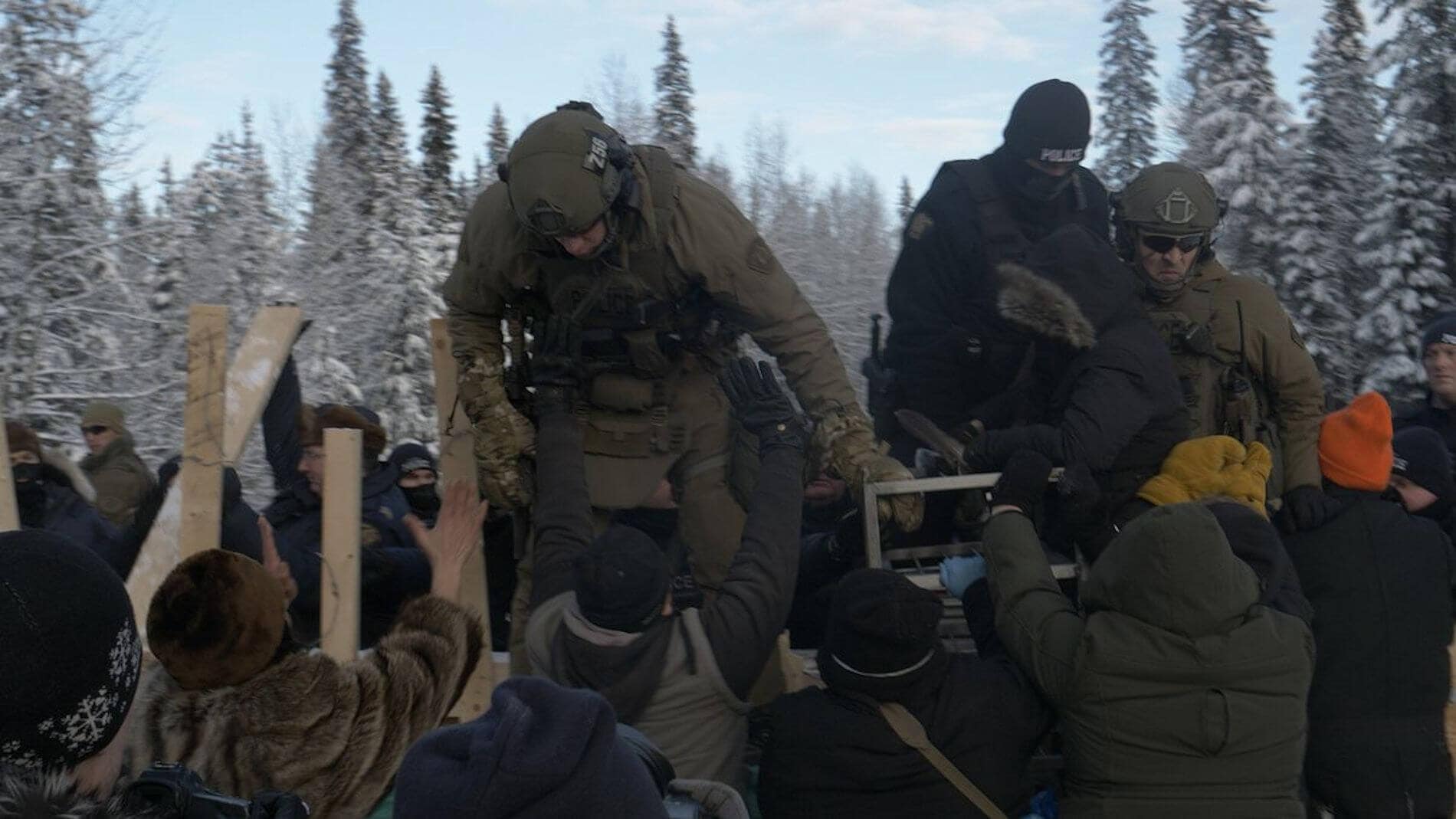
TransCanada is seeking an “interim, interlocutory or permanent injunction,” police enforcement, and financial damages for those “occupying, obstructing, blocking, physically impeding or delaying access” to our own unceded homelands.
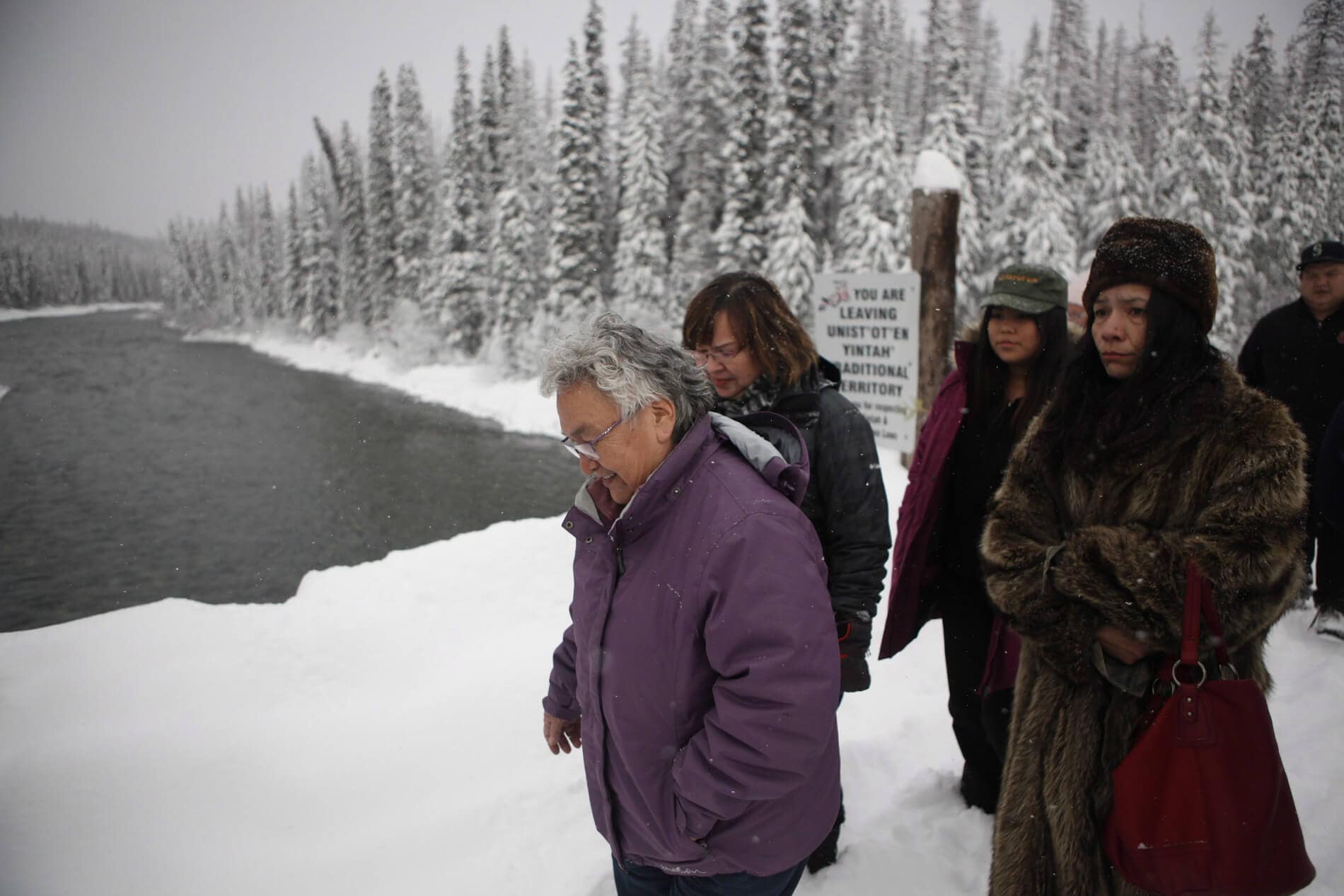
Instead of naming the Unist’ot’en house group and hereditary chiefs (Dinï ze’ and Ts’akë ze’), who collectively hold title and govern Unist’ot’en territory according to Anuk Nu’at’en (Wet’suwet’en law), these legal actions criminalize individuals who have laboured to protect our territories in an expression of our collective will. TransCanada continues to ignore the jurisdiction and authority of our hereditary chiefs and our feast system of governance, which was recognized by the Supreme Court of Canada in the 1997 Deglamuukw-Gisday’wa court case.
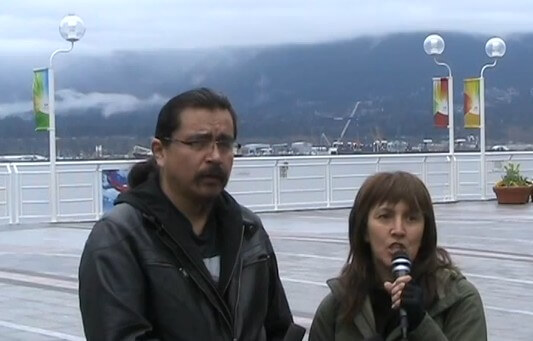
“This is our house group’s work. It’s a shared vision and purpose,” stated Dr. Karla Tait, Unist’ot’en house group member. “The fact that this company can make a civil suit thinking that Freda Huson and Warner Naziel are the only ones standing in the way of their project is utterly ignorant and out of touch with all that we stand for as Unist’ot’en and as Indigenous people. It shows that they have no understanding and appreciation for the relationship that we have with our territories, and the relationships we have with one another as members of a house group, of a clan, of a nation.”
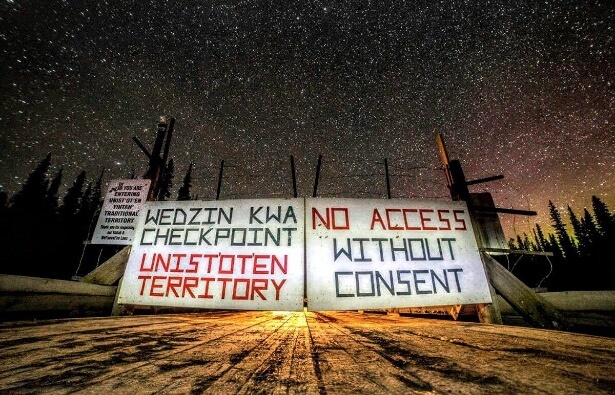
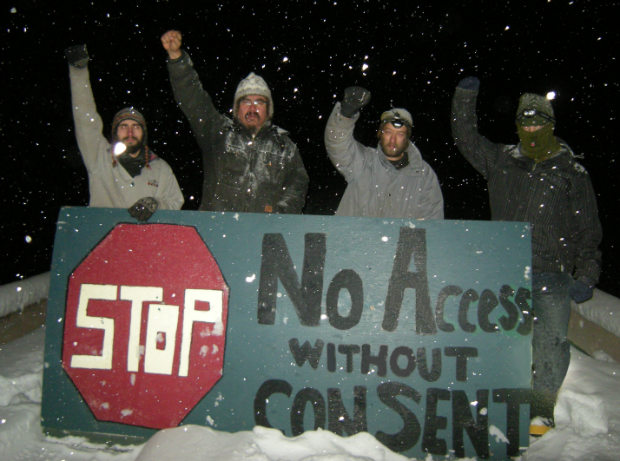
The Unist’ot’en Camp is not a blockade, a protest, or a demonstration – it is a permanent, non-violent occupation of Unist’ot’en territory, established to protect our homelands from illegal industrial encroachments and to preserve a space for our community to heal from the violence of colonization.
Since 2015, we have operated a three story healing centre and hosted gatherings for Indigenous women and youth. This centre is currently home to Wet’suwet’en community members who are receiving holistic and land based treatment for addictions. We see TransCanada’s legal threat, which requests that the RCMP enter our territory by force, as a direct challenge to the safety of our residents and an extension of the colonial violence from which we are trying to heal.
For more than a century, Canada’s federal and provincial governments have assumed ownership and jurisdiction of unceded lands without legal basis for doing so. Delgamuukw-Gisday’wa determined that Wet’suwet’en rights and title have never been extinguished across 22,000 km2 of northern British Columbia. As plaintiffs in that court case, and title holders on our land, we are exercising our right to exclusive use and occupation of land, and our right to determine its use.
“Our clan discussed this dream of a healing centre that would be land based, with all of the programming stemming from our teachings and our ancestral ways of wellness that are much more holistic and that recognize the impacts of colonization and of trauma on our youth and our families and communities,” stated Dr. Karla Tait.
“I see the projects proposed to run through our territory as a threat to us reclaiming and self-determining our own health and wellness,” stated Tait.
For further inquiries, contact:
Karla Tait, Unist’ot’en Healing Centre Programmer
karlatait@gmail.com
1(250) 640-1094
Freda Huson, Unist’ot’en Spokesperson
fhuson@gmail.com
1(778) 210-1100
Across the world right now, Indigenous peoples are facing a renewed assault on their lands, rights, and ways of life.
From extractive industries pushing deeper into ancestral territories, to governments rolling back hard-won protections,
the threat is global—and it is growing.
What makes this moment especially dangerous is how little attention it receives.
Stories like this are disappearing in real time. Mainstream media
barely covers it and the coverage is fragmented. The public is left without the context
needed to understand what is truly at stake.
That is exactly why IC Magazine exists..
For more than 20 years, IC has reported on Indigenous struggles worldwide — consistently, independently, and without compromise.
We don’t follow news cycles; we trace patterns. We don’t sensationalize; we provide context.
And when the world looks away, we stay focused.
But this work is increasingly difficult to sustain.
We refuse to lock our reporting behind a paywall. We don’t sell access through subscriptions.
And we don’t answer to advertisers. IC Magazine survives solely because readers like you choose to
support independent Indigenous journalism.
Please donate today if you can. Every contribution helps us to continue this crucial work.
Thank you,
John Ahni Schertow
Founder and Editor in Chief