Last Updated on April 21, 2025
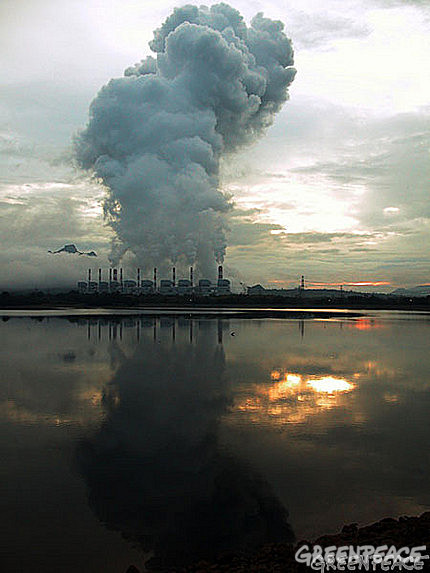 After five long years in court, Lampang villagers in Northern Thailand can breathe a much-needed sigh of relief, shallow and full of cancer-causing sulphur though the air may still be.
Last Month the Chiang Mai Administrative Court ordered the Electricity Generating Authority of Thailand (EGAT) to pay 477 villagers approximately 246,000 Baht (US $6,949) each, plus interest, for years of suffering brought on by pollution at the Mae Moh coal-fired power plant in Lampang.
According to Greenpeace, the power plant releases on average 1.6 million tons of sulphur gas into the air each day, over the years causing “irreversible damage to the natural environment” and widespread respiratory problems that have resulted the death of more than 200 people.
Greenpeace also says more than 30,000 people were displaced to make way for the power plant, which first went into operation 17 years ago.
In addition to compensation, the court ordered EGAT to pay for the reallocation of the affected families, and to rehabilitate the local environment.
The villagers were originally asking for 1.8 billion in damages and the permanent closure of the plant, however, Maliwan Nakwirot, leader of “the Network of Patients’ Rights Against Mae Moh Toxic Emissions”, says the villagers are nonetheless satisfied that justice has been served.
Also see: Lessons from a Community’s Struggle with Coal in Thailand
Across the world right now, Indigenous peoples are facing a renewed assault on their lands, rights, and ways of life.
From extractive industries pushing deeper into ancestral territories, to governments rolling back hard-won protections,
the threat is global—and it is growing.
What makes this moment especially dangerous is how little attention it receives.
Stories like this are disappearing in real time. Mainstream media
barely covers it and the coverage is fragmented. The public is left without the context
needed to understand what is truly at stake.
That is exactly why IC Magazine exists..
For more than 20 years, IC has reported on Indigenous struggles worldwide — consistently, independently, and without compromise.
We don’t follow news cycles; we trace patterns. We don’t sensationalize; we provide context.
And when the world looks away, we stay focused.
But this work is increasingly difficult to sustain.
We refuse to lock our reporting behind a paywall. We don’t sell access through subscriptions.
And we don’t answer to advertisers. IC Magazine survives solely because readers like you choose to
support independent Indigenous journalism.
Please donate today if you can. Every contribution helps us to continue this crucial work.
Thank you,
John Ahni Schertow
Founder and Editor in Chief