Last Updated on May 9, 2025
Before satellites, maps, and smartphones, people developed an intricate land-based system of knowledge to move across territory. You might even say it was the original GPS. But even if that’s going too far, the meaning behind this knowledge stands just as true now as it did 10,000 years ago: It was never just about finding a path. It was about knowing when, where and how to move with the land.
Maps fade. Satellites fail. Smartphones die in about ten seconds. But the land remembers.
Indigenous navigation is built from generations of lived experience. Unlike digital GPS, which relies on satellite signals and military infrastructure, Indigenous navigation draws on the positions of stars, the flow of rivers, the shape of coastlines, the behavior of animals, and the feel of wind. It’s a form of relational intelligence that is deeply tied to language, culture, community and survival.
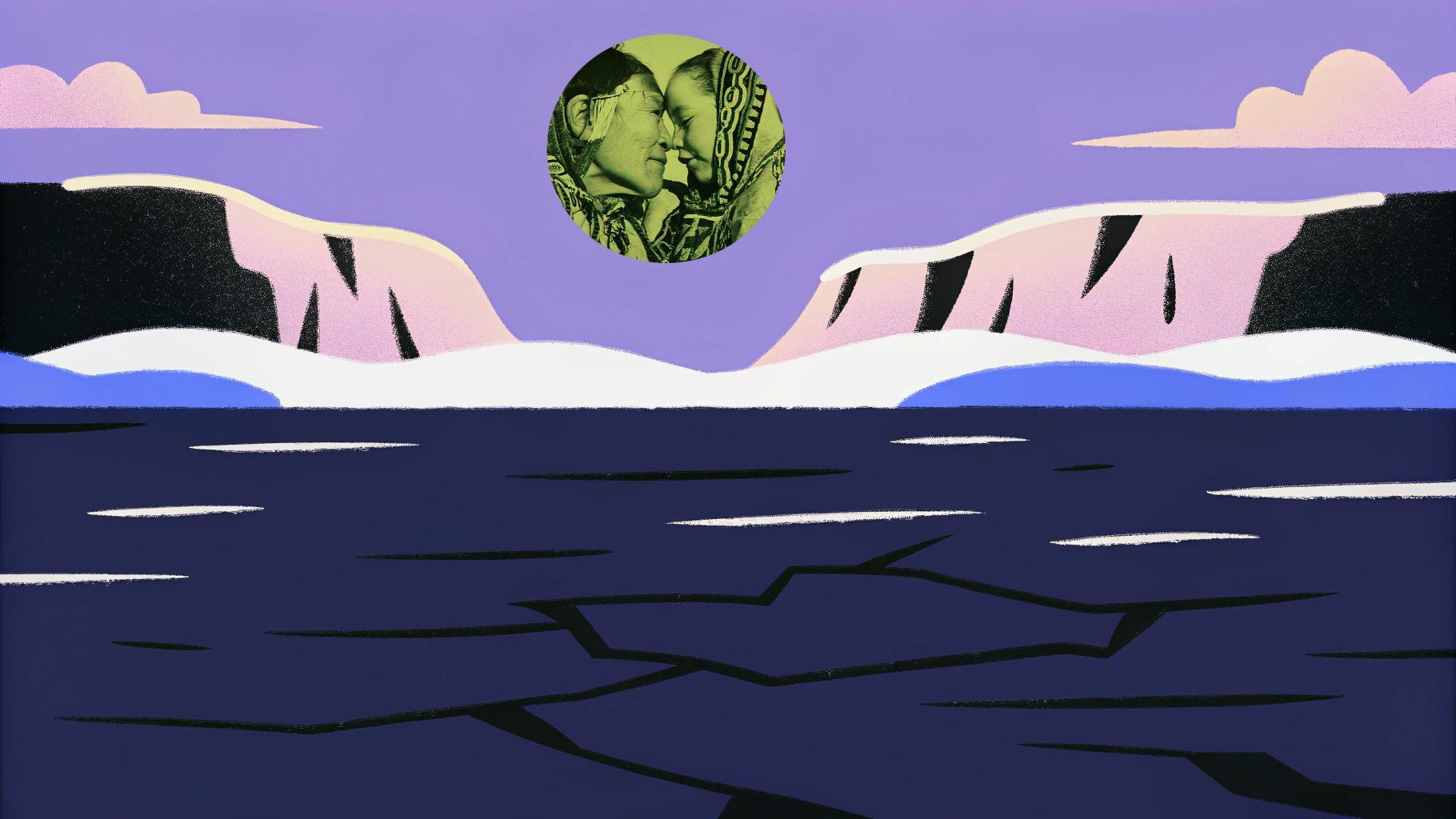
Inuit hunters in the Arctic, for instance, have long used a technique known as qaujimajatuqangit, or traditional knowledge, to travel safely across ice and snow. This includes reading subtle cracks in sea ice, interpreting snowdrift patterns shaped by wind (known as pukak), and recognizing the silhouettes of distant hills.
In the Pacific, Polynesian wayfinders use a sophisticated system called wayfinding to navigate thousands of miles of open ocean without instruments. They memorize star charts, watch the direction of ocean swells, and track bird flight paths.
Master navigator Nainoa Thompson of the Polynesian Voyaging Society describes it like this:
“Navigation is not about seeing with your eyes. It’s about sensing where you are in relation to everything else.”
Among the Anishinaabe in the Great Lakes region, land-based navigation included following the migration routes of animals and using landmarks like sacred rocks, tree formations, and water currents. These systems allowed for efficient travel and seasonal movement long before colonial borders divided the land, as Leanne Betasamosake Simpson beautifully explained in her book, “As We Have Always Done: Indigenous Freedom Through Radical Resistance”:
“The land is an animate, relational being. It holds our laws. It shapes our memories and our responsibilities. Our governance is not just in councils; it’s in how we move with each other and with the land.”
Simpson emphasizes that the land is a sentient, relational being that is exercised through living in respectful relationship with each other and with the land, rather than only through “modern” structures.
In this understanding, navigating space is inseparable from an individual’s connection to community, governance and care; and because of that relationship we can enrich our understanding of how each step connects to past, present, and future.
While GPS can tell you where you are, it cannot tell you how to be there. Indigenous navigation naturally teaches orientation in this space, and it does so responsibly.
A 2020 study published in Nature Sustainability warned us that many Indigenous navigation systems are at risk due to displacement, climate change, and the marginalization of Indigenous languages. But we didn’t really need a study to tell us that.
We also didn’t need a study to tell us what this loss of knowledge leads young people toward.
Not only do they lose or miss out on practical skills—they lose the language of relationship. The decline of land-based knowledge erodes community sovereignty. Communities that once moved seasonally with ecological rhythms find themselves confined by colonial borders and economic constraints. Traditional food system collapse, leading to poor nutrition and the rise of chronic illness. On top of that, sacred sites and kinship-based governance systems become harder to maintain without the physical practices that sustain them.
In this way, the loss is not abstract. In fact, it is deeply embodied and measurable in both cultural erosion and physical suffering.
Thankfully, Knowledge keepers across nations are working to change this situation for the better. In Aotearoa (New Zealand), Māori educators are bringing traditional star navigation (tātai arorangi) into school curriculums. In Alaska, the Calista Elders Council documents Yup’ik place names and trail systems to support cultural continuity.
In these and many other instances, Elders and young people are walking together across landscapes marked by memory and meaning, rebuilding the relationships that were once targeted for erasure.
And that’s a good thing, because cultural continuity stands as a powerful buffer against many of the ills that Indigenous youth struggle with including depression, suicide, addiction.
May this work continue with even greater strength in the yeas ahead… In the very least, we’re going to need more level heads for the day western civilization is once again left scrambling for toilet paper.
Across the world right now, Indigenous peoples are facing a renewed assault on their lands, rights, and ways of life.
From extractive industries pushing deeper into ancestral territories, to governments rolling back hard-won protections,
the threat is global—and it is growing.
What makes this moment especially dangerous is how little attention it receives.
Stories like this are disappearing in real time. Mainstream media
barely covers it and the coverage is fragmented. The public is left without the context
needed to understand what is truly at stake.
That is exactly why IC Magazine exists..
For more than 20 years, IC has reported on Indigenous struggles worldwide — consistently, independently, and without compromise.
We don’t follow news cycles; we trace patterns. We don’t sensationalize; we provide context.
And when the world looks away, we stay focused.
But this work is increasingly difficult to sustain.
We refuse to lock our reporting behind a paywall. We don’t sell access through subscriptions.
And we don’t answer to advertisers. IC Magazine survives solely because readers like you choose to
support independent Indigenous journalism.
Please donate today if you can. Every contribution helps us to continue this crucial work.
Thank you,
John Ahni Schertow
Founder and Editor in Chief