
Last Updated on June 12, 2025
Seven Indigenous Lenca men were imprisoned over 20 months ago under the emergency regime led by Salvadoran President Nayib Bukele. Their relatives, unable to visit them, are now telling their story in the hope that publicity will lead to the “miracle” of their release.
This report was originally published by ContraCorriente. It has been translated and abridged by IC Magazine with permission.
At midnight on 2 September 2023, nine hammocks hung from the wooden roof of an old house, the shelter for nine farm workers resting after a long day on a coffee farm in the community of La Orilla, which straddles the border between El Salvador and Honduras. The nine slept peacefully despite the popular belief in the area that it was the hour in which sorrowful spirits wander the world of the living in search of comfort. But it was not a ghost that stalked them.
“Aha, terrorist sons of bitches!” Were the cries of the Salvadoran Army that woke them.
Since then, and without knowing why, seven of the nine men have been added to the thousands of people imprisoned under the famous and relentless emergency regime of El Salvador.
The “terrorists” the soldier identified that night were farmers from El Pescadito, a Lenca settlement located in the Honduran municipality of San José. They all worked as day laborers on coffee farms in that area of La Paz, a Salvadoran department known for its highland coffee. Of the nine men seven were arrested that night: Óscar David López (24), Alexis Santos Vásquez (35), Gerardi Adonay Domínguez García (23), David Alexander Márquez López (18), Elmer Alfonso López (30), José Ismael Vásquez López (18), and Edy Exequiel Bautista Claros (27). The other two are free and are now telling their story.
The seven have been imprisoned for “criminal association”. Two were minors when captured and have been sentenced to 10 years in prison, while nothing is known of the other five except that they are being held in Santa Ana prison. Their families have no knowledge of their health status, whether they are also accused of criminal association, whether they have lawyers, or whether they have already been convicted.
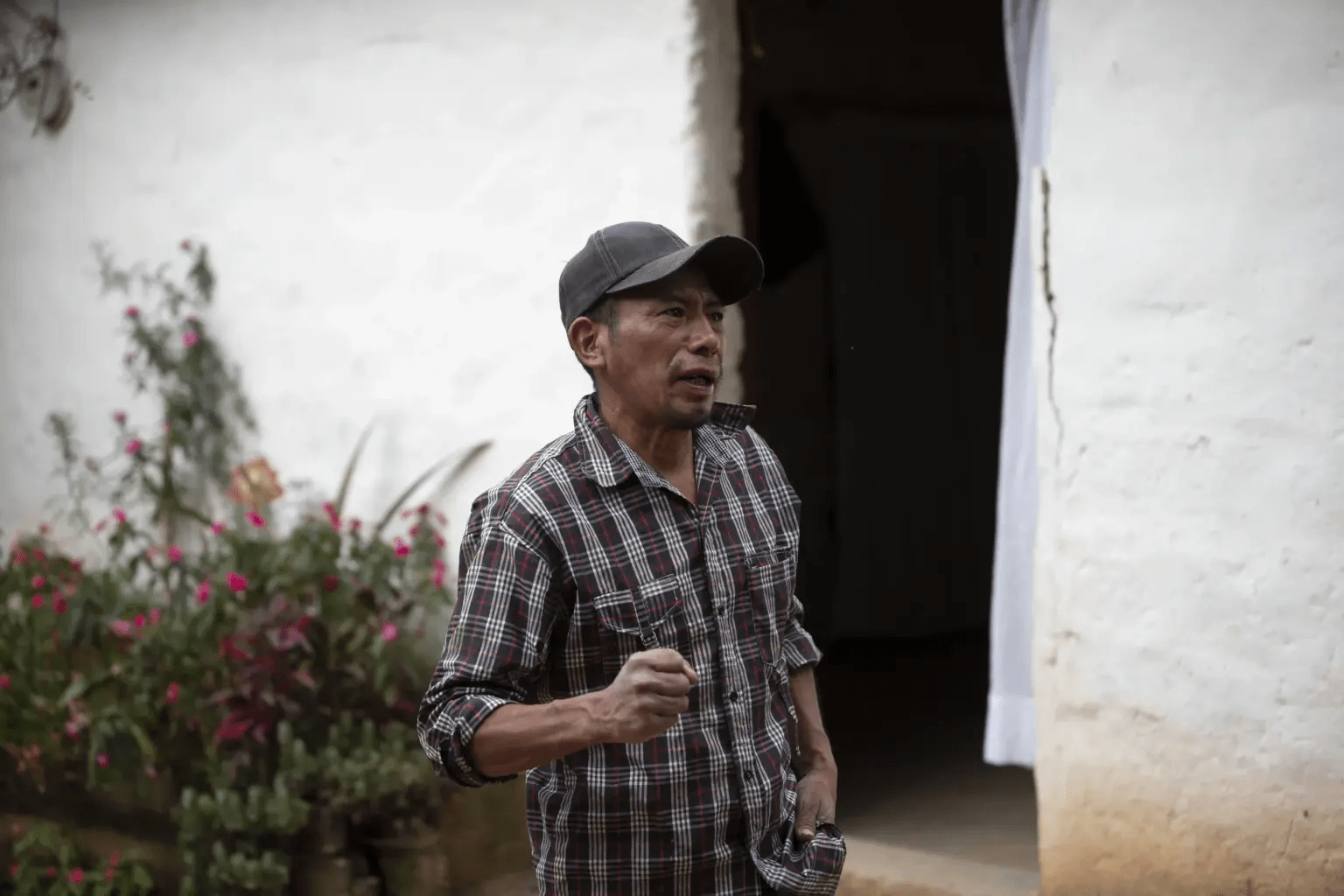
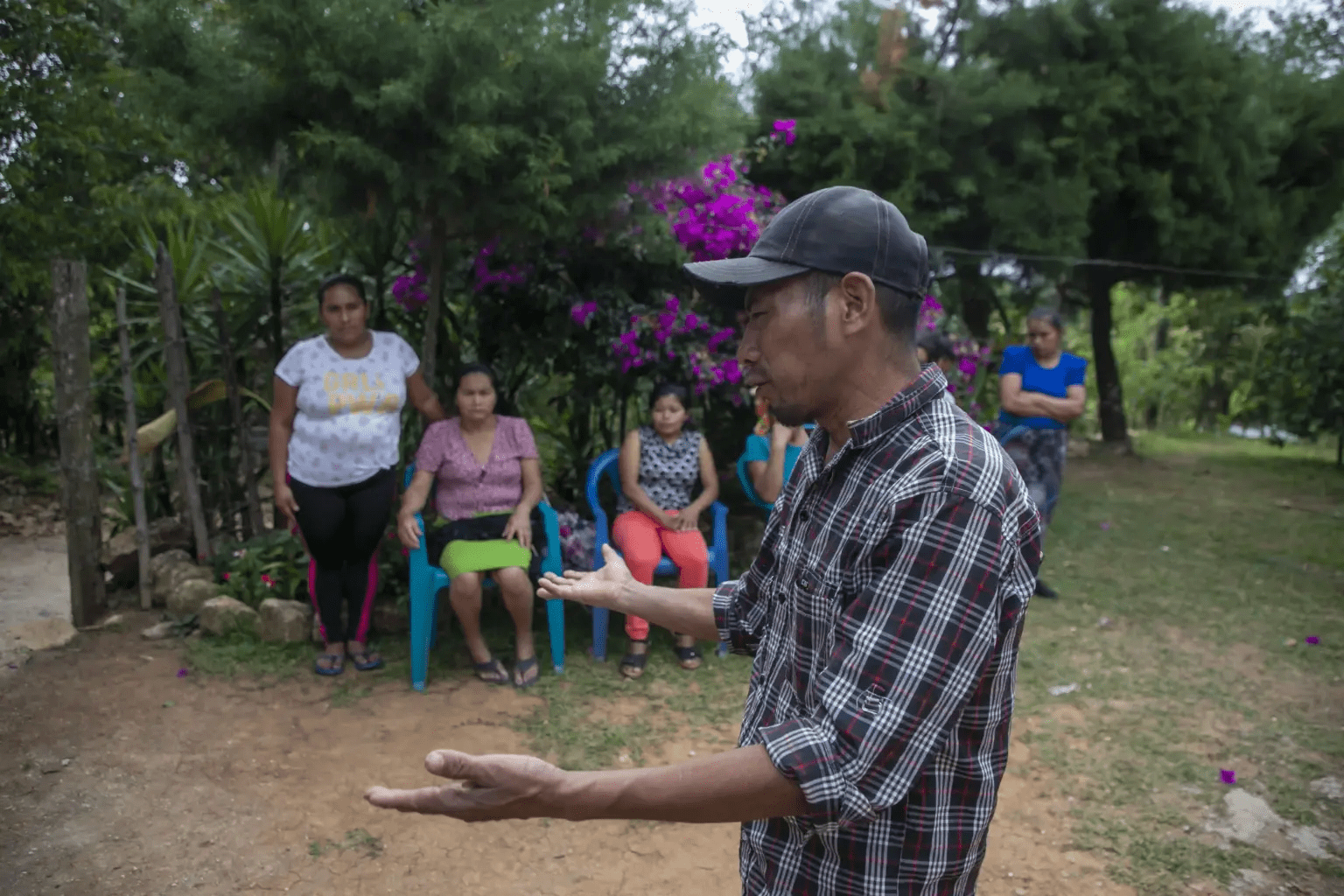
Pedro López, one of the two farmers who was not arrested by the Salvadoran military, tells the story of the detention of his seven companions and family members. The military let him go and he was the one who brought some of the work clothes of those now detained in El Salvador back to El Pescadito. El Pescadito, San José, La Paz, May 5, 2025. Photo ContraCorriente/Fernando Destephen.
This has become very common in El Salvador since March 2022, when President Nayib Bukele declared war on the maras and other gangs that were engulfing the country in uncontrolled violence. His strategy was to suspend several constitutional guarantees, such as the right to defense, the maximum period of detention, the inviolability of correspondence, and freedom of association. According to official data, more than 85,000 people have been imprisoned since the state of exception was established. The suspension of these due process rights has now become the norm, despite the government itself saying that the gangs have been successfully dismantled.
Prior to imposing these extreme measures, Bukele made a pact with the gangs to reduce the homicide rate in El Salvador, as the newspaper El Faro revealed in multiple reports. However, in March 2022, they broke the pact, and Bukele, who has the highest approval rating of any Latin American president, launched a hunt without precedent or control against gang members, a hunt whose prey now extends to anyone considered suspicious according to the criteria of the patrolling police and military. For that reason the ferocious campaign has resulted in thousands of innocent people being imprisoned without there being any other basis to support the accusations against them.
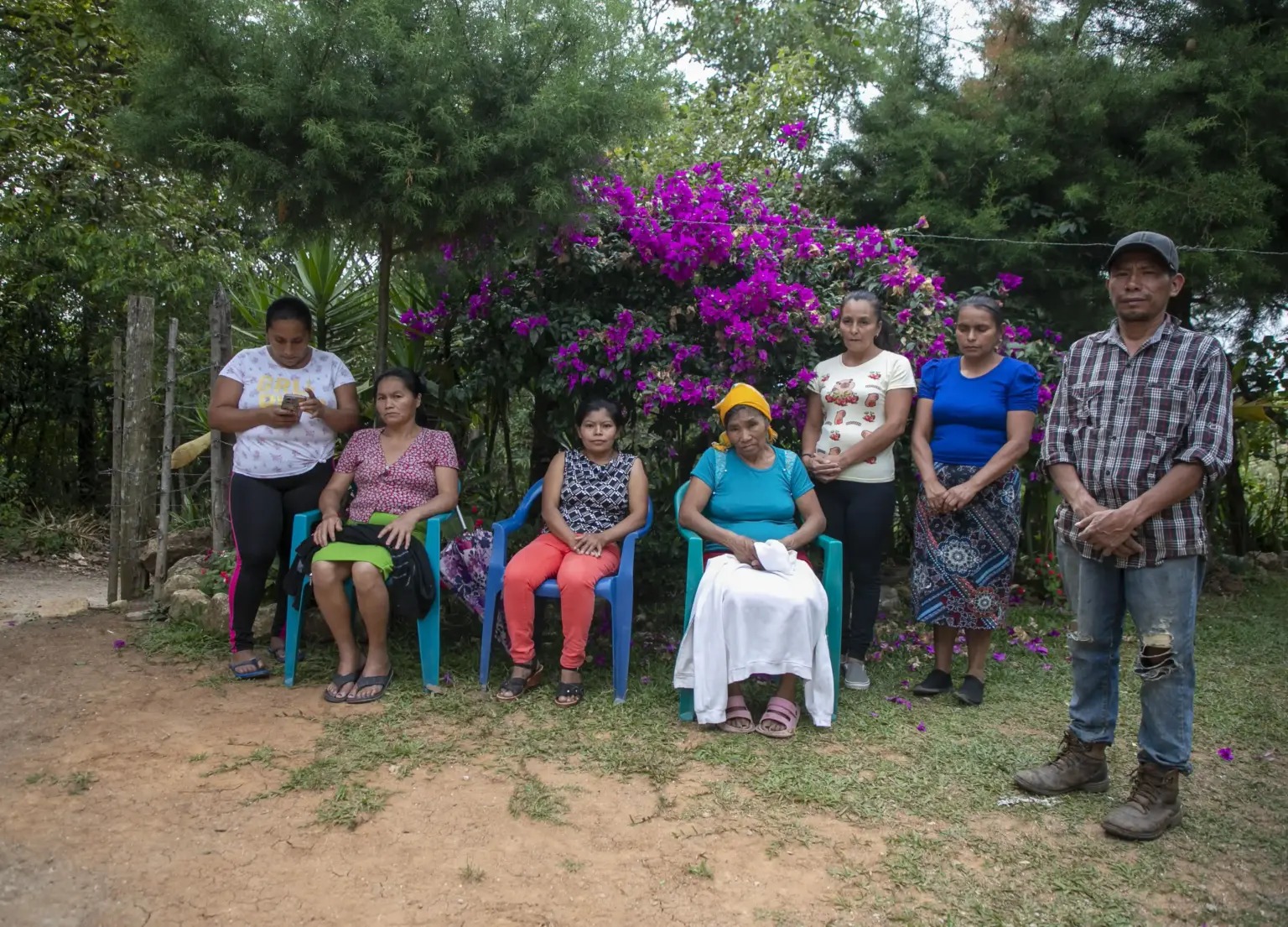
Mothers and wives of the seven detainees, who have not been able to see or directly communicate with their families for over 20 months. El Pescadito, San José, La Paz, May 5, 2025. Photo ContraCorriente/Fernando Destephen.
Salvadoran and international human rights organizations have documented numerous serious human rights violations, including mass arrests made without a clear court order and based on vague profiles or anonymous complaints; torture and cruel, inhuman, or degrading treatment; deaths in state custody; disappearances after arrest; and violations of due process.
René Valiente, Research Director at Cristosal – a human rights organization that has been persecuted by the Bukele regime – explained to Contracorriente that “the state of emergency has ceased to be a constitutional framework that allows for action, and has become a tool of fear. And it has been used in different areas of society, not just against gangs. It’s a propaganda tool”, he said.
The human rights defender maintains that the worst thing about the regime promoted by Nayib Bukele “is that cruelty is sold as justice. The true face of the atrocities being committed is hidden.” “There is a systematic violation of the rights of the Salvadoran population,” says Valiente, although now we must also add to their rights those of the migrant population deported from the United States, and also those of other Central Americans who might fall into the black hole of Bukele’s punitive system.
We contacted the Honduran Vice Minister of Immigration Affairs, Antonio García, to inquire about this case of the arbitrary detention of Honduran citizens in Salvadoran territory, but he responded briefly that he “had no information.”
“Aha, you terrorist sons of bitches! Don’t move! He who gets up, here I’ll break them!” a soldier shouted. Pedro doesn’t forget it, and replays every moment of that night, wondering why they didn’t take him too, and why they took his son and three of his nephews.
Pedro remembers that they were resting after having cleared almost 7 hectares of land when they heard noises and were suddenly surrounded by soldiers, who immediately called for reinforcements until about twenty uniformed men encircled them.
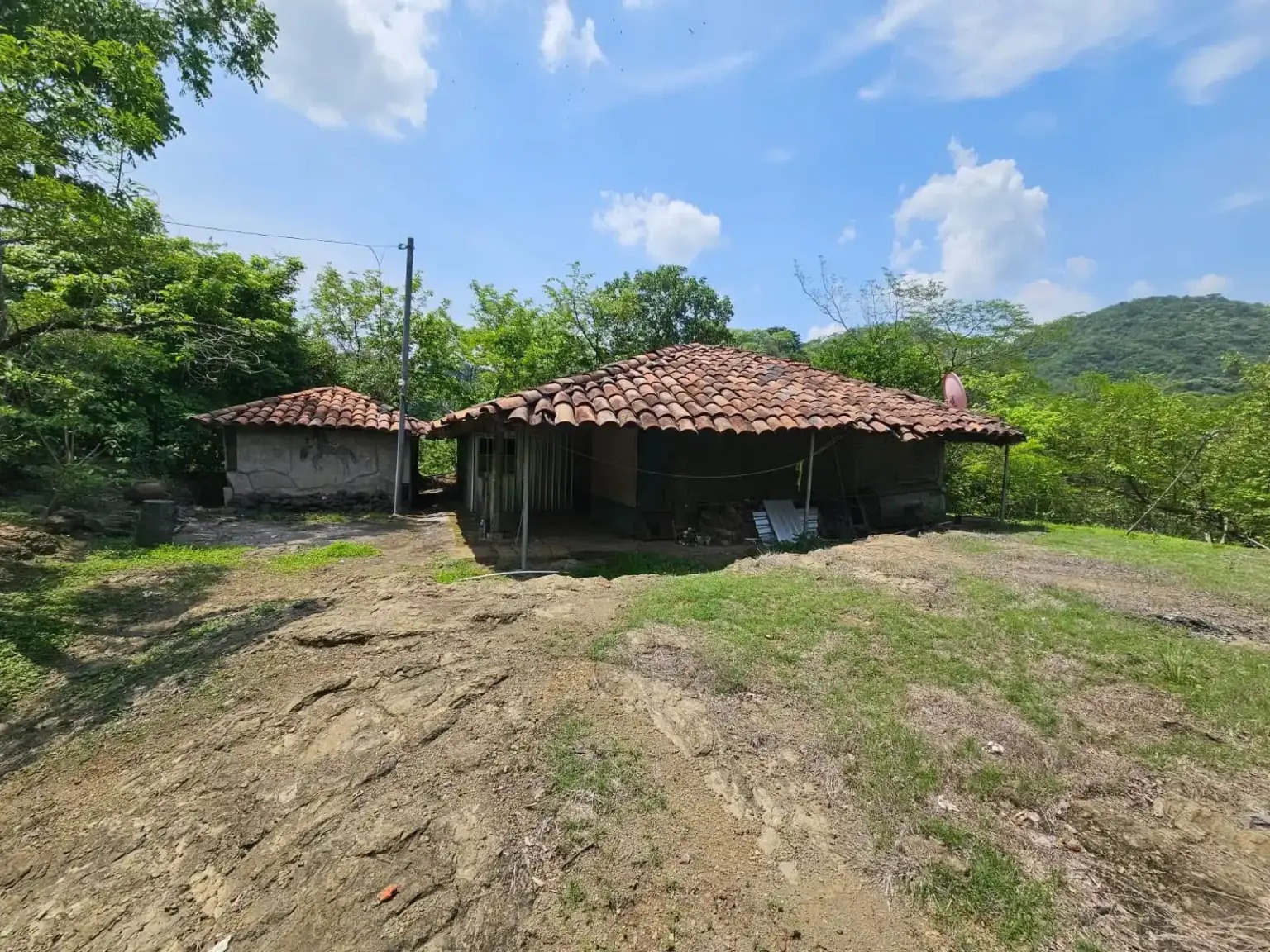
This is the house where the seven Hondurans were detained on September 2, 2023. La Orilla, El Salvador, May 6, 2025. Photo ContraCorriente/Allan Bu.
“These bastards are criminals, and right now they’re going to tell me which gang they’re from,” Pedro remembers an officer telling them. Pedro replied that they were working and pointed to the machetes they used every day, and with which they daily crossed the border.
To understand the arbitrariness of their detention, we must go back to August 21, 2023, when the nine left on a four hour journey to Magdalena in the department of Intibucá, close to the border with El Salvador. Pedro was the oldest of the group; the rest were young people under 35.
Their hometown is the Lenca community of El Pescadito in the municipality of San José in the Honduran department of La Paz. While it is not a rich community, the people we spoke to maintained that it almost always had work, usually on coffee farms. The daily wage is 200 lempiras (US$7.5) for day laborers, and up to 500 lempiras (US$19) for construction workers. Despite the low wages, young people rarely leave the community to migrate to other countries.
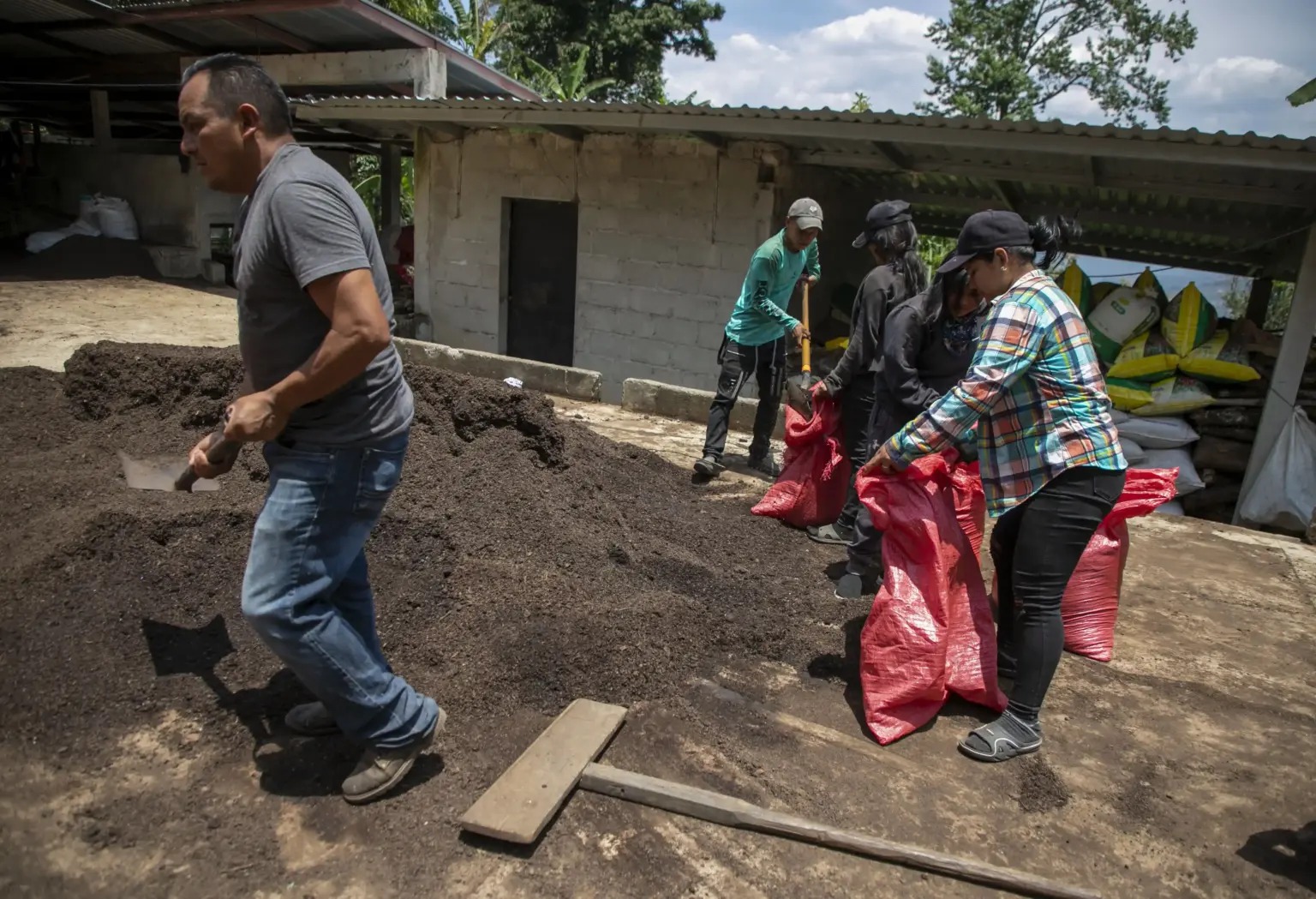
Part of the work in the area involves bringing organic fertilizer to the farms, a similar activity to that of the seven laborers now detained in El Salvador. San José, La Paz, May 7, 2025. Photo ContraCorriente/Fernando Destephen.
In Magdalena the nine had secured work clearing land in the village of El Aguacate, about five minutes from the border with El Salvador. Every evening they crossed the frontier, which is nothing more than a stream, to sleep in a house located in La Orilla, a community that comprises homes on both sides of the stream. Many there have dual nationality, like Don Santos Argueta, the man who hired the laborers and promised to provide them with food and lodging, in addition to paying their wages.
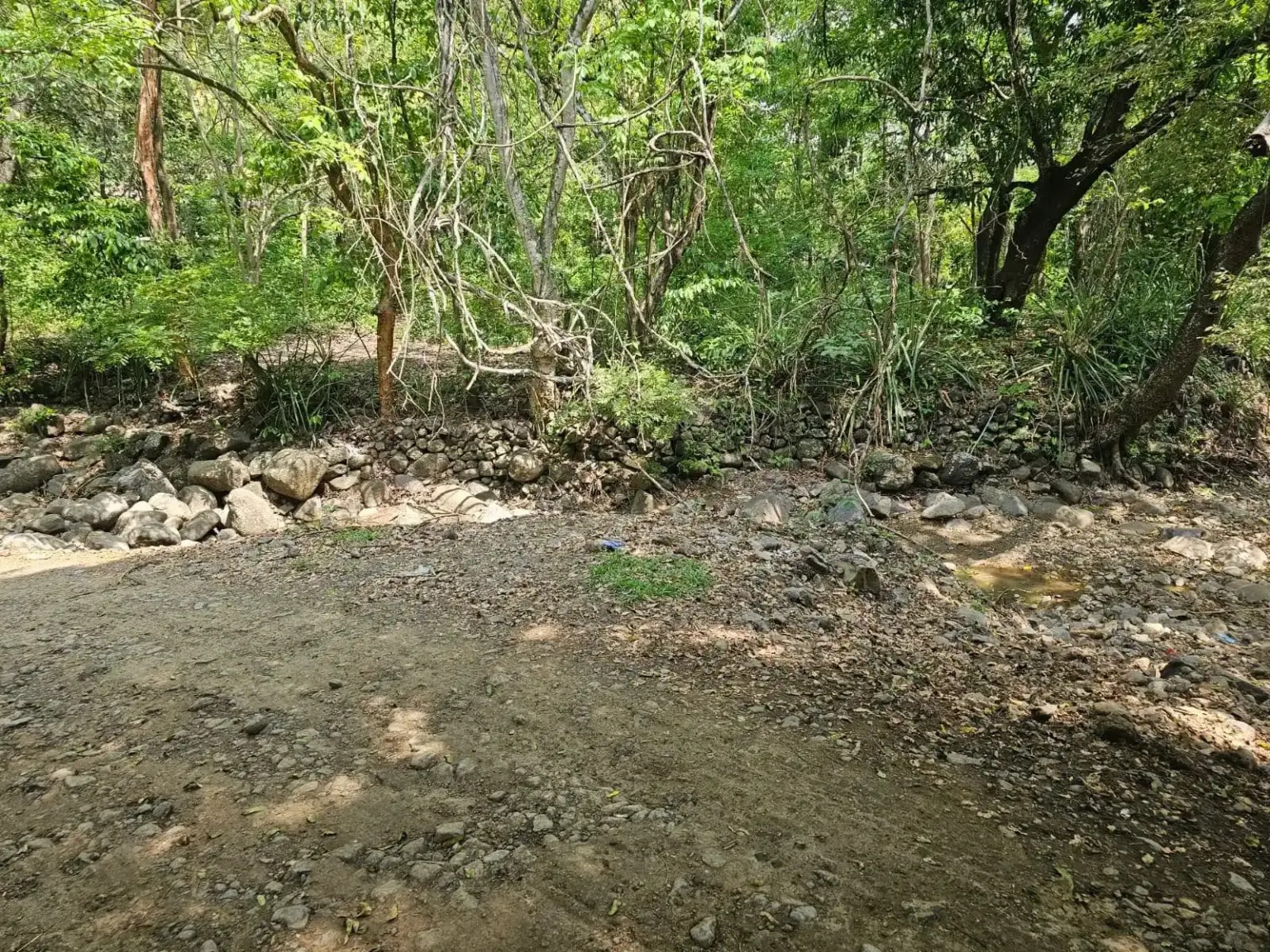
This small stream serves as the border between Honduras and El Salvador. La Orilla, San Miguel, May 6, 2025. Photo ContraCorriente/Allan Bu.
Don Santos says that upon receiving them, he asked the young men if they had had any problems with the law, as he is very familiar with the situation in that country under Bukele’s rule. The response was that none of them were afraid because they had no criminal ties.
The young men worked with machetes during the day in Honduras and at dusk crossed the stream and slept on Salvadoran soil. They continued in this routine for 11 days without anyone from the military checkpoint at the border issuing any warning, or questioning their presence in Honduras. But on the day they planned to return to their hometown, seven of the nine laborers were captured.
The army did not take Pedro, nor did they take Rigo (20), a laborer who had been suffering from gastrointestinal problems for three days. “If you take that boy, he’ll die,” Pedro told the soldiers, trembling with fear. That remark saved Rigo, who was able to return to Honduras.
Pedro isn’t sure why they didn’t take him, although he suspects it was because of his age, as he heard one of the soldiers say: “We have to leave that old man, why are we going to take him?” Pedro and the others, who were wearing only their underwear, were tortured until dawn by the soldiers as they demanded a confession.
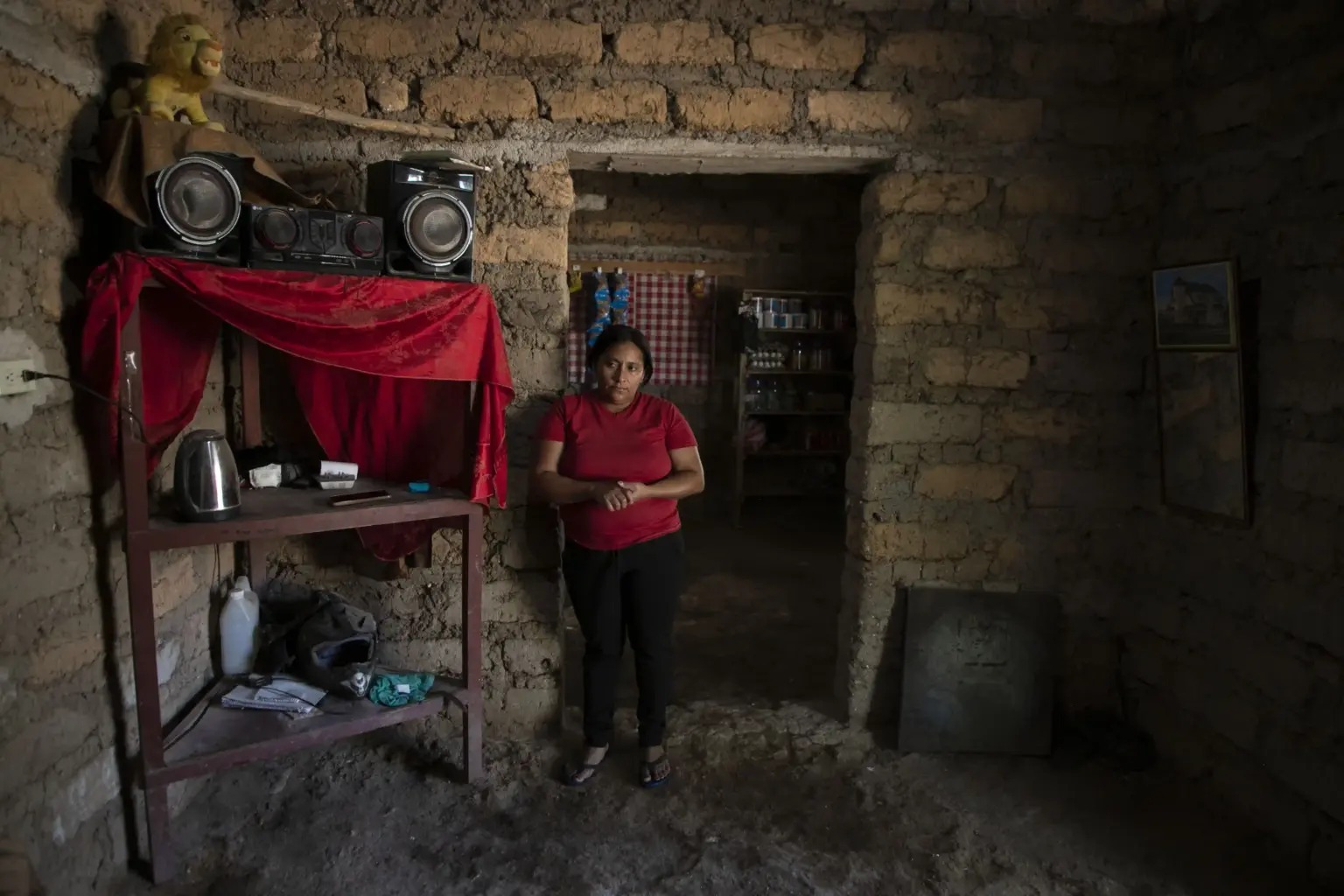
Norma is the mother of David Alexander Márquez López, who spent his 18th birthday in a prison in El Salvador. El Pescadito, San José, La Paz, May 5, 2025. Photo ContraCorriente/Fernando Destephen.
“The soldiers made a boy who was scared bite his nails and eat his own poop, and they unlocked the safeties on their weapons,” Pedro recalled, distressed.
Despite Pedro’s attempts to convince the soldiers that they were just workers who had come there hired by a local landowner, that they knew nothing about gangs and that their lives had been spent farming the land, the soldiers were like a wall. “Bullshit, you’re terrorists! Where are your weapons?” the commander yelled at them, and at that moment Pedro heard another of the soldiers respond, “They don’t have any weapons.”
Pedro was confused. Despite his fear, he asked them why they hadn’t stopped them sooner, given that they had crossed the border twice daily for 11 days. They told him that a permit was required to stay on Salvadoran soil, and without one they were in trouble. According to Pedro, the soldier told them that if they had carried a permit, the army, instead of calling them terrorists, would have protected them.
Pedro’s face twists into a grimace. Tears well up in his eyes. Memories still haunt him, and his voice cracks when he talks about the moment his family and friends were taken away: “They took those kids away with nothing on their feet.” He was told he had 15 minutes to leave the place, after having been tortured for hours to confess to the crimes the soldiers claimed they had committed.
Pedro and Rigo were released with the warning that if they mentioned the beating they had received at that time to the Salvadoran National Police, they would be subject to another “cachimbeada”[beating].
Once the remaining seven were arrested the accusation against them rested on the false testimony of the soldiers, and photos that, within the context in El Salvador, are automatically associated with maras and gangs. The Salvadoran authorities have not a single piece of meaningful evidence to support the accusation of criminal association against the seven Hondurans.
René Valiente, from Cristosal, explained that under Bukele the rules of evidence in criminal proceedings have been modified to such an extent that the prosecution has a complete advantage, as even the same officers involved in the arrest can testify against the individuals. However, he clarifies that this is just one modification among many: “There are issues with the right to defense, reforms to the time periods a person can be detained, which were drastically extended for crimes such as criminal association, since according to what the law says, these people could be waiting up to 10 years for a trial. Before this, the law established a maximum period of two years”.
Valiente explains that what is achieved in this way is to anticipate a sentence, and if a sentence is anticipated, it means that the accused has not had their legitimate right to defense.
There are other reforms being promoted by the Government of El Salvador; for example, they intend to have mass trials in which they intend to try up to 300 people in a single trial. A total aberration, according to Valiente: “That makes the work of the defense very difficult. A single court and a single hearing for so many people. Just identifying individuals becomes complicated, let alone adequately defending their rights.”
In the case of the seven Hondurans, the soldiers claimed that the boys were detained in a cemetery while performing satanic rituals. While there was a cemetery around 200 meters from where they were detained, there is evidence and testimony that refutes the soldiers’ version.
“We never left the house. That’s false. That morning we had left at 4:45 to have coffee with the boss, we went to the farm to work and we returned at 3:30 in the afternoon to rest. It’s incredibly hot there. We were all bitten by mosquitoes and even bees,” Pedro maintains.
In addition to Pedro’s testimony, we asked two people in La Orilla, who, without being too explicit told us that the Hondurans were never seen outside the house where they worked. “They went to work and came back to rest, they didn’t go out,” the owner of a small grocery store told us. Don Santos also reaffirmed the theory that they didn’t leave the house, and gave a reason: “It’s because they didn’t have money, they couldn’t go out, because they wouldn’t be paid until they finished the work,” he said.
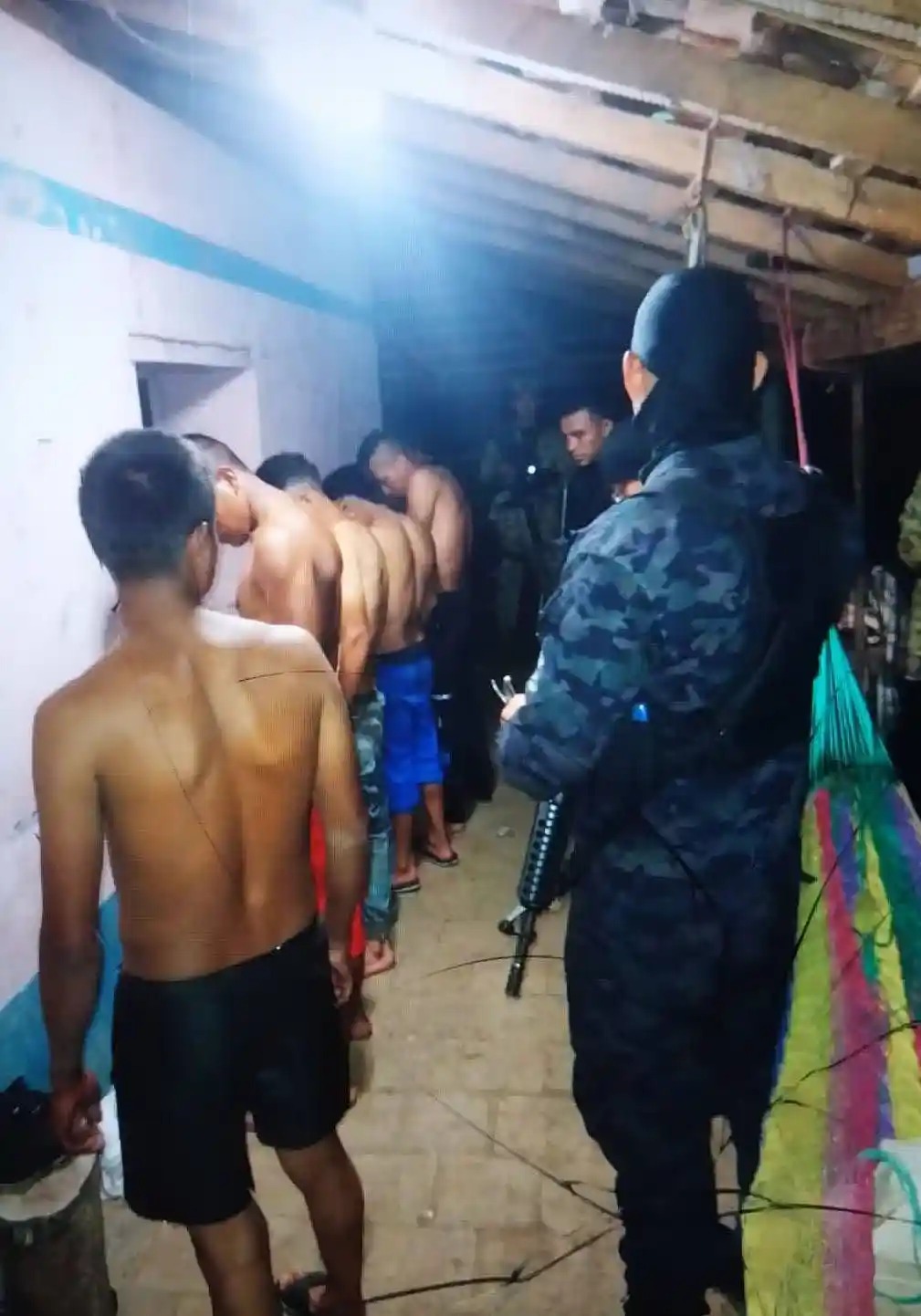
This photo was taken during the arrest at the house where they were sleeping. For security reasons, the source of the photo cannot be revealed. It shows that the Indigenous people were arrested in a home, not a cemetery. La Orilla, El Salvador, September 2, 2023. Photo: Courtesy.
But that’s not all; there is a photograph where the imprisoned men appear stripped, hands up, guarded by soldiers in the house where they slept. The hammocks and the roof of the house can be seen there. They were not in the cemetery when they were captured.
The other part of the accusation is based on photographs found on the cell phones of three of the detainees. The other four did not have cell phones. None of the family members have seen the incriminating images, but one of the mothers says it could possibly be a photograph of her son raising his index and little finger, which is the famous rocker gesture, but which in El Salvador is associated with the Mara Salvatrucha gang.
A close friend, who did not want to reveal their name for security reasons, said they learned about the photographs because the young man himself shared them, and that it’s likely that his hand gesture was interpreted as alluding to the gangs. A young man making the identifying signs of opposing gangs is a death sentence within the criminal world, but in these young men’s communities people don’t even know how to distinguish the signs; they know little about gangs because they haven’t been prominent in their community like they are in the cities of Honduras.
One of the employees of the farm where the detainees typically worked when they were at home in La Paz has a simple, colloquial explanation for these photos: “Look, those kids were caught as idiots; they don’t even know what a mara is,” he said.
In addition, photos were found on the detainees’ cell phones of them gathered with other young people of their age in the parkland of their community, something very common and not considered a crime in Honduras.
A horse is painted on one of the walls of the house where the farmers were detained. Pedro claims that the soldiers took photos of the detainees in front of that wall to use as evidence against the seven, even though it has no known connection to any mara or gang. Don Santos also claimed that because one of the detainees had a piercing in his ear (although he didn’t have the earring), that was used to link him to gang activity; another was linked by his long hair.
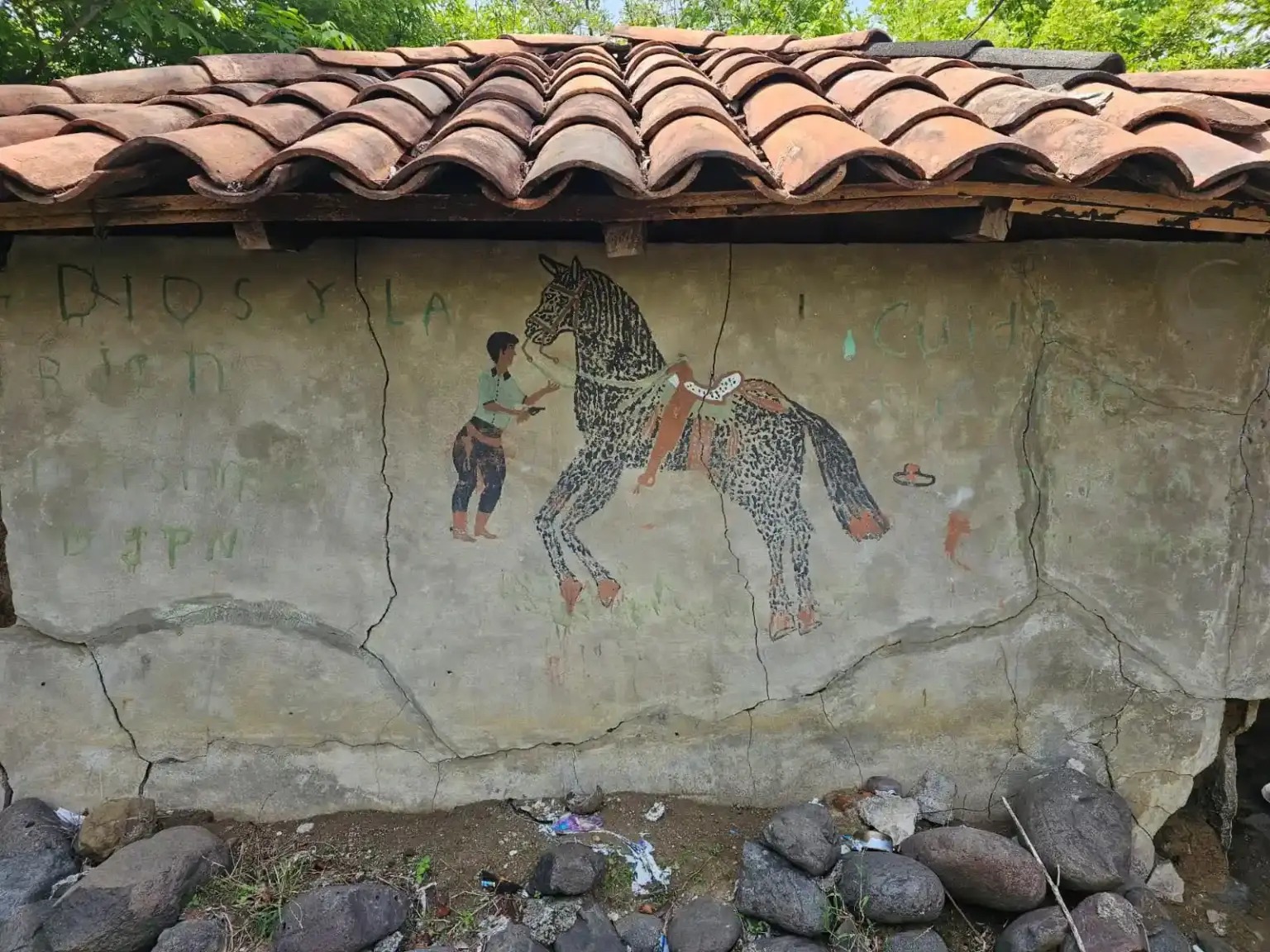
This painting on the house where the farmers were detained was used as the backdrop for photos used as evidence against the Hondurans. La Orilla, El Salvador, May 6, 2025. Photo ContraCorriente/Allan Bu.
A woman we met on the main street of their hometown El Pescadito told us that she knew the boys, that they were workers, but sometimes they would lark around, and possibly some of them “liked to smoke marijuana.” To consume marijuana use isn’t legal in Honduras, but it’s very common, and although drug use is common within gangs, this doesn’t mean that all those who use marijuana are gang members or criminals, much less in an indigenous community.
Their home department of La Paz is one of the regions with the least violence in Honduras. According to National Police data, 14 of the department’s 19 municipalities had no homicides between January 1 and May 12, 2025. Among those municipalities with zero homicides are San José and Marcala, located in the area where Pedro and his friends live. During that time, no homicides have been reported in Magdalena and Intibucá.
Another woman from the community stated that they were young workers, and that it was a shame they were imprisoned without having committed the crimes they are accused of.
René Valiente stated that in Cristosal, they have received more than 3,800 reports of human rights violations. Arrests are made without a formal warrant, and many testimonies indicate that the reason for the arrest is getting nervous when asked a question or appearing suspicious. “There are people who have been detained for years for getting nervous in front of the police,” he said. In the case of the seven, the people who had photos on their phones were asked what they meant, and they didn’t respond, perhaps because they didn’t know, or out of fear. They simply bowed their heads, and that was also considered evidence against them.
They were day laborers. The nine boys who went to the border with El Salvador were farm workers, accustomed to working with a machete and a hoe. “I took my son and my nephews because they’re good at working,” Pedro says, in words concealing his guilt for having taken that decision.
Of the seven who were detained, almost all were the breadwinners of their households. Luz Marina, Gerardi Adonay’s mother, told us that she hasn’t been able to drop off her son’s things due to lack of money, since the trip would cost approximately 3,500 lempiras.
And then she added: “Gerardi didn’t work for any of the organizations they’re accusing them of there; he was dedicated to working. I’m his mother, and I know him well. They didn’t find anything on his phone. He helped me because he was the only son who lived with me,” she said.
David Alexander López was a minor when he was arrested, and has now been sentenced to 10 years in prison for the crime of criminal association, according to his mother, Norma López. David’s father had died six months before he was imprisoned, and that’s why he had become an important support for his mother.
They found one of the photos of David that serve as the basis for the accusation. “He was making signs there” his mother said, but she asserts that her son was never arrested for anything bad: “I know he didn’t go out, not like that – to go around doing things in the street.” Norma avoids answering when asked if her son’s conviction is unfair; She maintains that in Honduras, young people have any number of things on their cell phones, and that this doesn’t pose a problem with the law, but that in El Salvador, the law is different.
María Garrido is the wife of Alexis Santos, a 35-year-old father of two young children. He was the head of the family, and since his imprisonment the burden has fallen on María, who has struggled to keep the household afloat. She told us she took out a loan so her children could continue school, hoping that her husband will return this year.
Every three months the families of prisoners empty their pockets to send the most essential items to their families. They send soap, sheets, sugar, oatmeal, sandals, and personal hygiene items. Not all families manage to send on every trip; it’s very costly for their finances. Usually, two mothers travel to make the delivery to Santa Ana prison.
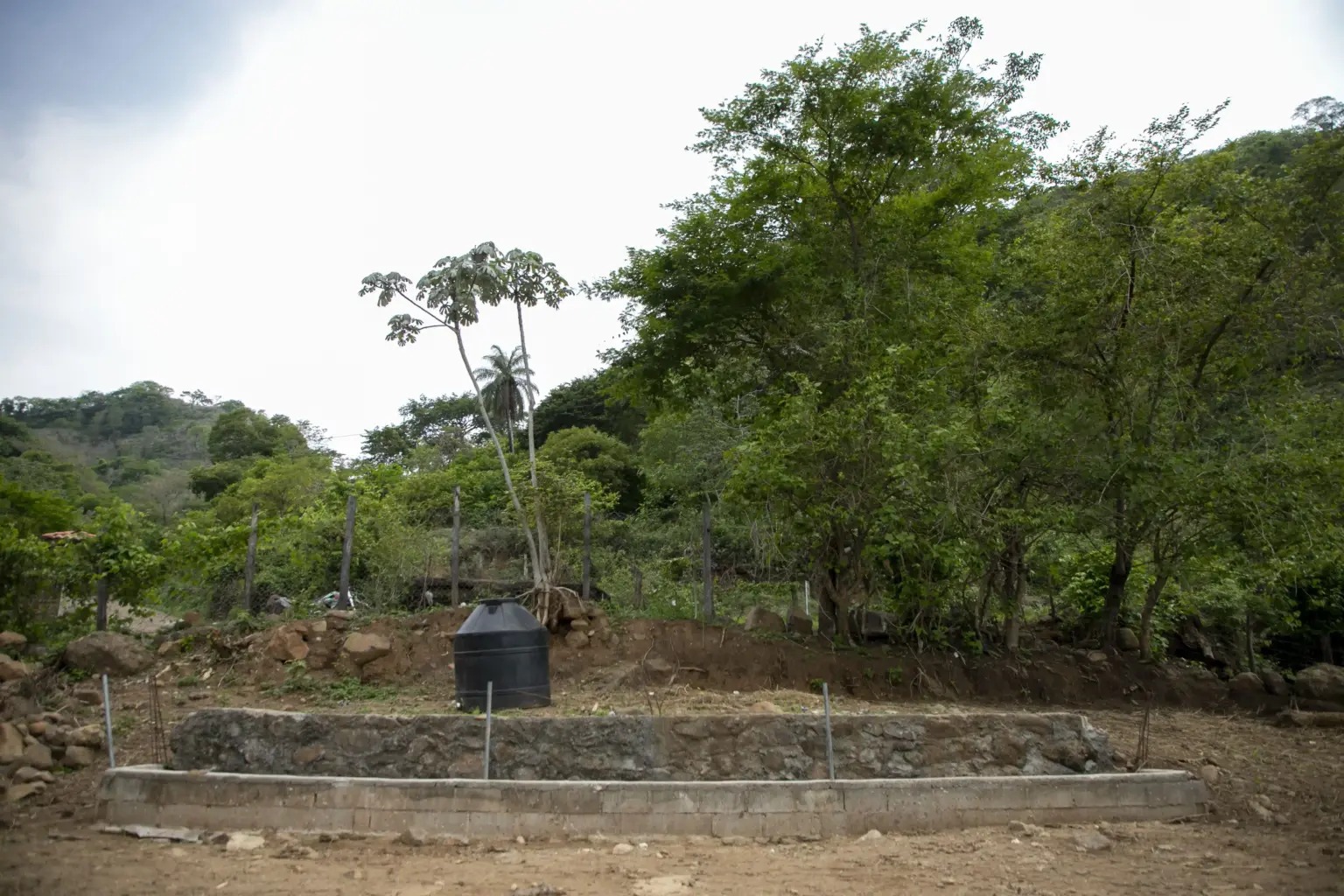
Part of one of the plots that the seven workers were clearing in the Honduran side of the La Orilla community. May 5, 2025. Photo ContraCorriente/Fernando Destephen.
However, Alexis has never received anything from Honduras: “I haven’t been able to send him anything because with the two kids, I feel even more overwhelmed. I don’t know what I’m going to do because to this day, nothing has been heard from them. I don’t know if Alexis is even alive, honestly,” says María.
Emma López is the mother of Elmer, her only son, who was the main breadwinner at the time of his arrest. His sister now works and she has sent some things to her brother. “I don’t know how she manages to send anything to his brother. I’m out of work,” says the mother.
Marleny Claros is the mother of Edy Bautista, who has a seven-year-old son who has begun to ask about his father: “Three days ago, he asked when his father was coming back, and I simply told him I didn’t know.”
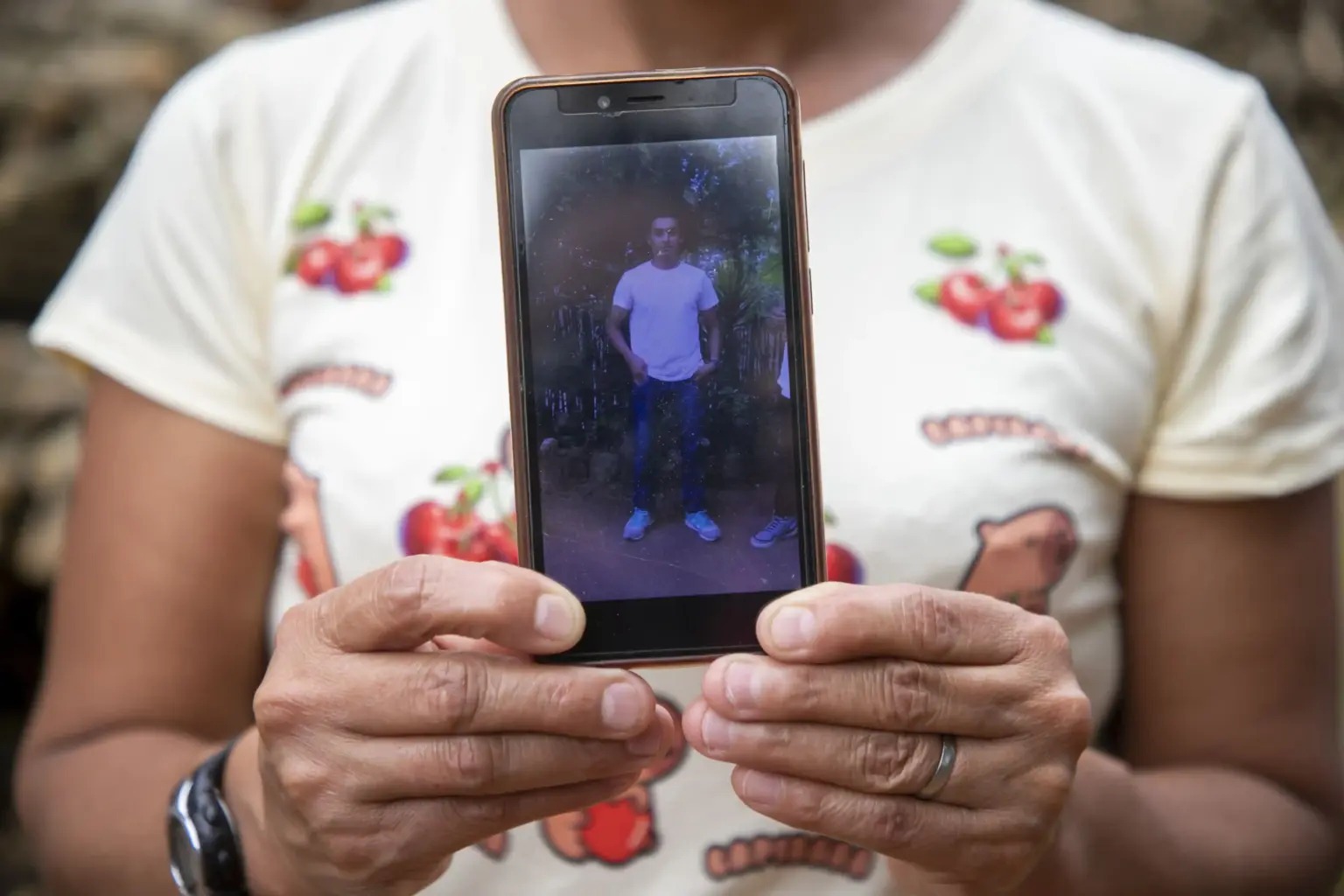
Marleny Claros displays the most recent photograph on her cellphone of her son, Edy Bautista, part of the group of seven Hondurans arbitrarily detained in El Salvador. El Pescadito, San José, La Paz, May 5, 2025. Photo ContraCorriente/Fernando Destephen.
The hardest thing for these families is that they know virtually nothing about the prisoners. They haven’t seen them, they aren’t allowed to call, and they have no way of entering the prisons. They deliver packages to prison guards without any certainty that they will reach them because they’re not being watched. Desperation drives these devastated mothers to trust the same State that has their children imprisoned without respecting due process. “We know they’re there because they’ve told us, because I ask which cell they’re in and they tell us the number and the sector,” said one of the mothers.
Alexis’s wife is less optimistic: “We haven’t spoken to them, not one call. Nothing. Since they were there, no one has heard from them. I ask them [the other families] if they’re alive; only God is with them. We don’t know anything.”
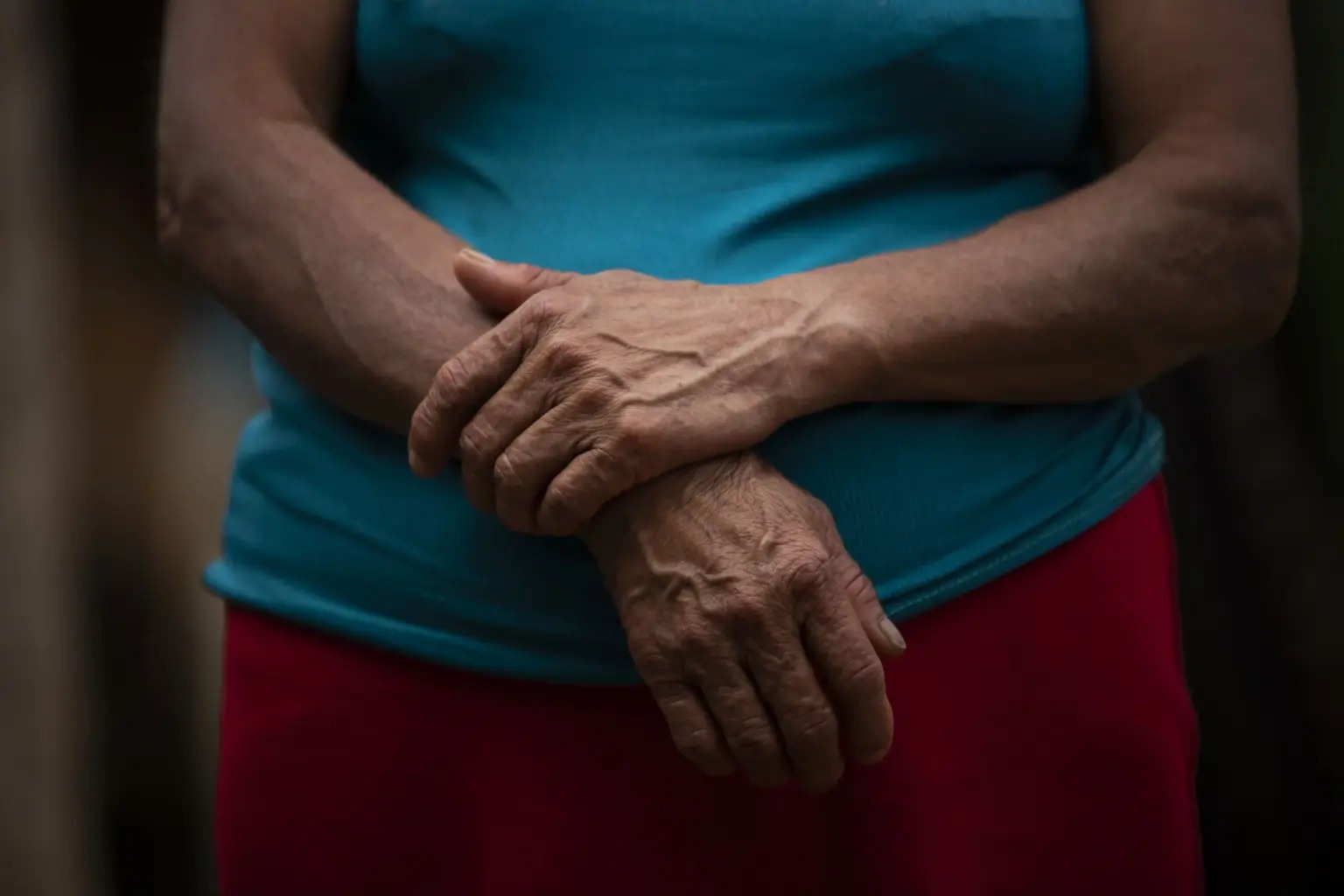
There is great concern among the group of women because they have no concrete news about their detained relatives. El Pescadito, San José, La Paz, May 5, 2025. Photo ContraCorriente/Fernando Destephen.
The families say that a few months ago, they received a call from the Salvadoran prison seeking to read letters written by the imprisoned day laborers. They have no way of proving the letters were true, but they are confident in one detail. One of the men is a member of a church, and in his message, Bible passages were left for his girlfriend, whom he mentioned by name in the letter. That’s all they know.
The Santa Ana Penitentiary Industrial Complex (formerly known as the Santa Ana Penitentiary Farm) houses approximately 8,000 inmates. It is located more than 75 kilometers from San Salvador, in the western part of the country. According to the official narrative, the prison focuses on the inmates’ reintegration into society through work and production programs, relating to agriculture, livestock, and manufacturing. None of the inmates are allowed visitors.
Cristosal’s Director of Research, René Valiente, emphasized that those detained under the regime are subjected to complete isolation: “The prisoners are not even in contact with their lawyers or their families; they have no right to receive visits,” he said.
Valiente noted that under the state of emergency there is a stigma associated with poverty, and argues that the vast majority of arrests are concentrated in marginalized neighborhoods, areas that have historically been victims of the gang violence that Nayib Bukele used to establish the state of exception.
Cristosal has received testimonies over the last three years of illegal raids (police powers to search homes and other properties were expanded unconstitutionally), of mistreatment “including torture both at the time of arrest and afterwards, of deprivation of access to medication and of precarious food supplies,” he maintains. That’s why the families of Honduran day laborers send sugar, oats, cereal, and other foodstuffs with a shelf life of 10 years.
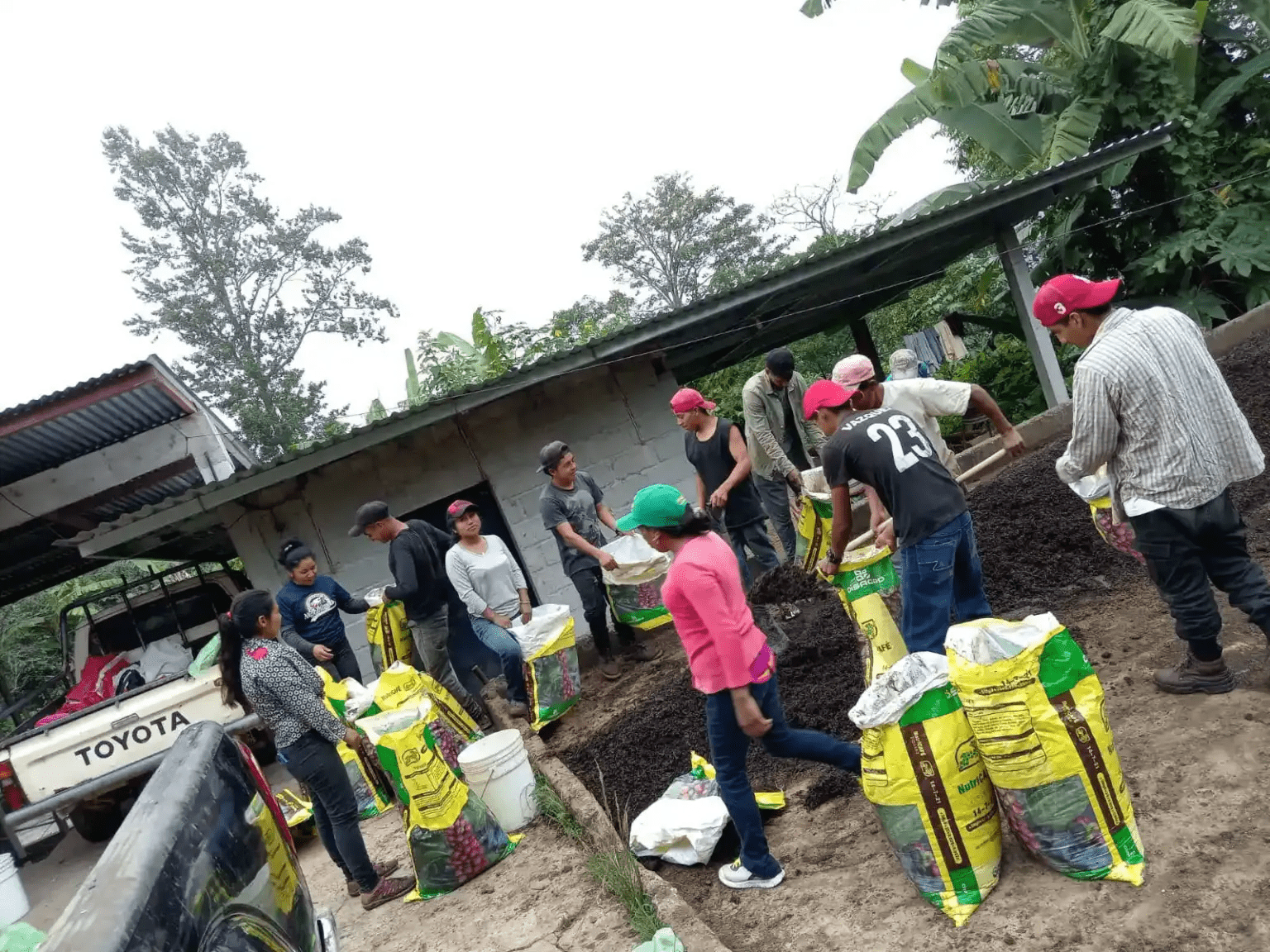
Work performed on coffee farms during the harvest. Photo: Courtesy.
Valiente noted that according to official figures, 85% of those arrested are men, with an average age of around 30. However, the most alarming figure that Cristosal has is the death of more than 380 people while in state custody: Since “a detained person is subject to the absolute control of the state, the state assumes responsibility,” he emphasized.
For those accused of criminal association it is difficult to find a lawyer, firstly because there are both subtle and direct threats against professionals who take on cases related to the state of emergency. Valiente added that some lawyers, for ethical reasons, prefer not to take on such cases, since due to the imposed limitations it is difficult to guarantee an effective defense: “The rules that should prevail in a democratic state are suspended,” he stated.
During the state of emergency, authorities have arrested more than 90,000 people, with 85,900 now prisoners and around 7,000 released. Added to those are migrants deported from the United States, suspected members of criminal organizations, for whom Bukele charges a fee to the Trump administration. No figures are known for other nationalities.
The Salvadoran government describes the number of people released due to claims of arbitrary procedures as a “margin of error.” However, Valiente stated that a review of those cases shows that although such individuals are no longer in prisons, they remain subject to judicial proceedings, with their incarceration measure modified but with the constant threat that the process could be reopened at any time.
Finally, reflecting on the worst aspects of the state of emergency, René Valiente expressed the deep anguish of families who do not know the whereabouts or condition of their detained loved ones. He concluded by stating that no democratic regime should operate in such an inhumane manner, leaving mothers with no information about whether their children are alive or dead after having been taken away by the police.
This is the situation in the Lenca village of El Pescadito; families know almost nothing about the prisoners and are hoping for a miracle.
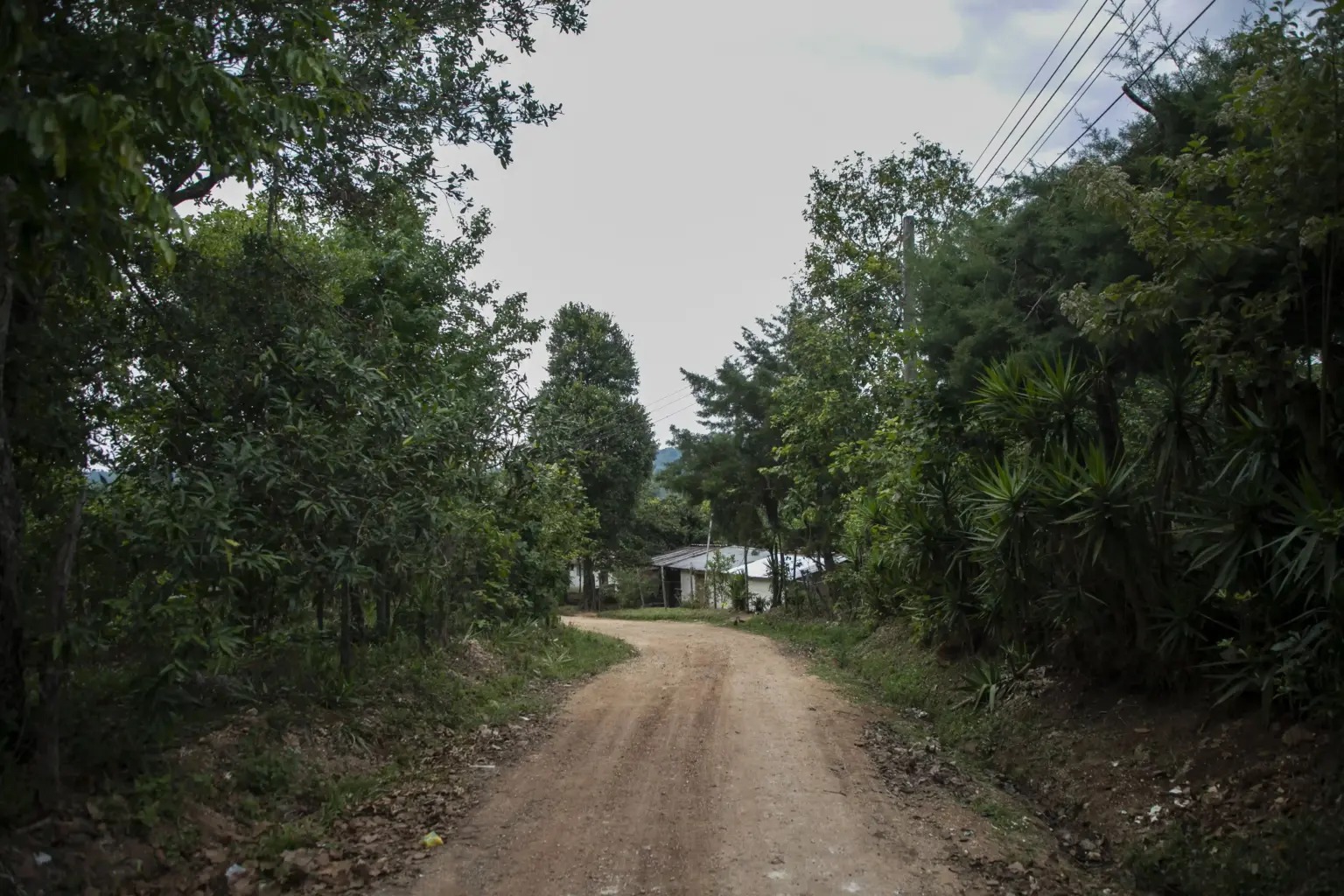
One of the streets in El Pescadito, from where the seven prisoners in El Salvador left to look for work. San José, La Paz, May 5, 2025. Photo ContraCorriente/Fernando Destephen.
Pedro López is haunted by memories. He still can’t understand why his former workmates are still in prison for nothing: “I start to think, if my son had committed a crime, I would have agreed to his arrest. But we were working. None of us were doing anything wrong.”
Across the world right now, Indigenous peoples are facing a renewed assault on their lands, rights, and ways of life.
From extractive industries pushing deeper into ancestral territories, to governments rolling back hard-won protections,
the threat is global—and it is growing.
What makes this moment especially dangerous is how little attention it receives.
Stories like this are disappearing in real time. Mainstream media
barely covers it and the coverage is fragmented. The public is left without the context
needed to understand what is truly at stake.
That is exactly why IC Magazine exists..
For more than 20 years, IC has reported on Indigenous struggles worldwide — consistently, independently, and without compromise.
We don’t follow news cycles; we trace patterns. We don’t sensationalize; we provide context.
And when the world looks away, we stay focused.
But this work is increasingly difficult to sustain.
We refuse to lock our reporting behind a paywall. We don’t sell access through subscriptions.
And we don’t answer to advertisers. IC Magazine survives solely because readers like you choose to
support independent Indigenous journalism.
Please donate today if you can. Every contribution helps us to continue this crucial work.
Thank you,
John Ahni Schertow
Founder and Editor in Chief