Last Updated on December 18, 2025
“Ola i ka wai” means water is life in Hawaiʻi. Water is sacred in the islands, often held in ancient aquifers that quietly sustain the archipelago. But the sacred waters resting beneath the slopes of Kapūkakī now carry deadly military jet fuel.
In November 2021, the U.S. Navy’s Red Hill Fuel Storage Facility leaked thousands of gallons of jet fuel into one of Honolulu’s primary drinking-water sources. The spill triggered one of the most significant environmental cases in Hawaiʻi’s history. More than 90,000 people from Halawa to Ford Island were suddenly thrust into a crisis the military had long insisted was impossible.
In May 2025, residents won a Federal Tort Claims Act lawsuit that found the Navy liable for contaminating the island’s water supply.
Kristina Baehr, the attorney who founded Just Well Law, points out that it was the first time that the government admitted liability in a case of this size. “It’s also the first time that plaintiffs have prevailed in an environmental case against the United States.”
By July 1st, Hawaiʻi’s Board of Water Supply opened its own lawsuit as the fight for accountability expanded across the archipelago.
Red Hill has become more than a legal dispute on aquifer water. It marks a turning point in a century-long struggle in which Native Hawaiian lands, first seized during the annexation of the Hawaiian Kingdom in 1898, have been used, militarized, and polluted to support American imperial power, especially after World War II.
The 2021 jet fuel spill didn’t happen randomly either. It’s a consequence of a land grab—or rather a water grab—in this long history of dispossession that denies Hawaiian autonomy, as well as the autonomy of its people, history, and systems of self-governance. Hawaiian communities remain at the center of the effort to defend the resources that keep the islands, and all islanders, alive.
Red Hill is ultimately a struggle over life: who controls Hawai’i’s water, who gets to live and who gets to die in shaping the future of the islands. The defense of clean water is inseparable from the resistance for Hawaiian self-determination.
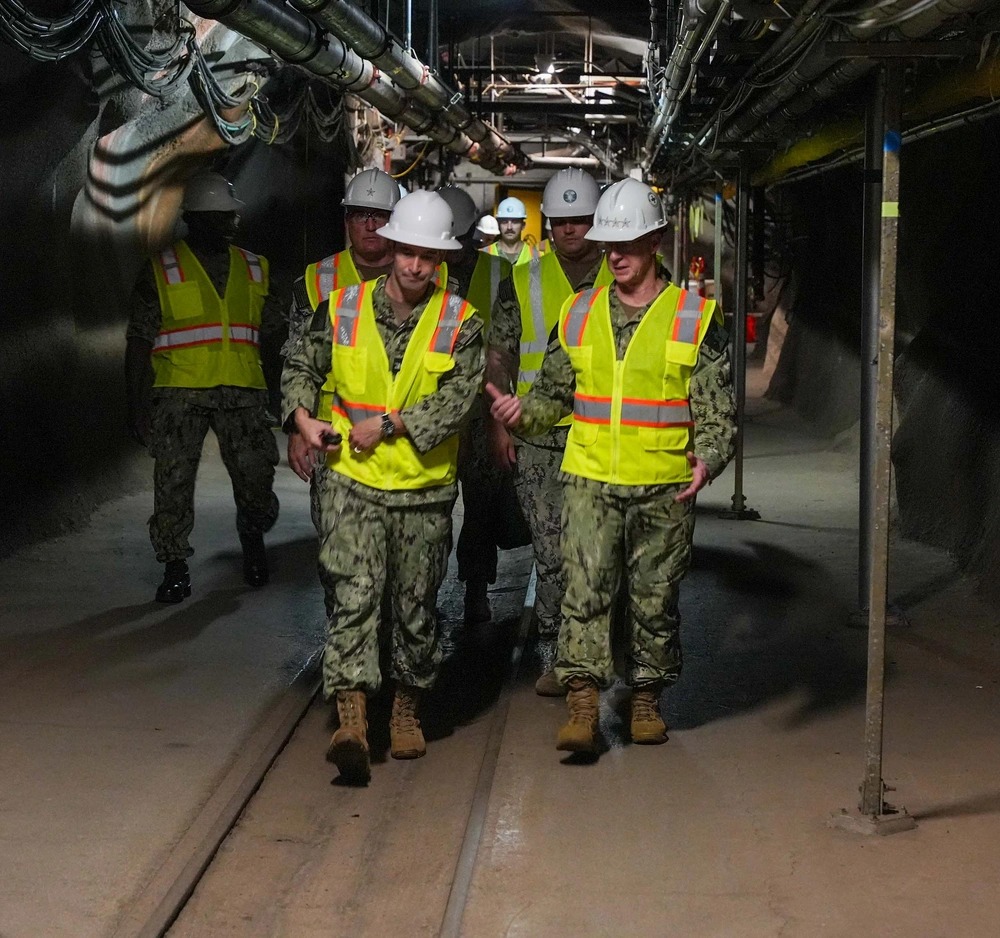
Chief of Naval Operations tours the Red Hill Fuel Storage Facility, Oʻahu, Hawaiʻi. U.S. Navy photograph, public domain. Source: Defense Visual Information Distribution Service (DVIDS)
Native Hawaiian scholar Haunani-Kay explains how the 1893 overthrow of the Hawaiian Kingdom placed Native Hawaiians under a U.S. backed oligarchy, turning them into “a politically subordinated group suffering all the legacies of conquest”(Trask 2-3). The legacies of conquest include poor health outcomes, displacement, and economic marginalization that still shape Hawaiian life today.
When Hawaiʻi became a territory of the United States in 1898, vast tracts of Hawaiian ancestral lands were transferred to federal control through the Newlands Resolution. This included a clause transferring “all rights of sovereignty” over approximately 1.8 million acres of ancestral lands directly to the U.S. government without the consent of Native Hawaiians.
The archipelago’s location was strategic geopolitically, becoming a platform for U.S. expansionism in the Pacific. Pearl Harbor was dredged into a modern naval base in 1908, Kahoʻolawe became a bombing range 1941, and Pōhakuloa turned into a training ground in 1943.
But what the U.S. viewed as strategic expansion, Native Hawaiians experienced as elimination, erasure and dispossession. And water was always at the core of the invasion.
In 1940 alone, the U.S. Navy carved twenty fuel tanks into the mountain of Kapūkakī (where Red Hill is located), reflecting an imperial worldview in which land and water served military goals. The settler colonial structure allowed the U.S. Navy to store millions of gallons of jet fuel above the source of drinking water for 400,000 people.
The aquifer beneath Red Hill was never understood as the beating heart of the island. It was treated as an asset to be managed; barrier Naval engineers believed they could conquer with steel and concrete.
The history of the island of Kahoʻolawe and the military training site in Pōhakuloa reveal how deeply the U.S. military’s presence has reshaped lands that hold profound cultural and spiritual significance for Native Hawaiians.
Kahoʻolawe, an island just south of Maui, was once a sacred center for navigation, ceremony, and burial, has been used for decades as a live-fire bombing range. The U.S. Navy dropped explosives across the entire island, leaving behind craters and erosion. To this day, 25 percent of the island has not been cleared of unexploded ordnance that make around 6,692 acres unsafe.
Native Hawaiian researcher Samuel M. Gohn notes that the island of Kahoʻolawe is now designed as a natural and cultural reserve with ongoing ordinance removal meant to support “the restoration of native vegetation” (Gohn 1).
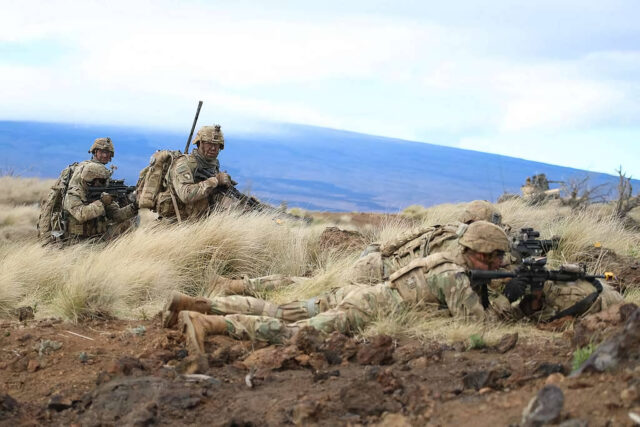
Pōhakuloa followed a similar pattern of sacrificing sacred Native Hawaiian land. Located on the island of Hawai’i between Mauna Kea and Mauna Loa, Pōhakuloa was originally used for pilgrimage, gathering, and ceremony. But during the height of the Cold War, the U.S. military viewed its wide, open lava fields as an ideal landscape for large-scale training. In 1964, the State of Hawaiʻi leased 23,000 acres of conservation-zoned public trust land to the U.S. Army for live-fire exercises and combat preparation, solidifying long-term federal control.
Native Hawaiian voices were largely excluded from the process in which ancestral lands that once supported Hawaiian lifeways were absorbed into the U.S. Army. Today, the Army controls a training area spanning more than 133,000 acres.
Both Kahoʻolawe and Pōhakuloa stand as reminders that the United States expanded its authority not only through force, but also by politically reframing sacred lands into sacrifice zones that could be treated as expendable for U.S. national defense.
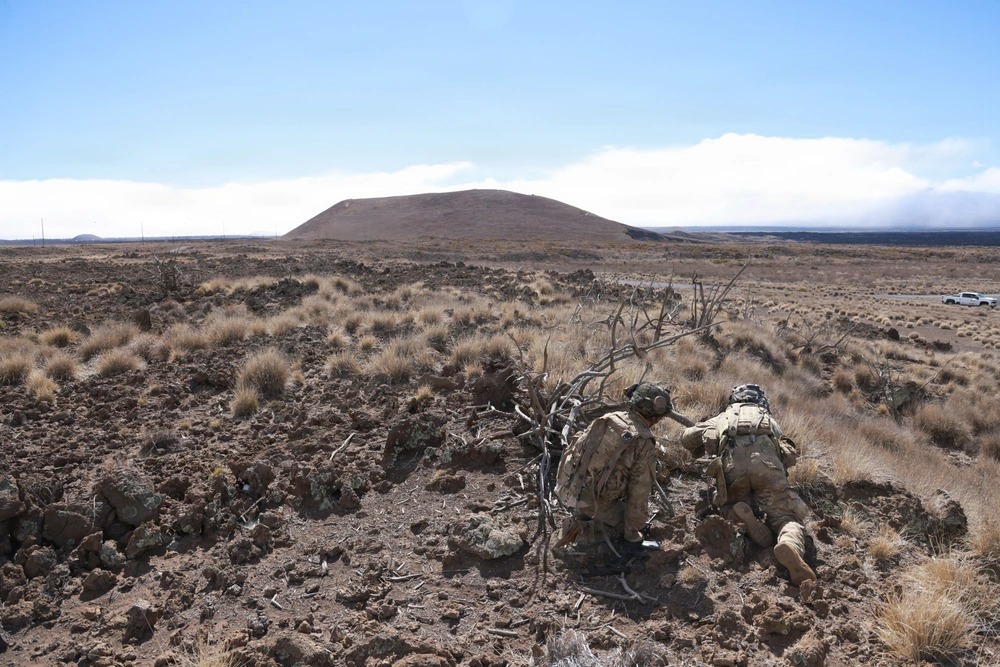
Military training operations at Pōhakuloa Training Area, Hawaiʻi Island. U.S. Army photograph, public domain (DVIDS).
A Staff Sergeant who worked directly on the Red Hill cleanup recalled that the communication between the fuel site on O’ahu and Washington was instantaneous. Satellite links, video calls, and email reports moved quickly, yet the cleanup took four months — “nothing got done…Not for the first few weeks, but for the first few months. Everything was about public perception, not actually fixing the spill.”
As families got sick, lost pets, and were displaced from their homes, political leaders spent time managing perceptions of the crisis failing to treat it like an emergency. Water testing was delayed or ignored.
Yet Red Hill was predictable. Legal scholars and Native Hawaiian activists have long argued that disasters like Red Hill are not accidents, but structural outcomes of settler colonialism in Hawaiʻi, where military power has historically operated with little accountability. “Things like this always happen in Hawaiʻi because there is never accountability,” the Staff Sergeant said.
This is what Native Hawaiians have fought for generations and continue to fight today: their homelands and water have been treated as wastelands expendable for military use.
In Hawaiʻi, Native stewardship is grounded in the understanding that ʻāina (land in Hawaiian) is a living relative, not a resource. Scholars such as Kawika B. Winter emphasize that true restoration requires rebuilding relationships with the land and water—relationships that Indigenous communities have maintained despite centuries of colonization.
Native stewardship expands to non-native Hawaiian’s who grow up learning the values of “aloha ʻāina, or loving the land as a familial elder, and mālama ʻāina, or caring for the land as a familial elder”(Kealiikanakaoleohaililani and Giardina 2016). Moving beyond the settler colonial project implies Native leadership that have guided the caretaking of those lands for generations.
This case is historic. Admitting liability for poisoning its own citizens isn’t something that has happened a lot in a military context. Following this case up with an accountability lawsuit signals a shift in how Hawai’i is willing to challenge federal power.
Hawai’i isn’t alone in this paradigm shift towards nature. Across the world, Indigenous and local communities continue to resist the destruction of their lands as sacrifice zones. In November 2025, Ecuadorian voters came together with “Vote No” a movement that rejected President Noboa’s proposal to allow the return of foreign military bases in the Galapagos Islands. Their concerns echo those in Hawai’i.
Foreign military bases bring contamination and erase self-governance. From Hawaii to the Galapagos, the fight isn’t only environmental. It’s about who gets to decide whose futures.
To Native Hawaiians, the poisoning of Kapūkakī is the latest episode of an ongoing settler colonial history of erasure. Yet the lawsuit signals a new chapter.
Hawaiʻi is now leading a vanguard in a global struggle to protect the future of life on earth. As Indigenous peoples defend their homelands and the lifeways that have sustained them for generations, they are slowly reshaping legal systems and broadening our sense of what the future can hold.
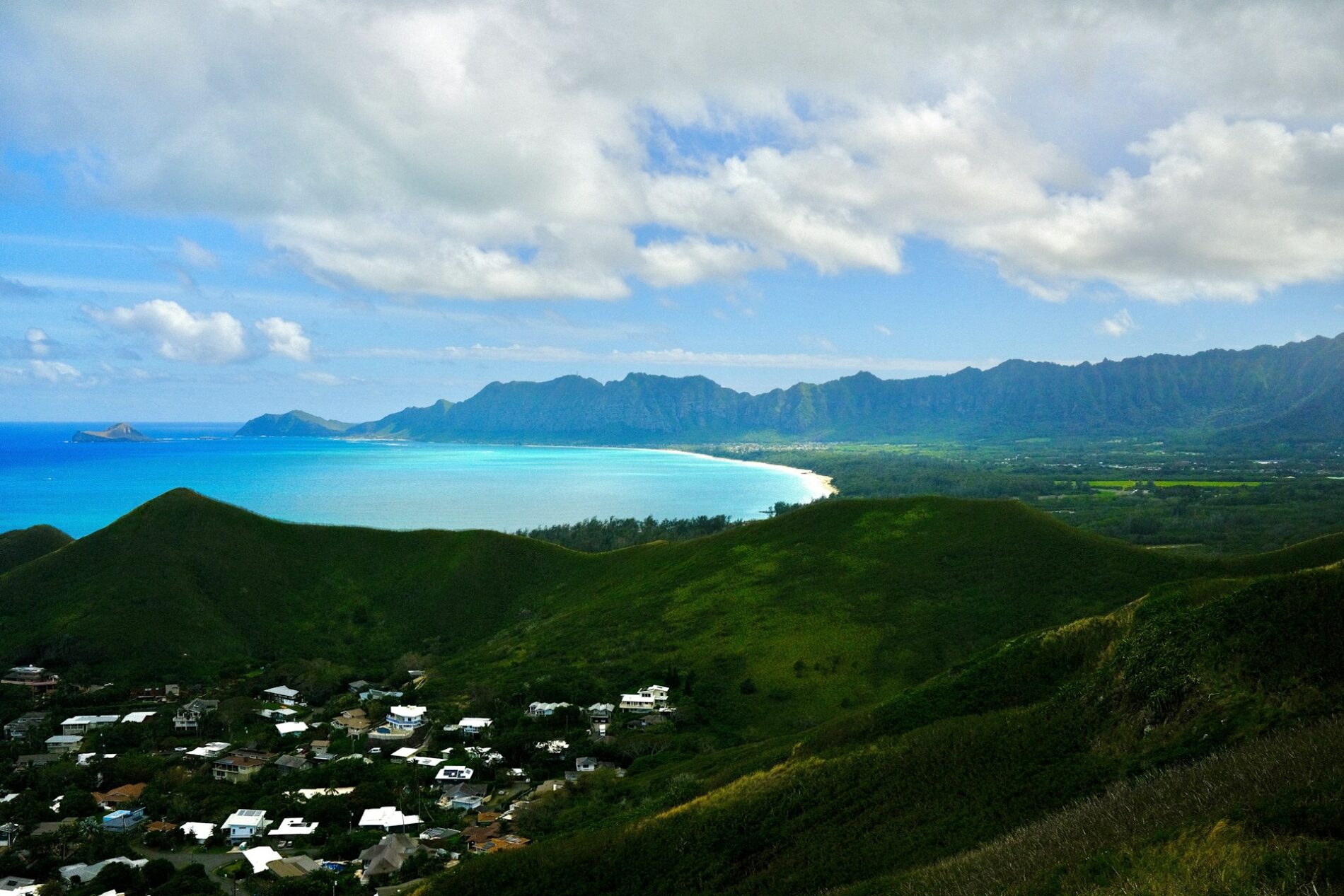
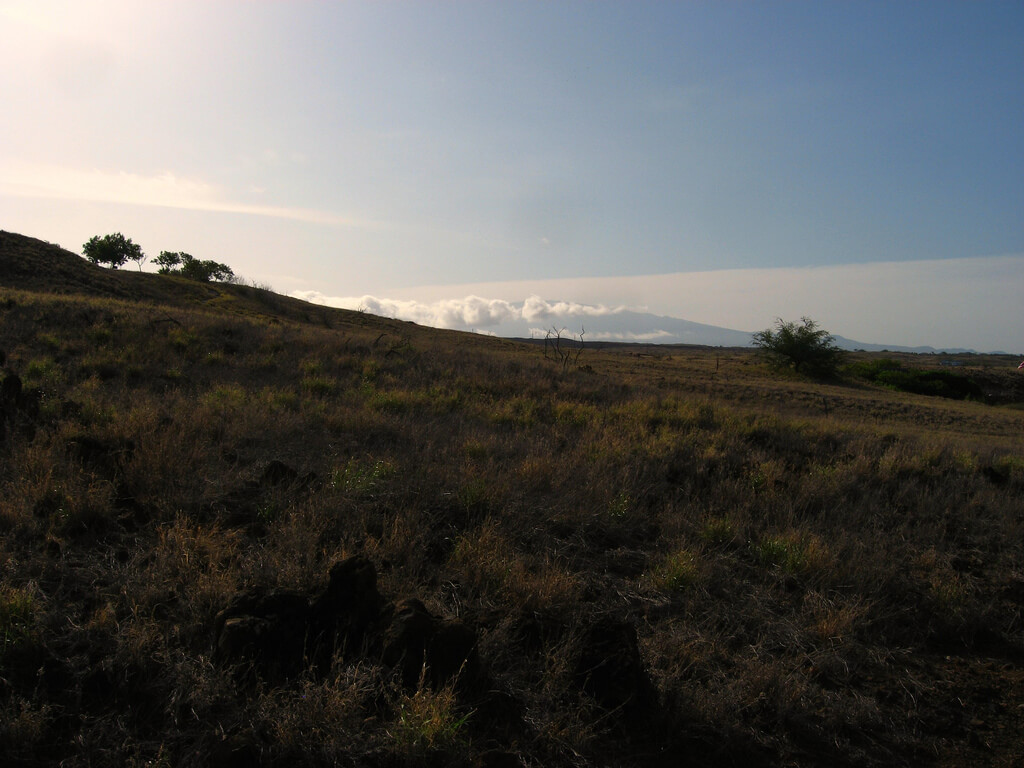
Coastal landscape on O’ahu. Photograph by Sandy Jiang, via Unsplash.
This article is a part of Hotspots, a journalistic collaboration between IC, Professor Manuela Picq and her students at Amherst College.
Across the world right now, Indigenous peoples are facing a renewed assault on their lands, rights, and ways of life.
From extractive industries pushing deeper into ancestral territories, to governments rolling back hard-won protections,
the threat is global—and it is growing.
What makes this moment especially dangerous is how little attention it receives.
Stories like this are disappearing in real time. Mainstream media
barely covers it and the coverage is fragmented. The public is left without the context
needed to understand what is truly at stake.
That is exactly why IC Magazine exists..
For more than 20 years, IC has reported on Indigenous struggles worldwide — consistently, independently, and without compromise.
We don’t follow news cycles; we trace patterns. We don’t sensationalize; we provide context.
And when the world looks away, we stay focused.
But this work is increasingly difficult to sustain.
We refuse to lock our reporting behind a paywall. We don’t sell access through subscriptions.
And we don’t answer to advertisers. IC Magazine survives solely because readers like you choose to
support independent Indigenous journalism.
Please donate today if you can. Every contribution helps us to continue this crucial work.
Thank you,
John Ahni Schertow
Founder and Editor in Chief